

Century-Old Wreckage of Royal Navy Warship HMS Tiger Located Off British Coast
The discovery of HMS Tiger off the United Kingdom coast resolves a century-long search and offers insight into the 1908 disaster that claimed over half its crew.
By The Global Wire Newsroom · Reported from Stephen Smith
Link preview · horizonglobalnews.com
Century-Old Wreckage of Royal Navy Warship HMS Tiger Located Off British Coast
The discovery of HMS Tiger off the United Kingdom coast resolves a century-long search and offers insight into the 1908 disaster that claimed over half its crew.
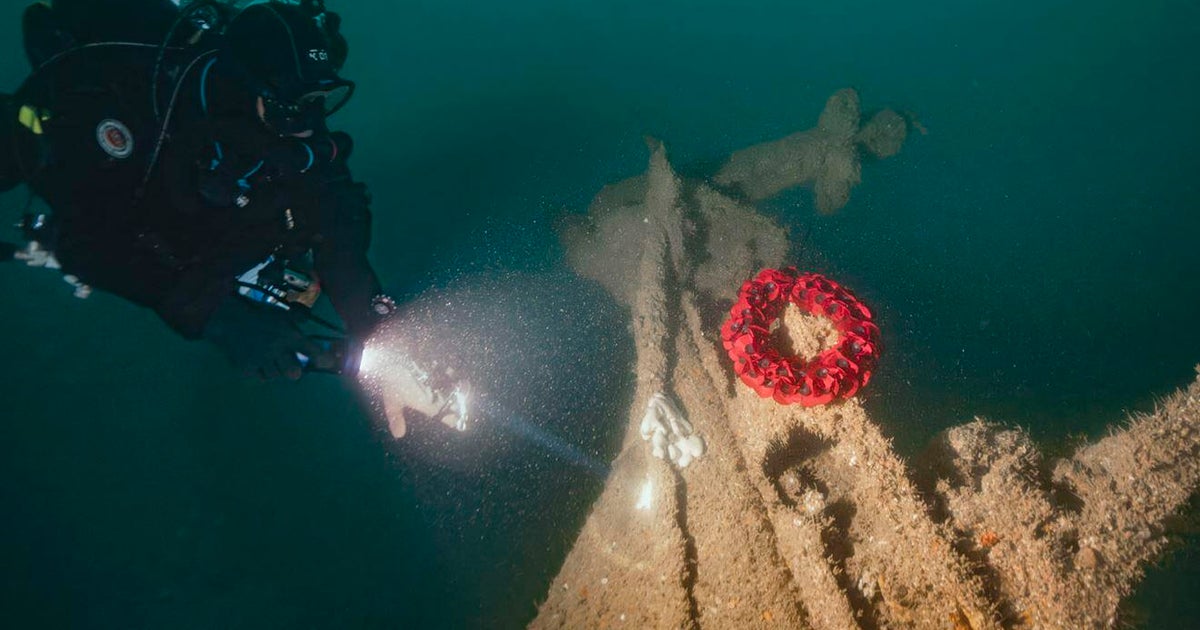
The sunken remains of HMS Tiger, a British naval warship that went down in 1908, have been located off the coast of the United Kingdom, resolving a search that spanned more than a century. The discovery brings an end to decades of unsuccessful efforts by the Royal Navy and independent shipwreck hunters to pinpoint the final resting place of the vessel. According to reporting by Stephen Smith, the location and physical state of the wreckage provide new clarity regarding the ship's final moments before it submerged, a disaster that resulted in the deaths of more than half of its crew.
Discovery of the HMS Tiger
For over 100 years, the precise location of HMS Tiger remained one of the Royal Navy's enduring historical mysteries. Despite advancements in hydrographic surveying and deep-sea technology throughout the 20th and early 21st centuries, previous search expeditions were unable to locate the vessel, which sank during operations off the British coastline.
The recently located wreck site offers tangible physical evidence of the vessel's final position, allowing historians and maritime specialists to examine how the ship went down. The discovery follows extended efforts by search teams who analyzed historical records, navigational logs, and marine geographic anomalies to narrow down potential search areas on the seabed. The location of the wreck site effectively concludes a multi-generational search conducted jointly and independently by naval authorities and marine search teams, according to reporting by Stephen Smith.
The 1908 Sinking and Loss of Life
The loss of HMS Tiger in 1908 marked a significant tragedy for the Royal Navy during a period of naval expansion leading up to the First World War. More than half of the crew aboard lost their lives when the ship went down, making the event one of the notable naval casualties of its era in home waters.
The physical condition of the newly discovered site offers researchers insight into the catastrophic sequence of events that unfolded during the sinking. Investigators examining the structural remains have noted details that illustrate the vessel's final moments before slipping beneath the surface. For naval historians and descendants of the personnel lost on board, the location of the vessel brings a definitive end to long-standing geographical uncertainty surrounding the precise site of the disaster.
Naval Operations in the Edwardian Era
To understand the circumstances surrounding HMS Tiger's loss, naval historians point to the operational environment of the Royal Navy during the Edwardian era. At the turn of the 20th century, Great Britain maintained an extensive maritime security presence, requiring continuous fleet exercises, nocturnal tactical drills, and high-speed maneuvers off the British coast.
These fleet training routines were often executed under demanding environmental conditions, including dense fog, heavy swells, and minimal nighttime visibility, prior to the development of modern navigational radar or GPS technology. Navigating heavily armored warships during fleet exercises required precise visual coordination and manual seamanship. When accidents occurred during these drills, vessels of the period could flood rapidly depending on structural hull design and the location of impact, frequently resulting in heavy casualties among crew members stationed below deck.
Technological Advances in Underwater Search
The discovery of long-lost shipwrecks like HMS Tiger reflects a broader evolution in maritime archaeology and deep-sea detection methods over recent decades. Historical search operations relied heavily on mechanical drag lines and basic acoustic depth sounders, tools that were often ineffective when searching complex sea bottom topography, deep trenches, or areas subject to heavy silt deposition.
Modern search efforts rely on advanced deep-water technology, including side-scan sonar systems, multi-beam echo sounders, and remotely operated underwater vehicles (ROVs) equipped with high-resolution visual cameras. These technologies enable searchers to scan vast swaths of the sea floor and build precise three-dimensional models of submerged anomalies. By cross-referencing modern bathymetric survey data with archived century-old deck logs and witness statements, marine searchers can pinpoint structural remains that have lay buried or concealed by marine growth for generations.
Legal Protections and Maritime War Graves
Because more than half of the crew lost their lives in the 1908 sinking, the wreck site of HMS Tiger carries sensitive legal and ethical standing as a military maritime grave. Under United Kingdom maritime laws and international agreements governing historic military shipwrecks, such sites receive protected status to guard against unauthorized diving, commercial salvage operations, or artifact removal.
Frameworks such as the Protection of Military Remains Act govern British military vessels resting in territorial and international waters. These regulations ensure that sites associated with significant loss of life remain undisturbed out of respect for the deceased military personnel. Authorities typically prioritize remote, non-intrusive survey methods, such as video photography and acoustic scanning, allowing researchers to study the vessel's remains without compromising the integrity of the site.
Preserving the Historical Record
The identification of HMS Tiger adds important detail to the recorded history of early 20th-century British naval operations. While written archives from the period document official military inquiries and administrative casualty lists, physical wreckage provides an objective archaeological record of structural damage and seabed deposition.
Historians and naval researchers continue to examine historical documentation associated with the ship to compare official accounts with the physical layout of the wreckage. The confirmation of the ship's final location ensures that the vessel and the crew members who perished in 1908 are formally mapped and preserved within the broader historical records of the Royal Navy.
This article incorporates reporting originally published by Stephen Smith.
How this story was produced
This report was written by The Global Wire newsroom from reporting first published by Stephen Smith. We verify the core facts against the original report, write our own account, and add the background and consequences a short wire item leaves out. Drafting is AI-assisted inside an editor-supervised pipeline, and every story is checked for accuracy of attribution, structure and duplication before it appears — full detail in our AI and funding disclosure.
Spotted an error? Tell us at corrections@horizonglobalnews.com and read our corrections policy or editorial standards.





Reader comments
Loading comments…