

Brisbane Broncos Suffer Ninth Consecutive Loss in Season Collapse Against Melbourne Storm
A turbulent week of off-field scrutiny ended in another defeat for Brisbane, extending their winless streak to nine matches as the regular season reaches its final weeks.
By The Global Wire Newsroom · Reported from Nick Wright
Link preview · horizonglobalnews.com
Brisbane Broncos Suffer Ninth Consecutive Loss in Season Collapse Against Melbourne Storm
A turbulent week of off-field scrutiny ended in another defeat for Brisbane, extending their winless streak to nine matches as the regular season reaches its final weeks.
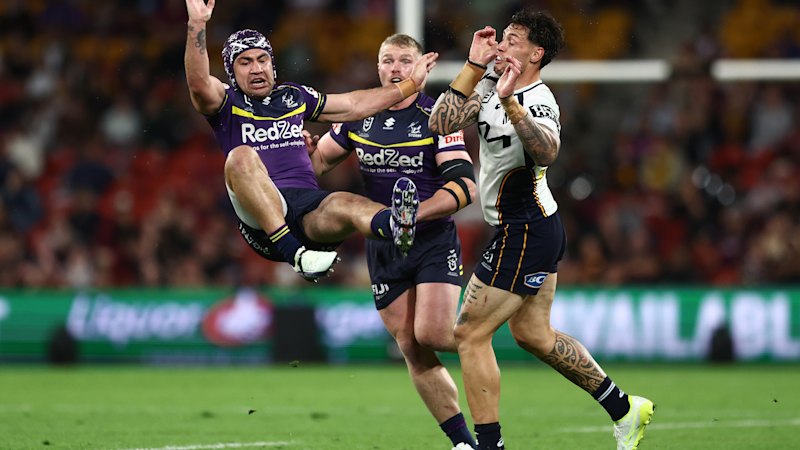
The Brisbane Broncos suffered their ninth consecutive defeat on August 27, 2026, falling to the Melbourne Storm at the tail end of a week dominated by off-field distraction and internal turmoil. The loss deepens a severe late-season collapse for one of Australia's wealthiest and most popular rugby league franchises, leaving the club mired in a multi-month slump as the National Rugby League (NRL) regular season draws to a close. According to reporting by journalist Nick Wright, the result represents the culmination of a week marked by growing frustration, intense media scrutiny, and escalating performance issues within the Brisbane organization.
Key facts
What happened
The collapse against the Melbourne Storm marked the ninth consecutive week in which the Brisbane Broncos failed to secure two competition points, extending a downward trajectory that has transformed their 2026 campaign from a top-eight push into a severe organizational crisis.
Reporting by Nick Wright indicates that the team entered game day already under heavy pressure following a seven-day period defined by mounting internal frustrations and contentious media headlines. Throughout the week leading up to the clash, public scrutiny focused heavily on the club's operational culture, player performance levels, and strategic direction.
When the squad took the field against Melbourne, those off-field distractions translated into another on-field failure. Brisbane was unable to match Melbourne's execution and discipline, allowing the Storm to control momentum and hand the Broncos another comprehensive defeat. The result extended Brisbane's winless run to nine matches, cementing their place near the bottom of the NRL table as the regular season reaches its final rounds.
Why it matters
A nine-game losing streak for the Brisbane Broncos carries wide-ranging consequences across financial, sporting, and administrative dimensions of Australian rugby league. As the sole NRL club operating out of Queensland's capital city for over three decades—until the recent introduction of the Dolphins—Brisbane commands one of the largest commercial footprints in Australian sport. Prolonged on-field failures jeopardize ticket sales at the 52,500-capacity Suncorp Stadium, reduce merchandise revenue, and weaken sponsorship leverage when corporate partnerships come up for renewal.
From a sporting standpoint, failing to qualify for the NRL finals series represents a major failure for a franchise budgeted and assembled to contend for premiership titles. Under the NRL's strict salary cap structure—set at $12.1 million AUD per club for top-30 squad rosters—roster management is designed to yield sustained competitiveness. A slide of nine consecutive losses suggests systematic misallocation of cap space, tactical deficiencies, or underlying physical and mental fatigue within the playing group.
The slump also places immediate institutional pressure on the club's executive management, coaching staff, and board of directors. In elite professional sport, extended slumps frequently precipitate mid-contract coaching dismissals, backroom restructures, and high-profile roster cleanouts. For players, extended poor form impacts career longevity, contract valuation in open-market negotiations, and selection for representative honours such as the State of Origin series and international test matches.
The background
The Brisbane Broncos were established in 1988 as the first team outside New South Wales to enter the Australian elite rugby league competition, then known as the NSWRL. Under founding coach Wayne Bennett, the club quickly established itself as a powerhouse of Australian sport, claiming premiership titles in 1992, 1993, 1997 (Super League), 1998, 2000, and 2006. For over two decades, Brisbane was renowned for its consistency, missing the finals series only once between 1992 and 2009.
However, the post-2015 era has proven far more volatile for the franchise. After losing the 2015 Grand Final in extra time to the North Queensland Cowboys, the club entered a period of administrative instability and coaching turnover. The low point occurred in 2020, when Brisbane finished at the bottom of the NRL ladder to claim the first "wooden spoon" in the club's history.
A brief resurgence occurred during the 2023 season, when Brisbane advanced to the NRL Grand Final, narrowly missing out on a seventh premiership after a late comeback by the Penrith Panthers. That run raised expectations that the club had re-established itself among the elite tier of the competition.
The Melbourne Storm, by contrast, have maintained unmatched structural stability since entering the competition in 1998. Under head coach Craig Bellamy, who took charge in 2003, Melbourne has qualified for the finals in almost every season of his tenure, developing a formidable head-to-head record against Brisbane. Melbourne has dominated the rivalry over the past fifteen years, frequently inflicting decisive defeats on Brisbane both at AAMI Park in Melbourne and at Suncorp Stadium in Brisbane.
In the NRL competition structure, 17 teams play 24 matches across 27 regular season rounds. The top eight teams at the conclusion of the regular season qualify for the finals series, which culminates in the NRL Grand Final in October. A nine-match losing streak in the latter half of the season guarantees mathematical or practical elimination from top-eight contention, stripping away any postseason revenue opportunities.
Reaction
Following the ninth consecutive loss, formal public statements from the Brisbane Broncos board and executive leadership remain pending, though immediate public debate has engulfed Australian sports broadcast networks and print media. Fans and commentators have expressed intense dissatisfaction with the team's trajectory, focusing criticism on coaching leadership and senior player execution.
Past precedent in the NRL suggests that prolonged losing streaks trigger formal end-of-season board reviews, during which the performance of head coaches, assistant staff, strength and conditioning personnel, and roster managers is subjected to systematic evaluation. Representatives from Melbourne, while acknowledging the victory, typically emphasize maintenance of their own standards heading into the finals campaign. Official comments from player leaders across both clubs are expected during post-match press conferences and media availability sessions scheduled in the days following the match.
What we don't know yet
Several critical pieces of information remain unconfirmed in the immediate aftermath of the loss, as reported by Nick Wright. The specific scoreline and precise match statistics from the game against the Melbourne Storm were not detailed in the initial summary, leaving the exact margin of defeat unquantified. Furthermore, it is not yet known whether any players suffered match-ending injuries or face disciplinary charges from the NRL match review committee.
Beyond the immediate match metrics, major long-term questions remain unanswered regarding internal club decisions. It is currently unclear whether the Broncos board will initiate an emergency meeting to review the head coach's contract or if staff changes will be deferred until the completion of the regular season. The exact nature of the off-field controversies that plagued the club in the days leading up to the match also remains partially unarticulated, leaving open questions about personal conduct, contract disputes, or administrative friction behind closed doors.
What to watch
In the coming days and weeks, several key indicators will reveal the full impact of Brisbane's ninth straight loss:
This report is based on original reporting by Nick Wright.
How this story was produced
This report was written by The Global Wire newsroom from reporting first published by Nick Wright. We verify the core facts against the original report, write our own account, and add the background and consequences a short wire item leaves out. Drafting is AI-assisted inside an editor-supervised pipeline, and every story is checked for accuracy of attribution, structure and duplication before it appears — full detail in our AI and funding disclosure.
Spotted an error? Tell us at corrections@horizonglobalnews.com and read our corrections policy or editorial standards.




Reader comments
Loading comments…