

Beijing Urges Washington to Clear Hurdles Ahead of Planned September Trump-Xi Summit
China's foreign minister has called on the United States to overcome bilateral obstacles before President Donald Trump and President Xi Jinping hold a scheduled meeting in September.
By The Global Wire Newsroom · Reported from ABC News
Link preview · horizonglobalnews.com
Beijing Urges Washington to Clear Hurdles Ahead of Planned September Trump-Xi Summit
China's foreign minister has called on the United States to overcome bilateral obstacles before President Donald Trump and President Xi Jinping hold a scheduled meeting in September.
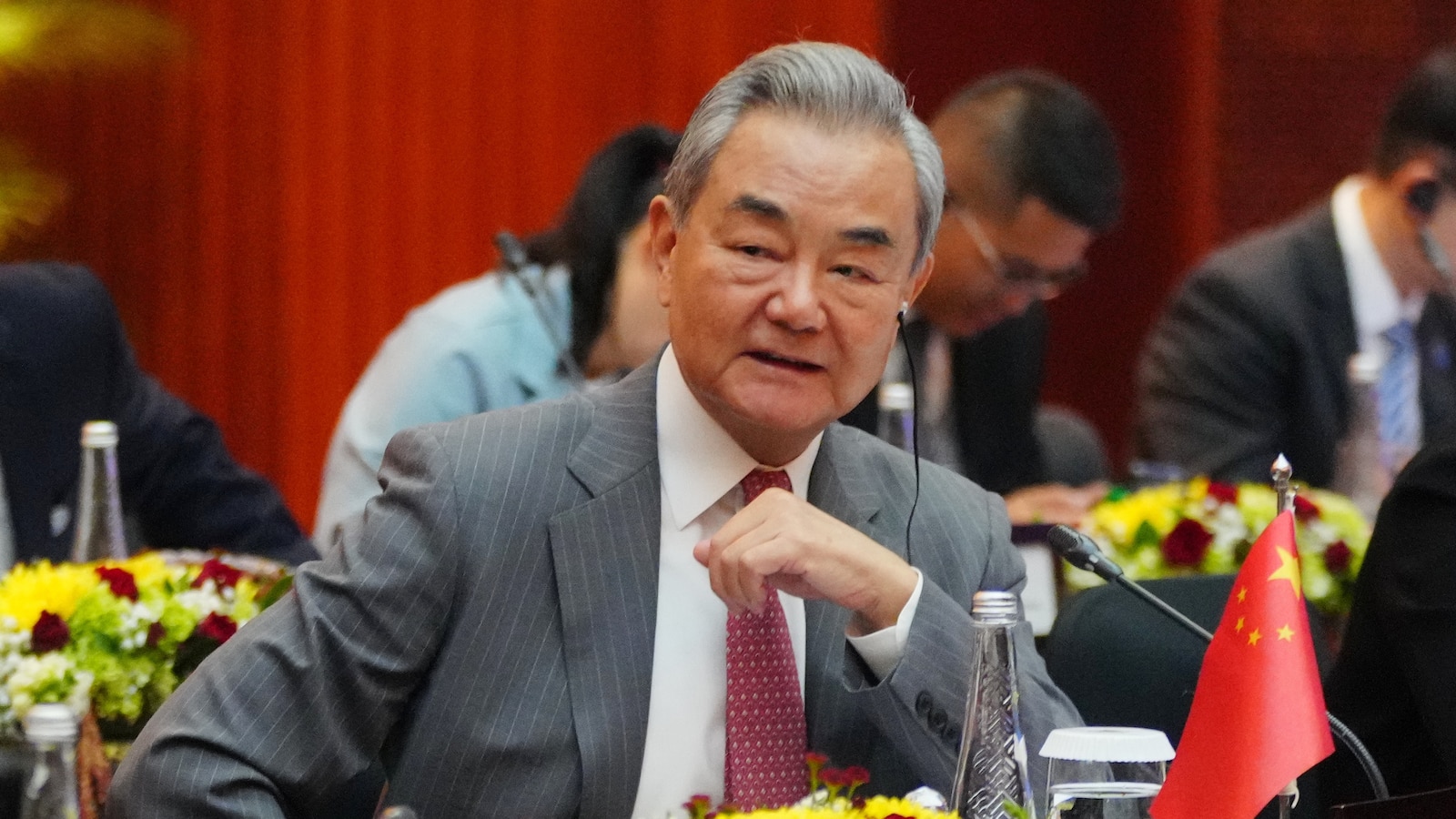
China's foreign minister has called on the United States to actively clear strategic and policy obstacles in bilateral relations ahead of a planned summit between U.S. President Donald Trump and Chinese President Xi Jinping scheduled for September 2026. The high-level appeal, delivered in public comments on August 27, 2026, underscores the diplomatic groundwork required by both superpowers to establish common ground before their leaders engage in direct negotiations. The upcoming head-of-state meeting marks a critical pivot point in bilateral engagement, coming amid complex trade discussions, technological competition, and security dynamics across the Indo-Pacific region.
Key facts
What happened
On August 27, 2026, China’s foreign ministry outlined Beijing's stance on the upcoming leadership summit, emphasizing that both Washington and Beijing must work constructively to remove diplomatic barriers. According to reporting by ABC News, the foreign minister explicitly urged the United States to join China in creating conducive conditions for the September meeting between President Trump and President Xi.
The announcement reflects weeks of back-channel communications and preliminary diplomatic exchanges aimed at structuring the agenda for the summit. The foreign minister emphasized that successful bilateral engagements require mutual respect and a shared commitment to managing core differences rather than allowing disagreements to impede overall dialogue. While specific agenda items were not fully detailed in the public statement, diplomatic observers note that preparatory talks have focused heavily on bilateral trade structures, technological export restrictions, intellectual property considerations, and open channels of communication between military and diplomatic leadership.
The statement serves as a formal public signal from Beijing that the success of the September leadership meeting depends heavily on pre-summit concessions and mutual compromises. Chinese diplomatic officials highlighted the necessity of avoiding unilateral actions that could escalate tensions during the final weeks of preparation. The outreach highlights the delicate nature of organizing presidential summitry when economic and strategic competition between the two nations remains exceptionally high.
Why it matters
The upcoming summit between the heads of state of the world's two major economic powerhouses carries far-reaching consequences for global markets, international supply chains, and macroeconomic policy. When leaders of the United States and China meet, their consensus or discord directly influences international trade policy, corporate investment strategies, global shipping corridors, and currency markets. A successful summit that reduces bilateral friction can lower risk premiums across global financial markets, while unresolved disputes can trigger renewed tariff escalations and regulatory hurdles for multinational enterprises.
Beyond immediate market reactions, the relationship between Washington and Beijing sets the baseline for global geopolitical stability. Strategic competition between the two nations impacts critical international issues, including semiconductor supply chains, clean energy technologies, cybersecurity standards, and maritime navigation rights in the South China Sea and Taiwan Strait. For business leaders, industrial manufacturers, and agricultural exporters, the outcome of presidential-level talks often dictates market access rules and regulatory environments for years to come.
Additionally, formal presidential summits establish the operating boundaries for military and security communications. By establishing direct lines of dialogue between top leadership, both powers seek to reduce the likelihood of miscalculations or operational accidents in contested military sectors. For third-party nations across Asia, Europe, and Latin America, the trajectory of U.S.-China relations forces careful geopolitical balancing, making the summit's tone and outcomes a central focus for international diplomacy worldwide.
The background
Direct summitry between U.S. presidents and top Chinese leadership has served as the primary mechanism for managing bilateral relations for over five decades, tracing back to President Richard Nixon's historic visit to Beijing in 1972. Under President Donald Trump's initial term in office from 2017 to 2021, high-level diplomatic engagement featured high-stakes face-to-face meetings alongside significant economic confrontation.
During Trump's first presidency, the two leaders held several notable summits, beginning with an April 2017 meeting at the Mar-a-Lago resort in Florida, followed by an official state visit to Beijing in November 2017. Subsequent bilateral talks occurred on the sidelines of international gatherings, including the G20 summit in Buenos Aires, Argentina, in December 2018, and the G20 summit in Osaka, Japan, in June 2019. These meetings were frequently paired with aggressive tariff actions under Section 301 of the Trade Act of 1974, ultimately culminating in the signing of the Phase One Economic and Trade Agreement in January 2020.
In the years following, the bilateral framework expanded to encompass rigorous national security controls, including technology export restrictions enforced through the U.S. Department of Commerce's Entity List, sanctions on strategic hardware components like advanced semiconductors, and heightened scrutiny over foreign direct investment. On the Chinese side, Beijing expanded domestic regulatory frameworks, including its own unreliable entity lists and export control laws governing critical raw materials such as rare earth elements.
The institutional framework supporting U.S.-China diplomacy relies on multiple bureaucratic tracks. In the United States, bilateral strategy involves the White House National Security Council, the Department of State, the Department of the Treasury, and the Office of the U.S. Trade Representative. In China, policy execution is led by the Central Foreign Affairs Commission of the Chinese Communist Party alongside the Ministry of Foreign Affairs and the Ministry of Commerce. Presidential summits require extensive preliminary negotiation through these institutional channels to draft communiqués, establish working group guidelines, and manage public expectations.
Reaction
Following the public statements from Beijing, diplomatic analysts and market participants have begun evaluating the prospective parameters of the September summit. Official responses from Washington typically emphasize the commitment to maintaining open lines of communication while aggressively defending national economic and strategic interests.
Trade groups representing major export industries, including agriculture, aviation, and technology manufacturing, have historically supported high-level diplomatic engagement to reduce tariff burdens and secure predictable market conditions. Business organizations such as the U.S.-China Business Council and the American Chamber of Commerce in China consistently urge both capitals to prioritize commercial stability and transparent regulatory regimes during high-level summits.
In legislative corridors on Capitol Hill, bipartisan lawmakers monitor summit planning closely, often cautioning against diplomatic concessions that could compromise national security or technological competitiveness. Members of congressional committees overseeing foreign relations and trade frequently demand strict enforcement mechanisms for any bilateral agreements reached during executive summits. Meanwhile, regional allies across the Indo-Pacific—including Japan, South Korea, Australia, and ASEAN member states—track the diplomatic preparations closely, balancing their security alliances with the United States alongside deep commercial ties to the Chinese economy.
What we don't know yet
While both governments have confirmed preparations for a September leadership meeting, several critical operational and policy details remain unverified:
These unresolved factors are significant because the format, agenda, and specific binding outcomes of the summit will determine whether the event marks a substantive policy shift or primarily serves as a symbolic diplomatic exchange.
What to watch
In the weeks leading up to the September summit, several key indicators and events will clarify the direction of bilateral relations:
This report is based on original news coverage published by ABC News.
How this story was produced
This report was written by The Global Wire newsroom from reporting first published by ABC News. We verify the core facts against the original report, write our own account, and add the background and consequences a short wire item leaves out. Drafting is AI-assisted inside an editor-supervised pipeline, and every story is checked for accuracy of attribution, structure and duplication before it appears — full detail in our AI and funding disclosure.
Spotted an error? Tell us at corrections@horizonglobalnews.com and read our corrections policy or editorial standards.





Reader comments
Loading comments…