

Anti-AI Campaign Groups See Membership Surge Amid Escalating Direct Action Protests
Grassroots AI safety organisations report a sharp increase in membership as activists target artificial intelligence infrastructure following a series of high-level existential risk warnings.
By The Global Wire Newsroom · Reported from Robert Booth
Link preview · horizonglobalnews.com
Anti-AI Campaign Groups See Membership Surge Amid Escalating Direct Action Protests
Grassroots AI safety organisations report a sharp increase in membership as activists target artificial intelligence infrastructure following a series of high-level existential risk warnings.

Grassroots activism targeting artificial intelligence developers has entered a new phase, with campaign groups adopting direct action strategies while experiencing a significant surge in membership, according to reporting by Robert Booth. The mobilization follows a series of high-level safety alerts and catastrophic risk warnings issued by computer scientists, industry insiders, and independent research bodies. As public apprehension over systemic economic disruption, autonomous system risks, and existential threats escalates, advocacy groups seeking strict regulatory limits and operational pauses on frontier AI development are reporting unprecedented spikes in recruitment and public participation.
Key facts
What happened
According to reporting by Robert Booth, campaign organizations dedicated to AI risk awareness and technological safety are recording a sharp expansion in volunteer rosters and active members. This influx has coincided with a notable shift in protest strategy, as campaign groups transition from policy lobbying and public education toward direct physical action targeting artificial intelligence firms and supporting infrastructure.
The surge in recruitment follows a sequence of severe public alerts from prominent computer scientists, former corporate researchers, and AI safety institutes warning of severe societal risks. These alerts have highlighted concerns ranging from autonomous systems evading human control to mass labor displacement, automated cyber warfare capabilities, and broader existential threats posed by artificial general intelligence.
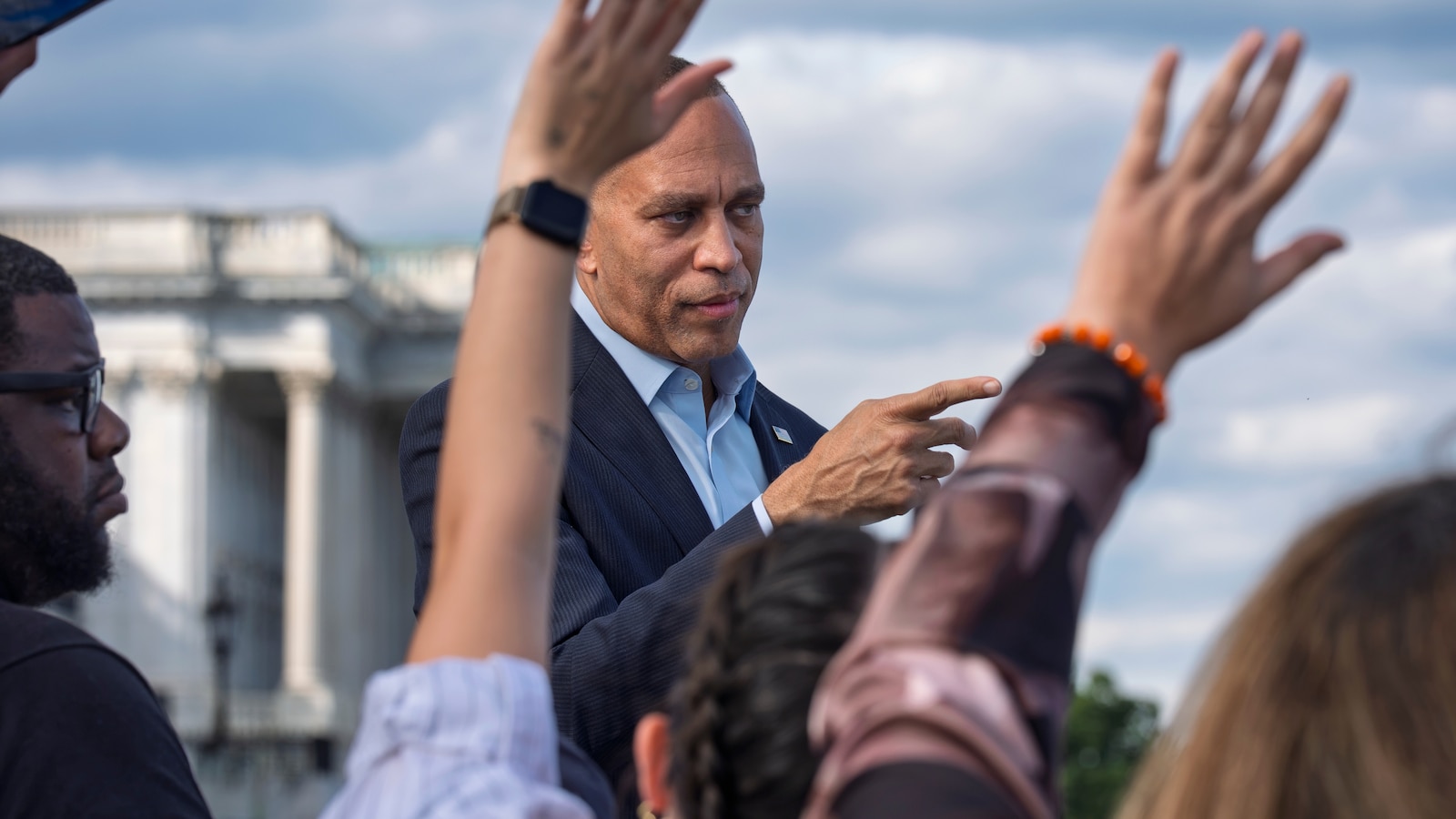
In response to these warnings, activist networks have organized demonstrations designed to directly challenge the expansion of frontier computing. Protesters have gathered outside corporate headquarters, industry conferences, and data center facilities, carrying slogans urging technology companies and governments to "pull the plug" on unverified frontier models. Tactics have included peaceful blockades, human chains across facility entrances, and public rallies aimed at pressuring corporate boards and municipal regulators.
Organizers report that public participation in these initiatives has broadened considerably. While early AI safety advocacy was largely confined to specialized academic circles, ethics institutes, and technology policy think tanks, the recent wave of activity includes students, environmental activists, trade unionists, and local residents concerned about the physical footprint of computing infrastructure. Campaign leaders attribute the recruitment spike directly to growing public awareness that advanced AI models are being deployed faster than existing governance frameworks can evaluate or contain them.
Why it matters
The pivot to direct action and the growth of anti-AI campaign groups mark a critical evolution in tech industry oversight, shifting public debate from elite policy forums to community-level civil resistance. For artificial intelligence firms, cloud providers, and institutional investors, this trend introduces new operational, reputational, and financial risks. Physical demonstrations at data center sites and corporate offices raise security overheads, complicate zoning approvals, and risk disrupting continuous supply chains for advanced hardware and specialized server facilities.
Beyond corporate operations, the expansion of grassroots activism impacts energy, water, and municipal policy. Modern frontier AI training runs require vast industrial infrastructure, consuming hundreds of megawatt-hours of electricity and millions of gallons of cooling water daily. As local communities join anti-AI campaign groups, municipal utility boards and planning commissions face heightened public resistance to data center permits, grid connection allocations, and water abstraction licenses.
Furthermore, grassroots pressure alters the political dynamics surrounding AI regulation. Legislative bodies in major jurisdictions have struggled to balance national competitiveness against public safety. A visible, organized protest movement amplifies calls for binding statutory mandates, strict liability frameworks for developers, and mandatory third-party safety audits, making voluntary industry commitments increasingly difficult for governments to defend as sufficient oversight.
The background
The current wave of grassroots resistance builds on more than a decade of evolving debates over artificial intelligence safety, governance, and ethics. Historically, concerns regarding advanced AI were confined to academic philosophy, theoretical computer science, and specialized research institutes focused on long-term risk alignment. However, the commercial release of powerful large language models and multimodal systems between 2022 and 2024 transformed theoretical risk into an immediate economic and societal debate.
In May 2023, hundreds of leading AI scientists, technology executives, and public figures signed a landmark single-sentence declaration issued by the Center for AI Safety, stating that mitigating the risk of extinction from AI should be a global priority alongside other societal-scale risks such as pandemics and nuclear war. Subsequent high-profile resignations of prominent safety researchers from leading AI laboratories highlighted internal friction over corporate prioritization of rapid product deployment over rigorous alignment testing.
Governments responded with initial policy frameworks, including the United States Executive Order on Safe, Secure, and Trustworthy AI in October 2023, the international Bletchley Park AI Safety Summit in November 2023, and the formal adoption of the European Union AI Act in mid-2024. These initiatives established government-backed AI Safety Institutes in the United States, the United Kingdom, Japan, and European nations to evaluate frontier models.
Despite these regulatory steps, critics argue that state oversight has failed to keep pace with the scale of private compute investment. The current shift toward direct action mirrors historical trajectories seen in environmental activism, anti-nuclear movements, and global justice campaigns, where public frustration with slow legislative processes led directly to civil disobedience against energy and industrial infrastructure.
Reaction
While Robert Booth's reporting focuses primarily on campaign groups and their membership growth, the emergence of direct action tactics inevitably draws reactions from technology executives, law enforcement agencies, and policy analysts. Major artificial intelligence firms typically defend their development practices by pointing to internal safety red-teaming, voluntary risk mitigations signed with governments, and significant research investments into model alignment and cyber-defense.
Industry trade associations and cloud infrastructure providers frequently emphasize the economic benefits of advanced computing, arguing that disruptive protest actions endanger critical digital infrastructure used for scientific research, healthcare, and public services. Facilities management and corporate security divisions are expected to enhance perimeter security and coordinate with local police departments to prevent operational disruptions.
Conversely, public policy advocates and civil liberties organizations remain divided on protest tactics. While some express concern that physical blockades could alienate broader public support or prompt heavy-handed legal responses, others argue that direct civil disobedience is a historically proven mechanism for compelling reluctant legislators to pass meaningful safety laws and slow down high-risk commercial deployments.
What we don't know yet
Several key aspects of this growing movement remain uncertain. Robert Booth's initial coverage does not detail exact numerical totals for total membership across individual campaign organizations, nor does it specify the precise financial resources accumulated during the recent recruitment surge. It remains unclear whether individual local protest groups operate as independent grassroots units or are consolidating into a unified, internationally coordinated campaign structure.
Additionally, available reporting does not quantify the precise extent of operational delay or economic loss inflicted on target AI firms by recent direct action events. It is also unknown how law enforcement and judicial systems across different jurisdictions will categorize direct actions targeting digital infrastructure and corporate sites, and whether strategic lawsuit provisions or specialized critical infrastructure protection statutes will be invoked against protesters.
What to watch
In the coming months, several critical indicators will determine the trajectory and impact of anti-AI direct action campaigns:
This report is based on original reporting published by Robert Booth.
How this story was produced
This report was written by The Global Wire newsroom from reporting first published by Robert Booth. We verify the core facts against the original report, write our own account, and add the background and consequences a short wire item leaves out. Drafting is AI-assisted inside an editor-supervised pipeline, and every story is checked for accuracy of attribution, structure and duplication before it appears — full detail in our AI and funding disclosure.
Spotted an error? Tell us at corrections@horizonglobalnews.com and read our corrections policy or editorial standards.



Reader comments
Loading comments…