

Beetaloo Energy Australia Secures 25% Taroom Trough Liquids Stake in Queensland
Beetaloo Energy Australia has acquired a 25 percent stake in a Queensland liquids play at zero upfront cost, adding regional optionality to its Northern Territory gas assets.
By The Global Wire Newsroom · Reported from Penny Taylor
Link preview · horizonglobalnews.com
Beetaloo Energy Australia Secures 25% Taroom Trough Liquids Stake in Queensland
Beetaloo Energy Australia has acquired a 25 percent stake in a Queensland liquids play at zero upfront cost, adding regional optionality to its Northern Territory gas assets.
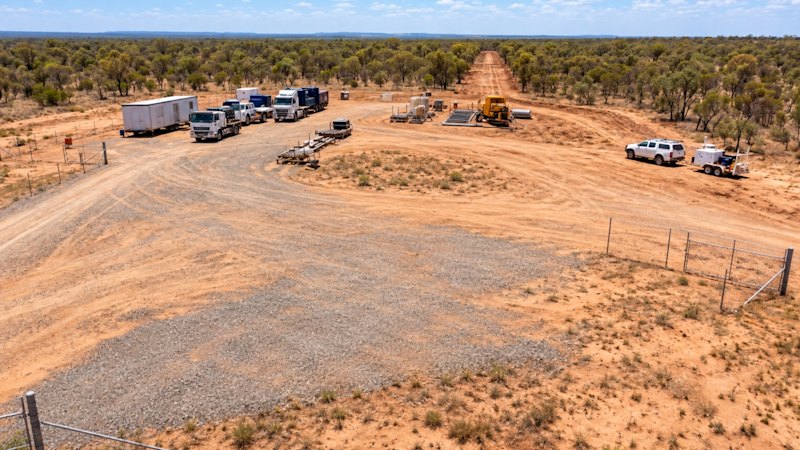
Beetaloo Energy Australia has expanded its operational footprint into Queensland after securing a 25 percent working interest in a liquids-rich prospect within the Taroom Trough at zero upfront cost, according to reporting by energy analyst Penny Taylor on October 5, 2026. The strategic acquisition provides the company with immediate portfolio diversification outside its core shale gas holdings in the Northern Territory. By securing an entry into Queensland’s energy sector without incurring initial cash acquisition expenditure, Beetaloo Energy Australia gains valuable optionality, balancing its large-scale, long-dated gas appraisal assets in northern Australia with potential exposure to high-margin hydrocarbon liquids in close proximity to established eastern Australian energy infrastructure.
Key facts
What happened
Beetaloo Energy Australia has finalized an agreement to acquire a 25 percent working interest in a liquids-focused exploration play located in the Taroom Trough of Queensland, according to reporting by Penny Taylor. The commercial structure of the deal allows Beetaloo Energy Australia to enter the permit at zero upfront cost, avoiding an initial cash outlay for the asset acquisition.
In upstream oil and gas transactions, zero upfront cost arrangements are typically executed through farm-in or promote structures. Under these commercial frameworks, an incoming joint venture participant acquires an equity interest by agreeing to carry a portion of future exploration, seismic acquisition, or appraisal drilling costs, or by contributing specialized technical and operational management rather than paying cash upfront to the seller. While specific joint venture obligations and partner identities remain undisclosed in the initial reporting, the transaction establishes Beetaloo Energy Australia as a participant in the Queensland play.
The deal marks a strategic shift in corporate positioning for Beetaloo Energy Australia. Previously focused primarily on the exploration and evaluation of massive unconventional gas reserves in the remote Northern Territory, the company’s new Queensland position gives it access to a distinct geological setting characterized by liquid hydrocarbons, including condensate and light crude oil, alongside natural gas.
Why it matters
The transaction holds substantial strategic implications for Beetaloo Energy Australia, its shareholders, and the broader Australian onshore energy market.
From a balance sheet perspective, entering a new exploration domain at zero upfront cost enables the company to preserve its existing cash reserves while gaining exposure to upside potential. Capital allocation in junior and mid-tier resource exploration companies is tightly constrained by capital market conditions. By avoiding an upfront cash purchase price, Beetaloo Energy Australia retains financial flexibility to fund ongoing commitments across its broader asset portfolio or direct cash flow into high-priority exploration programs.
From an economic perspective, the target asset’s liquids focus provides a commercial advantage over pure dry gas developments. Hydrocarbon liquids, such as condensate, light crude oil, and liquefied petroleum gas (LPG), command premium pricing linked to global crude oil benchmarks like Brent. Liquids can be monetized rapidly using existing truck, rail, or regional pipeline networks without requiring the extensive processing, compression, and high-capacity long-distance pipeline infrastructure necessary to transport dry natural gas to market. Fast-to-market liquids production offers early cash flow opportunities that can help fund long-term gas development projects.
Furthermore, the geographical expansion into Queensland provides vital regional diversification. While the Northern Territory possesses world-class gas volumes, it faces significant infrastructure bottlenecks and long development lead times. In contrast, Queensland boasts a mature onshore energy sector, clear regulatory pathways, and direct pipeline connections to domestic industrial demand centers on the east coast, as well as three major liquefied natural gas (LNG) export facilities situated at the Port of Gladstone.
The background
To fully appreciate the significance of Beetaloo Energy Australia’s move into Queensland, it is necessary to examine the background of both the Taroom Trough and the Northern Territory’s Beetaloo Basin, along with the broader dynamics of Australia's energy market.
The Taroom Trough is a major structural depocenter situated within the southern Bowen Basin, underlying parts of the Surat Basin in central-southern Queensland. Geologically, the trough features deep Permian-age sedimentary sequences, including the Kianga Formation and the Back Creek Group, which contain substantial accumulations of tight gas and liquid hydrocarbons. Over the past decade, advanced horizontal drilling and multi-stage hydraulic fracturing techniques have transformed the Taroom Trough into one of the most active deep onshore exploration frontiers in eastern Australia. Major energy producers and independent explorers have targeted the region to unlock deep continuous gas and condensate plays, drawn by the basin's proximity to existing gas processing plants and trunk pipelines.
In contrast, Beetaloo Energy Australia's primary focus has historically centered on the Beetaloo Sub-basin in the Northern Territory. Located approximately 500 kilometers south of Darwin, the Beetaloo Basin is widely regarded as one of the world's largest undeveloped shale gas resources, with thick, organic-rich shales in the Mesoproterozoic Velkerri and Kyalla formations. Federal and territory governments have repeatedly highlighted the Beetaloo as a strategic resource capable of underpinning domestic gas security and expanding LNG exports for decades.
However, developing the Beetaloo Basin presents formidable challenges. The region is remote, lacking established midstream infrastructure. Commercializing Beetaloo gas requires constructing hundreds of kilometers of new high-pressure transmission pipelines to connect Northern Territory fields either westward to Darwin or eastward to the Mount Isa pipeline network and the main East Coast Gas Grid. These infrastructure requirements entail billions of dollars in capital expenditure, extended regulatory approval timelines, and complex negotiations with traditional landowners and pastoral leaseholders.
Meanwhile, eastern Australia faces persistent warnings of domestic gas shortages from regulatory bodies such as the Australian Energy Market Operator (AEMO) and the Australian Competition and Consumer Commission (ACCC). The east coast market relies heavily on Queensland's coal seam gas (CSG) and conventional gas production, which feeds both domestic consumers in Queensland, New South Wales, Victoria, and South Australia, and three export LNG plants on Curtis Island in Gladstone—APLNG, GLNG, and QCLNG. In this tight market context, acquiring liquid-rich acreage in Queensland allows explorers to tap into established infrastructure pathways and supply high-value energy products to active markets far more rapidly than greenfield projects in remote basins.
Reaction
Following the report by Penny Taylor, energy sector analysts have noted that Beetaloo Energy Australia’s acquisition reflects a pragmatic strategy to de-risk its asset portfolio. Market observers generally view farm-in arrangements with zero upfront acquisition costs as risk-mitigated strategies for junior resource companies seeking to add prospective acreage without diluting existing share capital or draining cash reserves.
Regulatory authorities in Queensland, specifically the Department of Resources, will be expected to process and review the formal transfer of title or joint venture registration associated with the 25 percent interest once official documentation is submitted by the operating joint venture.
While formal statements from company executives and joint venture partners have not yet been detailed in initial reporting, shareholders and institutional investors are expected to seek clarification during upcoming quarterly corporate updates regarding the operational commitments and expenditure requirements tied to the transaction.
What we don't know yet
Despite the details reported by Penny Taylor, several critical aspects of the deal remain undisclosed and represent key gaps in current knowledge:
What to watch
Investors and industry participants should monitor several key milestones and upcoming events to evaluate the impact of the acquisition:
This report incorporates original reporting published by energy analyst Penny Taylor on October 5, 2026.
How this story was produced
This report was written by The Global Wire newsroom from reporting first published by Penny Taylor. We verify the core facts against the original report, write our own account, and add the background and consequences a short wire item leaves out. Drafting is AI-assisted inside an editor-supervised pipeline, and every story is checked for accuracy of attribution, structure and duplication before it appears — full detail in our AI and funding disclosure.
Spotted an error? Tell us at corrections@horizonglobalnews.com and read our corrections policy or editorial standards.




Reader comments
Loading comments…