

49ers Lose De'Zhaun Stribling to Ankle Surgery as Tight End Jake Tonges Ruled Out
San Francisco wide receiver De'Zhaun Stribling faces a 10-week recovery after ankle surgery, while tight end Jake Tonges is sidelined for the remainder of the 2026 NFL season.
By The Global Wire Newsroom · Reported from Nick Wagoner
Link preview · horizonglobalnews.com
49ers Lose De'Zhaun Stribling to Ankle Surgery as Tight End Jake Tonges Ruled Out
San Francisco wide receiver De'Zhaun Stribling faces a 10-week recovery after ankle surgery, while tight end Jake Tonges is sidelined for the remainder of the 2026 NFL season.
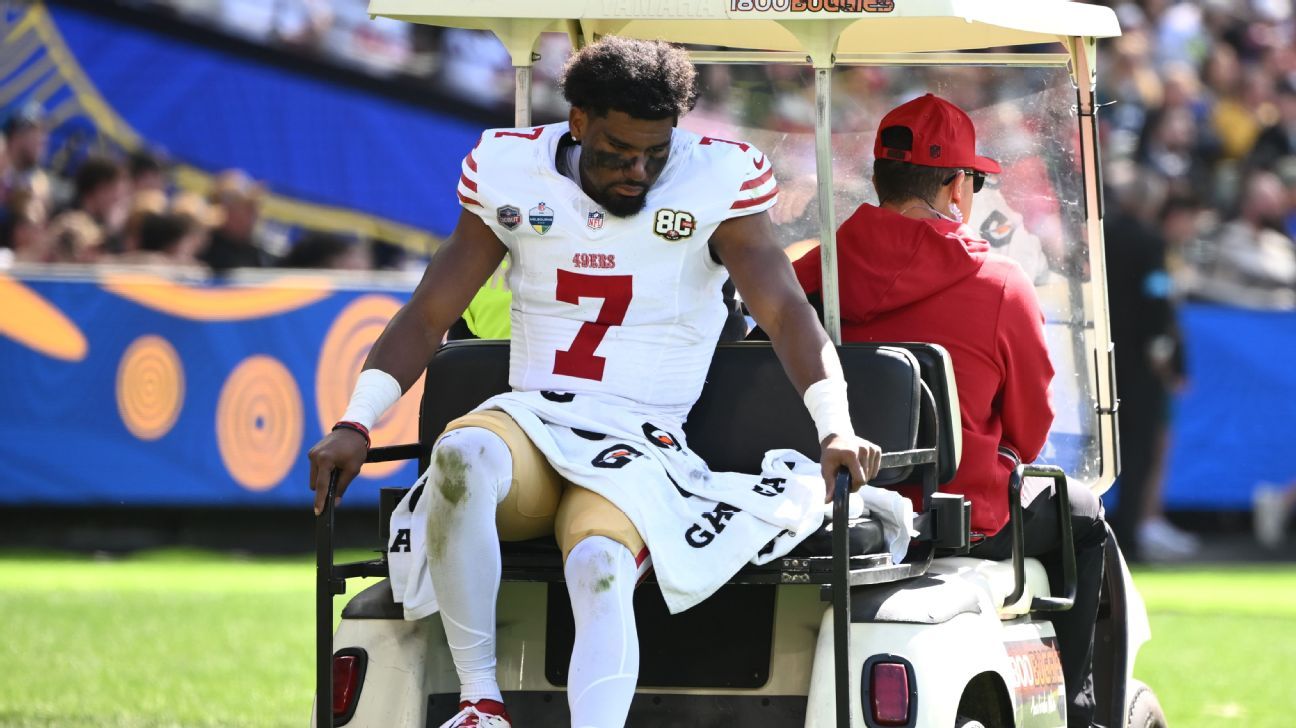
San Francisco 49ers receiver De'Zhaun Stribling has undergone ankle surgery and is projected to miss approximately 10 weeks, while tight end Jake Tonges has been ruled out for the remainder of the 2026 season, according to reporting by Nick Wagoner. The dual injury blows deliver a significant setback to San Francisco's offensive depth during the early stretch of the campaign, forcing head coach Kyle Shanahan and the front office to adjust roster personnel and game plans. Stribling’s surgical procedure puts his expected return around late November or early December, while Tonges’ season-ending designation requires a permanent replacement on the active roster or practice squad.
Key facts
What happened
On September 16, 2026, news broke regarding two major medical updates for the San Francisco 49ers. Wide receiver De'Zhaun Stribling underwent a surgical procedure to repair an ankle injury, placing his recovery timeline at approximately 10 weeks. Concurrently, tight end Jake Tonges was determined to be sidelined for the entirety of the 2026 regular season, ending his campaign prematurely.
The timing of Stribling’s surgery necessitates an extended rehabilitation program. An estimated 10-week recovery period would keep the wide receiver off the field through mid-to-late autumn, targeting a potential return toward the final quarter of the regular season. In professional football, ankle surgeries often require non-weight-bearing periods followed by progressive mobilization and conditioning before a player can resume full-contact practice.
At the same time, the loss of Tonges strips the tight end room of depth. Season-ending designations in the NFL typically involve severe structural damage, such as torn ligaments or major joint injuries, which require multi-month rehabilitation programs extending well into the following offseason. With Tonges ruled out for the year, San Francisco must open a permanent roster spot, while Stribling's long-term absence makes him a prime candidate for placement on injured reserve with a designation to return once his recovery progresses.
Why it matters
The double injury report creates immediate operational and tactical challenges for the 49ers. San Francisco’s offensive system under head coach Kyle Shanahan relies heavily on position versatility, pre-snap motion, and robust blocking from non-offensive linemen. Tight ends and wide receivers in this system are expected not only to execute precise route running, but also to engage in physical perimeter and inline blocking to set up the team's trademark wide-zone rushing scheme.
Losing Tonges for the season removes a vital depth piece in San Francisco's tight end rotation, which is headlined by All-Pro tight end George Kittle. Shanahan frequently utilizes "12 personnel" sets—configurations involving one running back, two tight ends, and two wide receivers—to create matchup advantages against opposing defensive packages. Without Tonges, the 49ers must rely more heavily on remaining backup tight ends or alter their formation tendencies by increasing three-receiver sets ("11 personnel").
Meanwhile, Stribling’s 10-week absence deprives the offense of receiver depth during a crucial 10-game stretch of the regular season schedule. From an administrative perspective, the team must navigate NFL roster rules governing Injured Reserve (IR). Under modern NFL regulations, teams may place players on IR, requiring a minimum four-game absence before they can return to active status. Each team is permitted a limited number of IR return designations per season—currently capped at eight during the regular season. Managing these return designations requires strategic foresight, ensuring that standard roster spots are preserved for healthy contributors while keeping open the option to reactivate high-priority returnees like Stribling later in the year.
The background
The 49ers’ offensive architecture has long been defined by its physical demands on skill-position players. Since Kyle Shanahan took over as head coach in 2017, San Francisco has built its identity on a multi-faceted ground attack combined with play-action passing concepts. This scheme requires tight ends and wide receivers to act as dual-threat contributors who absorb substantial physical contact on every snap, whether lead-blocking for running backs or making catches in traffic over the middle of the field.
Because of these unique system demands, depth at tight end and wide receiver has consistently been a key focus for San Francisco’s front office, led by general manager John Lynch. Backup tight ends in Shanahan's system play crucial roles in heavy run formations and special teams units. Losing depth at these positions during the season forces coaching staffs to either accelerate the development of young reserve players or seek short-term solutions on the free-agent market.
The evolution of NFL roster regulations has provided teams with greater flexibility when dealing with mid-season injuries compared to earlier eras. Prior to 2012, placing an NFL player on injured reserve automatically ended their season, regardless of the length of recovery. The league subsequently introduced injured reserve return designations, which have been expanded over time to allow up to eight regular-season returns per team. For an injury requiring a 10-week recovery timeline—such as Stribling’s ankle surgery—the return rules offer a structured path back to the active roster without burning a permanent spot on the 53-man squad during active game weeks.
Ankle injuries among NFL skill players carry variable recovery profiles based on the specific anatomical structures involved. Common surgical procedures for wide receivers include tightrope fixation for syndesmotic (high ankle) sprains, repair of lateral ligaments, or surgical hardware insertion for minor fractures. A 10-week rehabilitation period generally reflects surgical stabilization that allows 4 to 6 weeks of initial healing before sports-specific reconditioning begins.
Reaction
Following the injury updates reported by Nick Wagoner, attention turned to how San Francisco’s leadership and coaching staff will manage the personnel openings. Head coach Kyle Shanahan and general manager John Lynch typically address player health status during scheduled weekly press conferences, where they discuss administrative moves such as injured reserve placements and corresponding roster elevations.
Within the team, remaining members of the receiver and tight end groups will be expected to absorb additional practice snaps and game reps. In NFL locker rooms, mid-season roster adjustments routinely test team depth, placing elevated responsibilities on practice squad members and special teams contributors. Surrounding teams in the division and across the league will monitor San Francisco’s transaction activity to anticipate potential tactical shifts in their offensive personnel groupings in coming weeks.
What we don't know yet
Several specific details regarding both medical situations remain undisclosed in initial reports. For De'Zhaun Stribling, the precise diagnosis that necessitated ankle surgery—such as whether the procedure addressed a severe high ankle sprain, a fracture, or ligament repair—has not been publicly specified by the team. Understanding the exact nature of the surgery provides clearer insight into whether a 10-week timeline represents a strict minimum or a conservative estimate.
Regarding Jake Tonges, the specific injury or condition that resulted in his season-ending ruling has not been detailed in the primary report. Additionally, the 49ers have not yet formally announced the administrative transactions corresponding to these health updates, such as official placement on Injured Reserve or signing free agents to fill open roster slots.
What to watch
In the immediate future, key indicators will clarify how the 49ers adapt to these injuries. Readers and observers should monitor official NFL transaction logs for San Francisco's formal roster moves, including placement of Tonges on season-ending IR and potential IR placement for Stribling.
Another area to watch is San Francisco's workout schedule and practice squad transactions over the coming days. The front office may hold tryouts for free-agent tight ends and wide receivers to bolster practice depth. On the field, monitoring snap counts for backup tight ends and wide receivers during San Francisco's next scheduled regular-season game will reveal how Shanahan adjusts his personnel packages in response to the reduced availability. As Stribling progresses through his rehab, tracking milestones around weeks four through eight will indicate whether his return remains on schedule for late autumn.
This report is based on original news gathering reported by Nick Wagoner for ESPN.
How this story was produced
This report was written by The Global Wire newsroom from reporting first published by Nick Wagoner. We verify the core facts against the original report, write our own account, and add the background and consequences a short wire item leaves out. Drafting is AI-assisted inside an editor-supervised pipeline, and every story is checked for accuracy of attribution, structure and duplication before it appears — full detail in our AI and funding disclosure.
Spotted an error? Tell us at corrections@horizonglobalnews.com and read our corrections policy or editorial standards.
Reader comments
Loading comments…