

Woollahra Mayor Sarah Dixson Discloses Address Search of Pro-Housing Speaker
Mayor Sarah Dixson admitted looking up the home address of a public speaker at a Woollahra Council meeting, escalating tensions over Sydney housing policy.
By The Global Wire Newsroom · Reported from Cindy Yin
Link preview · horizonglobalnews.com
Woollahra Mayor Sarah Dixson Discloses Address Search of Pro-Housing Speaker
Mayor Sarah Dixson admitted looking up the home address of a public speaker at a Woollahra Council meeting, escalating tensions over Sydney housing policy.
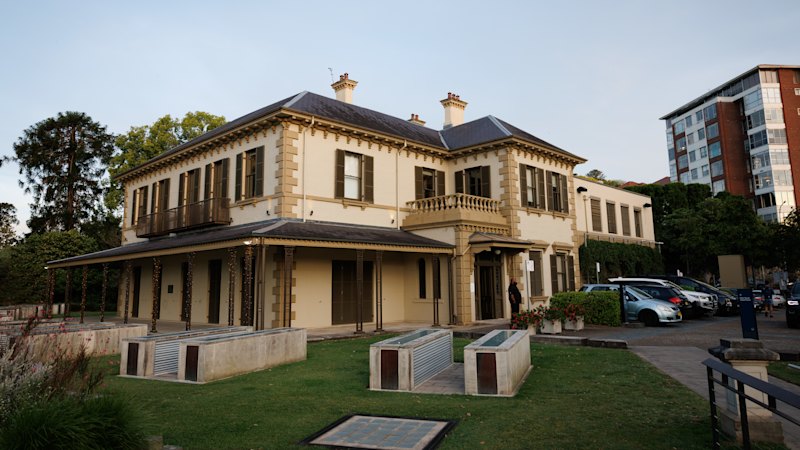
A marathon five-hour meeting of the Woollahra Municipal Council descended into personal confrontation after Mayor Sarah Dixson admitted to looking up the private residential address of a pro-housing advocate who had registered to address the chamber, according to reporting by journalist Cindy Yin. The disclosure, made during proceedings in Sydney’s eastern suburbs, highlighted escalating friction between local elected officials and housing advocates over urban planning policy and housing targets. The advocate had submitted a standard registration form required for members of the public seeking to speak during the council meeting, after which the mayor acknowledged researching where the individual lived.
Key facts
What happened
During a scheduled session of the Woollahra Municipal Council that extended over five hours, councillors convened to address municipal business, including local planning, budgetary matters, and community governance. As part of standard council meeting procedures, members of the public were permitted to submit registration forms to speak before the governing body on items listed on the meeting agenda.
A pro-housing advocate completed and submitted the required administrative paperwork to secure a speaking slot during the public access segment of the agenda. However, as deliberations unfolded, the session shifted from policy debate to personal conduct when Mayor Sarah Dixson admitted in the chamber that she had searched for the advocate’s private residential address following the submission of the speaker form, according to reporting by Cindy Yin.
The admission sparked immediate friction within the council chamber, turning the debate personal as attendees and council members confronted the implications of an elected leader looking up the residential details of a public speaker. The five-hour meeting highlighted growing tension over public participation protocols, housing density advocacy, and the boundaries of mayoral oversight during civic proceedings.
Why it matters
The admission by an elected mayor that she accessed or searched the personal address of a constituent or advocate who registered to speak at a council meeting raises significant questions regarding public participation, civic trust, and data protection in local government.
At the core of municipal democracy is the principle that residents and community advocates can petition their local representatives without concern over surveillance or targeted scrutiny of their living situations. Speaker registration forms in New South Wales municipal councils are gathered for administrative verification—ensuring speakers adhere to council standing orders, identifying relevant agenda items, and managing time allocations. When an elected official uses administrative submissions or personal lookup methods to vet a speaker's private address, it threatens to create a chilling effect on civic engagement, potentially deterring community members from addressing their local government.
Furthermore, the incident reflects the high stakes surrounding urban housing policy across metropolitan Sydney. The debate over housing density, heritage preservation, and residential development has increasingly pitted grassroots advocates against established local councils. When policy disputes spill over into personal address lookups by public officials, it undermines civil civic discourse and opens municipal authorities to statutory scrutiny regarding privacy compliance and elected official conduct.
The background
Woollahra Municipal Council, established in 1860, is located in the Eastern Suburbs of Sydney, New South Wales, approximately five kilometres east of the Sydney Central Business District. The local government area encompasses suburbs including Woollahra, Paddington, Bellevue Hill, Double Bay, Rose Bay, Vaucluse, and Point Piper. Geographically bounded by Sydney Harbour to the north and eastern coastal suburbs to the east, Woollahra is recognized as one of Australia’s most affluent local government areas, characterized by high property values, historic heritage conservation zones, and low-density residential neighborhoods.
In recent years, local councils across Greater Sydney—and Woollahra in particular—have become central arenas in the state's broader housing affordability debate. The New South Wales state government, led by Premier Chris Minns, introduced sweeping planning reforms aimed at expanding housing supply across metropolitan Sydney. These reforms include mandatory housing targets for local councils, transit-oriented development policies permitting medium-density housing near railway stations, and statutory overrides of municipal planning instruments that restrict multi-dwelling residential construction.
These state-level planning mandates have generated debate between local councils seeking to preserve existing neighborhood character and heritage protections, and pro-housing advocacy groups—often associated with the YIMBY ("Yes In My Back Yard") movement—who advocate for upzoning, planning deregulation, and expanded housing construction to improve housing access for younger residents and renters. Advocates routinely register to attend local council meetings across Sydney to speak in favor of proposed housing developments and policy changes.
Under the Local Government Act 1993 (NSW), municipal councils operate under statutory governance rules. Public participation at council meetings is governed by individual council Codes of Meeting Practice, which typically require speakers to register in advance and provide contact details, including residential addresses, for administrative validation.
Additionally, elected councillors and council staff in New South Wales are bound by the Model Code of Conduct for Local Councils in NSW, administered by the Office of Local Government. The code requires council officials to act with integrity, treat members of the public with respect, and avoid using council resources or personal information for unauthorized purposes. Privacy management by public entities in New South Wales is further governed by the Privacy and Personal Information Protection Act 1998 (NSW), which establishes Information Protection Principles governing the collection, use, and disclosure of personal data by public authorities.
Reaction
While full formal statements from all participating councillors following the five-hour session were not detailed in the initial report by Cindy Yin, events of this nature routinely prompt formal responses across municipal and state regulatory frameworks in New South Wales.
Community members and public advocacy groups attending municipal meetings maintain an expectation of transparency regarding how personal data submitted on administrative forms is handled by council staff and elected representatives. Public admissions regarding address lookups frequently prompt calls for formal code of conduct reviews or external oversight intervention.
In New South Wales, complaints regarding potential breaches of conduct by elected officials are handled through structured legal and administrative channels. Reports of misconduct can be submitted to the council's General Manager or directly to the Office of Local Government (OLG), an agency within the NSW Department of Planning, Housing and Infrastructure. The OLG possesses statutory authority to investigate councillor behavior, order independent inquiries, or impose disciplinary sanctions on elected officials who violate conduct standards. Additionally, concerns regarding the handling of personal information fall under the purview of the Information and Privacy Commission NSW (IPC), which monitors compliance with state privacy statutes.
What we don't know yet
Several operational and legal aspects of the incident remain unconfirmed based on available reporting:
These details will determine whether the action is classified as an administrative oversight, a breach of statutory privacy standards, or a violation of local government conduct codes.
What to watch
This report is based on original reporting published by journalist Cindy Yin on October 1, 2026.
How this story was produced
This report was written by The Global Wire newsroom from reporting first published by Cindy Yin. We verify the core facts against the original report, write our own account, and add the background and consequences a short wire item leaves out. Drafting is AI-assisted inside an editor-supervised pipeline, and every story is checked for accuracy of attribution, structure and duplication before it appears — full detail in our AI and funding disclosure.
Spotted an error? Tell us at corrections@horizonglobalnews.com and read our corrections policy or editorial standards.



Reader comments
Loading comments…