

Sen. John Kennedy Condemns Iranian Naval Tactics in Senate Floor Address
U.S. Sen. John Kennedy criticized Iranian naval forces during a Senate floor speech, mocking the regime's fast-attack craft in strategic waterways and recalling past U.S. military action.
By The Global Wire Newsroom · Reported from ET Online
Link preview · horizonglobalnews.com
Sen. John Kennedy Condemns Iranian Naval Tactics in Senate Floor Address
U.S. Sen. John Kennedy criticized Iranian naval forces during a Senate floor speech, mocking the regime's fast-attack craft in strategic waterways and recalling past U.S. military action.
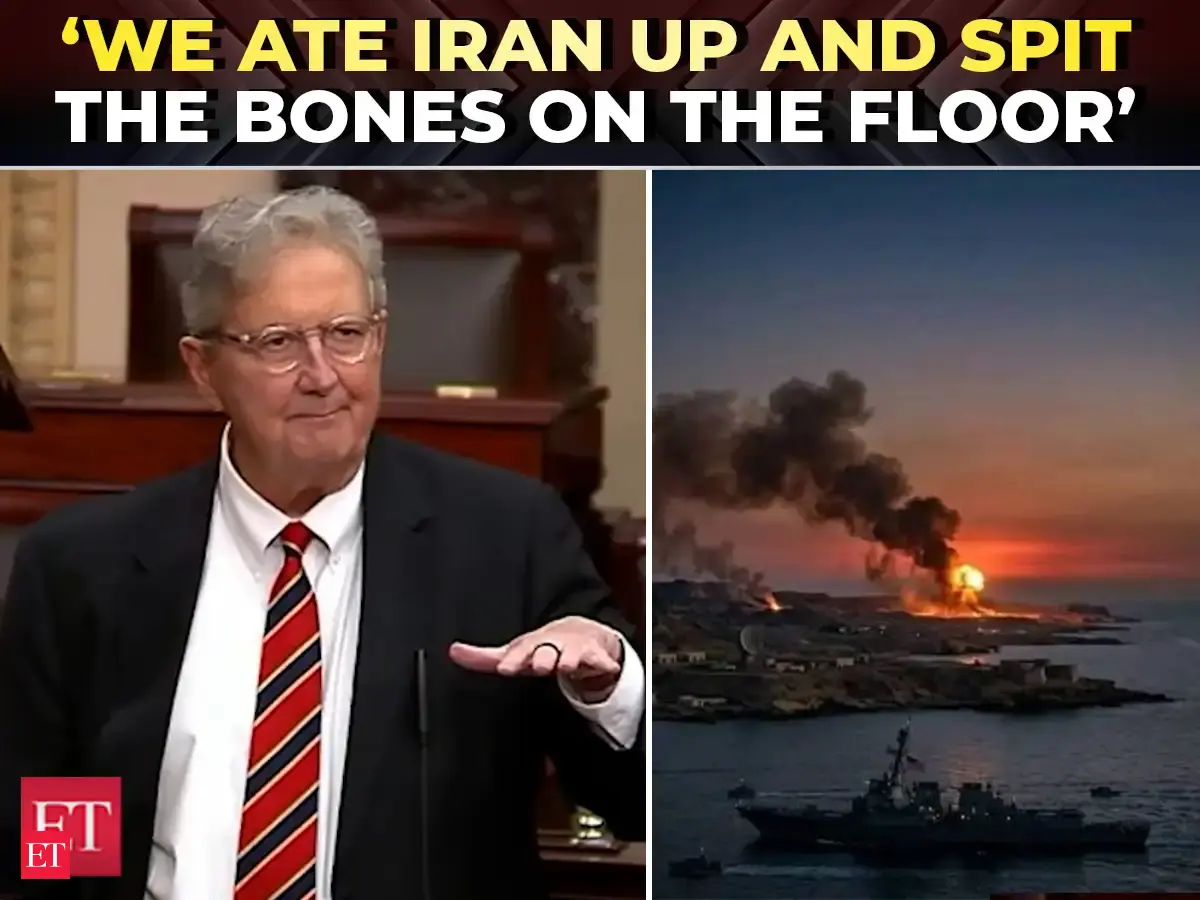
U.S. Sen. John Kennedy delivered a pointed address on the Senate floor in Washington, D.C., launching a sharp verbal attack on Iran's military leadership and mocking the capabilities of the Iranian navy in strategic Middle Eastern shipping lanes. Speaking during legislative proceedings, the Louisiana Republican targeted Tehran's armed forces, specifically ridiculing Iran's use of small, fast-attack boats operating in the Strait of Hormuz and surrounding waters. Kennedy warned Iranian officials by recalling past instances of direct U.S. military action against the regime's military assets, framing his remarks around American naval dominance and military readiness in the region, according to coverage published by ET Online on September 30, 2026.
Key facts
What happened
During a session of the U.S. Senate, Sen. John Kennedy took to the floor to deliver a scathing critique aimed directly at the government of Iran, its military apparatus, and its naval command. In his address, Kennedy used colorful and aggressive language to dismiss the operational strength of Iranian naval vessels patrolling the Persian Gulf and the Strait of Hormuz.
Highlighting what he described as a severe asymmetry in military power between the United States and Iran, Kennedy singled out Iran's deployment of small, high-speed patrol craft. He mockingly told the chamber that Iranian forces rely on "little weenie boats" that "run around" the strait, attempting to project strength despite what he characterized as their fundamental vulnerability against U.S. naval forces.
Beyond ridiculing Iran's maritime tactics, Kennedy invoked history to reinforce his warning to Tehran. He reminded the Senate and foreign observers of past military confrontations in which the U.S. armed forces engaged and destroyed Iranian military targets. Kennedy argued that Iranian leadership should remember the consequences of previous direct clashes with American forces before engaging in further escalation or harassment of international shipping. The floor speech served as a public venue for Kennedy to articulate a hawkish posture, warning Tehran against underestimating U.S. military resolve or capabilities in strategic waterways, as detailed in reporting by ET Online.
Why it matters
Sen. Kennedy's remarks reflect a broader, persistent debate within the U.S. Congress regarding American military posture in the Middle East and the enforcement of freedom of navigation in international waters. While individual floor speeches do not alter executive military doctrine on their own, high-profile rhetorical broadsides from senior lawmakers signal the legislative atmosphere surrounding defense authorizations, foreign military funding, and potential sanction regimes targeting Tehran.
The focus on Iran's naval tactics touches upon a central vulnerability in global energy security. The Strait of Hormuz, located between Oman and Iran, connects the Persian Gulf with the Gulf of Oman and the Arabian Sea. It serves as the single most vital oil transit choke point in the world, through which approximately 20 percent of global petroleum liquids pass daily. Any disruption or perceived threat to commercial shipping in this narrow waterway immediately reverberates across global energy markets, driving up maritime insurance premiums, shipping freight costs, and global crude oil prices.
Furthermore, Kennedy's comments highlight the ongoing military friction between the U.S. Navy and the Islamic Revolutionary Guard Corps Navy (IRGCN). The IRGCN has long employed asymmetric naval strategies, utilizing swarms of small, armed fast-inshore attack craft to monitor, harass, or intercept commercial and foreign naval vessels. Congressional rhetoric demanding aggressive counter-tactics can influence legislative oversight of U.S. Central Command (CENTCOM) operational rules of engagement and shape the debate over U.S. naval force structure in the Fifth Fleet's area of responsibility.
The background
The tension between American naval forces and Iranian military craft in the Persian Gulf and Strait of Hormuz spans several decades, rooted in asymmetric naval tactics developed by Tehran following the 1979 Iranian Revolution.
Rather than attempting to build a conventional blue-water navy capable of matching the tonnage and firepower of a U.S. Navy carrier strike group, Iran established a dual naval structure. While the regular Islamic Republic of Iran Navy operates traditional frigates and submarines, the Islamic Revolutionary Guard Corps Navy (IRGCN) was tasked with asymmetric coastal defense. The IRGCN developed a doctrine based on swarm tactics, employing hundreds of small, fast-attack craft armed with anti-ship cruise missiles, unguided rockets, torpedoes, and naval mines. These high-speed boats operate out of hidden coastal bases and islands along the Persian Gulf, designed to overwhelm larger warships in confined shallow waters.
The most notable direct naval confrontation between the two nations occurred on April 18, 1988, during Operation Praying Mantis. Conducted by the U.S. Navy during the Iran-Iraq War's "Tanker War" phase, the operation was launched after the guided-missile frigate USS Samuel B. Roberts struck an Iranian sea mine in international waters, suffering severe damage. In response, U.S. forces launched a single-day major naval air attack against Iranian naval vessels and oil platforms used as command posts. By the end of the operation, U.S. forces had sunk or damaged multiple Iranian warships, including the frigate Sahand, a gunboat, and several fast-attack speedboats, inflicting the largest single-day surface action loss on Iran's navy since World War II.
In the decades since, the U.S. Navy's Fifth Fleet, headquartered in Manama, Bahrain, has maintained a constant presence in the Persian Gulf to guarantee open sea lanes. Periodic encounters between U.S. destroyers and IRGCN speedboats—often involving close-range intercepts, high-speed maneuvers, and laser illumination—have repeatedly drawn warnings from American military commanders and key lawmakers in Washington.
Reaction
Following the address, coverage of Kennedy's remarks by ET Online amplified the senator's floor statement to a public audience. On Capitol Hill, Senate floor speeches of this nature routinely reflect division and consensus within congressional foreign policy circles. Hawkish lawmakers frequently align with Kennedy's rhetoric, advocating for firm military deterrence and expanded sanctions against Tehran, while opposing foreign policy stances favor diplomatic channels and warn that inflammatory rhetoric risks accidental military escalation.
Official responses from the executive branch and foreign governments were not immediately detailed in the primary report. However, established diplomatic protocol suggests that statements mocking foreign military forces typically elicit sharp counter-statements from Iranian state media outlets, such as the Islamic Republic News Agency (IRNA) or Fars News Agency. Iranian defense officials frequently dismiss foreign congressional statements as political posturing, while reiterating Tehran's claim of sovereign jurisdiction over the Strait of Hormuz and demanding the withdrawal of Western naval forces from the Persian Gulf.
What we don't know yet
Several key elements surrounding the context and immediate aftermath of Sen. Kennedy's speech remain unconfirmed by current reporting. It is not currently clear whether Kennedy's floor address was triggered by a specific, recent tactical encounter between U.S. warships and IRGCN fast-attack craft in the Strait of Hormuz, or if the speech was delivered as part of general legislative debate on national security strategy.
Additionally, the reporting does not indicate whether Kennedy introduced or co-sponsored specific legislative measures alongside his floor remarks, such as new sanction legislation targeting Iran's military supply chains, amendments to the pending National Defense Authorization Act (NDAA), or a formal congressional resolution regarding rules of engagement in the Persian Gulf.
Finally, it remains unknown how executive branch officials, including commanders at U.S. Central Command or officials within the State Department, assess the impact of such floor rhetoric on ongoing security operations and regional diplomatic messaging in the Middle East.
What to watch
Moving forward, observers of U.S.-Iran relations and maritime security should monitor several key development points:
This news report is based on original reporting published by ET Online.
How this story was produced
This report was written by The Global Wire newsroom from reporting first published by ET Online. We verify the core facts against the original report, write our own account, and add the background and consequences a short wire item leaves out. Drafting is AI-assisted inside an editor-supervised pipeline, and every story is checked for accuracy of attribution, structure and duplication before it appears — full detail in our AI and funding disclosure.
Spotted an error? Tell us at corrections@horizonglobalnews.com and read our corrections policy or editorial standards.





Reader comments
Loading comments…