

Will Young Targets 2027 World Cup Spot Amid Shifting New Zealand Top Order
New Zealand batter Will Young is focusing on personal execution rather than squad rivalries as the Black Caps navigate a generational transition ahead of the 2027 ODI World Cup.
By The Global Wire Newsroom · Reported from Karthik Krishnaswamy
Link preview · horizonglobalnews.com
Will Young Targets 2027 World Cup Spot Amid Shifting New Zealand Top Order
New Zealand batter Will Young is focusing on personal execution rather than squad rivalries as the Black Caps navigate a generational transition ahead of the 2027 ODI World Cup.
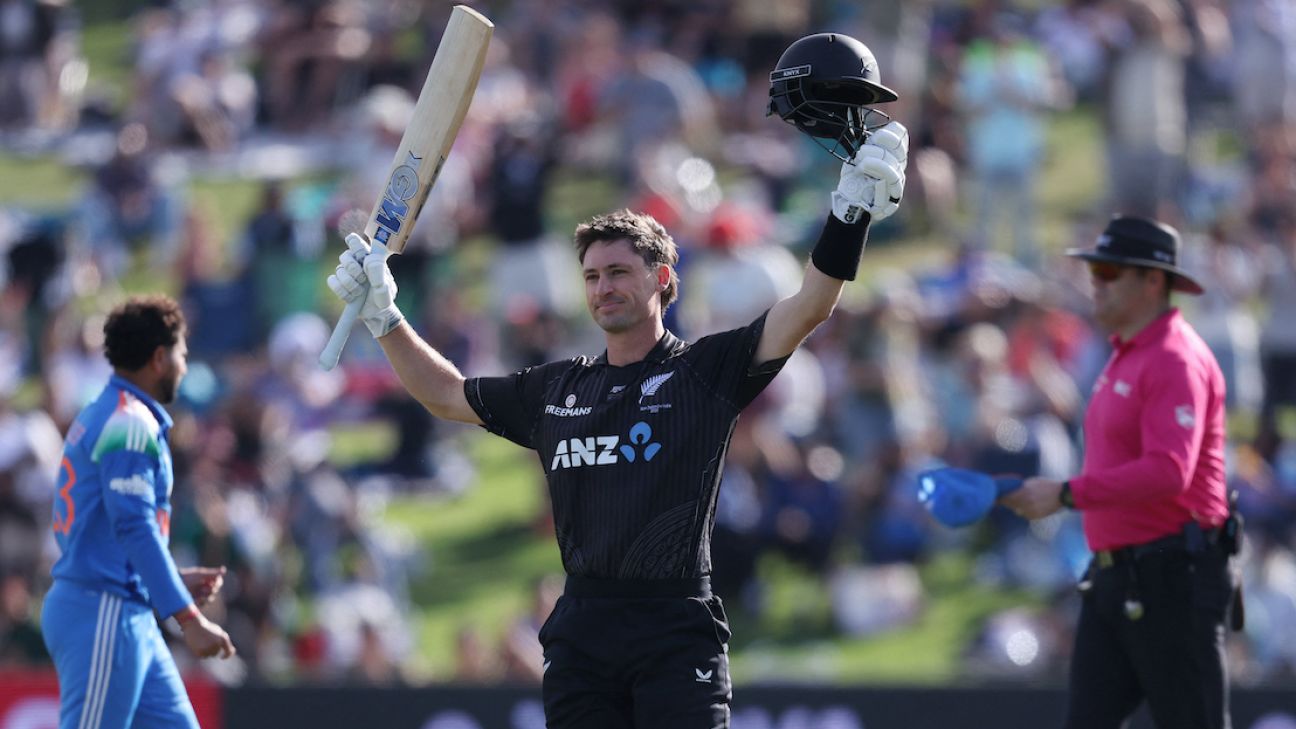
WELLINGTON — New Zealand top-order batter Will Young has articulated his ambition to secure a place in the Black Caps squad for the 2027 ICC Men's Cricket World Cup, framing his preparation around consistent output rather than anxiety over selection competition. Despite standing as New Zealand's most frequently deployed top-three batter across One-Day Internationals since his international debut in the format, Young faces a complex selection environment as national selectors balance veteran mainstays with emerging white-ball talent across the four-year cycle leading to the tournament in southern Africa.
Key facts
What happened
Speaking on his international trajectory and the path toward the 2027 tournament, Young outlined a measured outlook on the unpredictable nature of top-level selection. According to reporting by Karthik Krishnaswamy, Young acknowledged that while there is no current certainty surrounding the final makeup of New Zealand's 15-man contingent for the global event, his objective remains focused on putting his best foot forward with every international opportunity.
Young noted specifically that he refuses to spend his international career looking over his shoulder at other contenders vying for identical roles. Over the course of his ODI tenure, the right-hander has frequently served as New Zealand's primary top-order buffer, slotting in at opening positions or at number three depending on the fitness and availability of marquee teammates. Even as rotation, workload management, and franchise league commitments have pulled senior players in and out of bilateral series, Young has accumulated the highest number of appearances within the top three batting slots for New Zealand since his format debut, giving him a considerable body of work on which to construct his claim.
Rather than assuming an established status guarantees future tournament inclusion, Young framed each bilateral bilateral assignment as a discrete opportunity to cement his value. The dynamic reflects the reality of international white-ball cricket, where form, conditions in host nations, and tactical shifts often redefine a team sheet within months of a major ICC event.
Why it matters
Young's candid assessment highlights the operational realities facing second-generation international cricketers inside New Zealand's system. For much of the past decade, New Zealand's top-order structure was anchored by generational players whose positions were rarely challenged during bilateral windows. As that era gradually recedes, the national team must construct a functional bridge toward the 2027 tournament without suffering the sharp drop in competitive output that has historically afflicted smaller cricketing boards during generational turnovers.
The battle for top-three ODI slots carries significant implications for team composition, tactical tempo, and squad equilibrium. In contemporary 50-over cricket, the top three positions dictate the entire pacing of an innings. Teams increasingly demand top-order batters who can simultaneously anchor the innings against the new ball and maintain elevated strike rates to exploit initial powerplay restrictions. Young has offered stability and classical technique, but New Zealand's team management must evaluate whether his statistical return provides the optimal foundation when weighed against more explosive alternatives.
Furthermore, the long lead-up to the 2027 event in South Africa, Zimbabwe, and Namibia presents specific geographical challenges. Pitches across southern Africa generally reward batters capable of negotiating pace, steep bounce, and lateral movement under morning or day-night conditions. Establishing a settled top order well ahead of 2027 is critical for head coach Gary Stead and the selection panel, as late changes before previous tournaments have often created middle-order instability. Young's position in this ecosystem makes his output a crucial barometer for New Zealand's overall tournament readiness.
The background
Will Young made his ODI debut for New Zealand in March 2021 against Bangladesh at Dunedin, having already broken into the Test match arena the previous summer against the West Indies. Over the subsequent years, New Zealand's ODI setup underwent significant structural stress. Long-time opening staples like Martin Guptill transitioned away from international cricket, while senior figures such as Kane Williamson and Devon Conway managed complex schedules divided between international duties, physical rehabilitation, and overseas franchise Twenty20 leagues.
During this window, Young developed a reputation as a dependable top-order solution. Whether deployed as a specialist opener or asked to fulfill the pivotal number three mantle during Williamson's intermittent absences with elbow and knee injuries, Young provided technical solidity. Central Districts cricket nurtured Young as an organized, classical stroke-maker, and his domestic pedigree translated into reliable performances across varying conditions. He was named in New Zealand's squad for the 2023 ICC Men's Cricket World Cup in India, where he featured in multiple matches during the group phase.
However, the emergence of younger, multi-format players has continually tightened competition within the Black Caps dressing room. Rachin Ravindra's breakout performance during the 2023 World Cup established him as a premier all-format batting option, while aggressive ball-strikers such as Finn Allen have presented selectors with contrasting tactical possibilities for the opening berths. Additionally, New Zealand Cricket's flexible contract policies—which have seen premier players opt out of standard central agreements to pursue global franchise deals—have produced continuous turnover in bilateral squads, complicating long-term combination building.
The 2027 World Cup will mark a significant milestone in ICC history, returning to southern Africa for the first time since 2003. With 14 teams competing under a revised tournament format that reinstates the Super Six stage, squad depth and adaptability across different venues from Johannesburg to Harare will determine success. New Zealand has reached the semi-final stage or better in every ODI World Cup held since 2015, establishing a benchmark of tournament consistency that exerts immense pressure on any player stepping into the lineup.
Reaction
While New Zealand team management and national selectors have not issued formal responses directly targeting Young's comments, his statements align closely with the cultural ethos promoted under Gary Stead and team leadership. The Black Caps have long emphasized internal role clarity and collective purpose over individual selection anxiety, urging players to focus exclusively on controllable variables.
Within the broader cricket community, analysts frequently identify Young as one of the most technically accomplished unheralded batters in the international game. His capacity to perform without guaranteed continuity has drawn respect from peers and domestic observers, particularly given the historical difficulty of shuttling between backup status and primary responsibilities. As New Zealand's international calendar proceeds through upcoming bilateral cycles, national selectors will face public scrutiny regarding whether they reward Young's accumulated volume of appearances with guaranteed tournament berths, or whether they prioritize rotational experimentation.
What we don't know yet
Several critical variables remain unresolved regarding New Zealand's path toward the 2027 tournament. The reporting does not specify whether national selectors have outlined an explicit role hierarchy for Young over the next two years, nor is it clear where the panel views his long-term positional ceiling—whether as a specialist opener, a permanent number three, or a versatile reserve covering multiple spots.
The future international availability of New Zealand's senior contingent also remains an open question. It is not yet established whether veterans like Kane Williamson intend to contest the 2027 tournament in southern Africa, or how many bilateral series they will participate in before the competition begins. If veteran availability remains intermittent, Young's role as the workhorse of the top order during bilateral tours could either solidify his automatic World Cup qualification or leave him exposed to being displaced when senior stars return for the ICC showpiece event.
What to watch
The trajectory of New Zealand's top order will be decided across upcoming ICC Future Tours Programme fixtures and domestic campaigns over the 2026-2027 period. Observers will be watching how selectors configure the top three in upcoming home and away bilateral ODI series, particularly against high-caliber bowling attacks where technical discipline is tested.
Key metrics to follow include Young's scoring rate in the opening ten overs, his conversion rate from half-centuries into match-winning centuries, and how frequently he is chosen when a full-strength squad is available. Decisions regarding annual central contracts announced by New Zealand Cricket each winter will also provide tangible indicators of where Young sits in the institutional hierarchy. The scheduling of multi-match ODI series in subcontinent and southern hemisphere conditions will serve as the primary proving ground for whether Young's non-defensive mindset translates into definitive tournament selection.
This account is based on original reporting published by Karthik Krishnaswamy.
How this story was produced
This report was written by The Global Wire newsroom from reporting first published by Karthik Krishnaswamy. We verify the core facts against the original report, write our own account, and add the background and consequences a short wire item leaves out. Drafting is AI-assisted inside an editor-supervised pipeline, and every story is checked for accuracy of attribution, structure and duplication before it appears — full detail in our AI and funding disclosure.
Spotted an error? Tell us at corrections@horizonglobalnews.com and read our corrections policy or editorial standards.



Reader comments
Loading comments…