

Chinese Automakers Surpass Japanese Rivals in Import Share Across 14 More Nations
Major markets including Germany, Italy, Brazil, and South Korea have seen Chinese vehicle imports overtake Japanese competitors this year.
By The Global Wire Newsroom · Reported from Xinyi Wu
Link preview · horizonglobalnews.com
Chinese Automakers Surpass Japanese Rivals in Import Share Across 14 More Nations
Major markets including Germany, Italy, Brazil, and South Korea have seen Chinese vehicle imports overtake Japanese competitors this year.
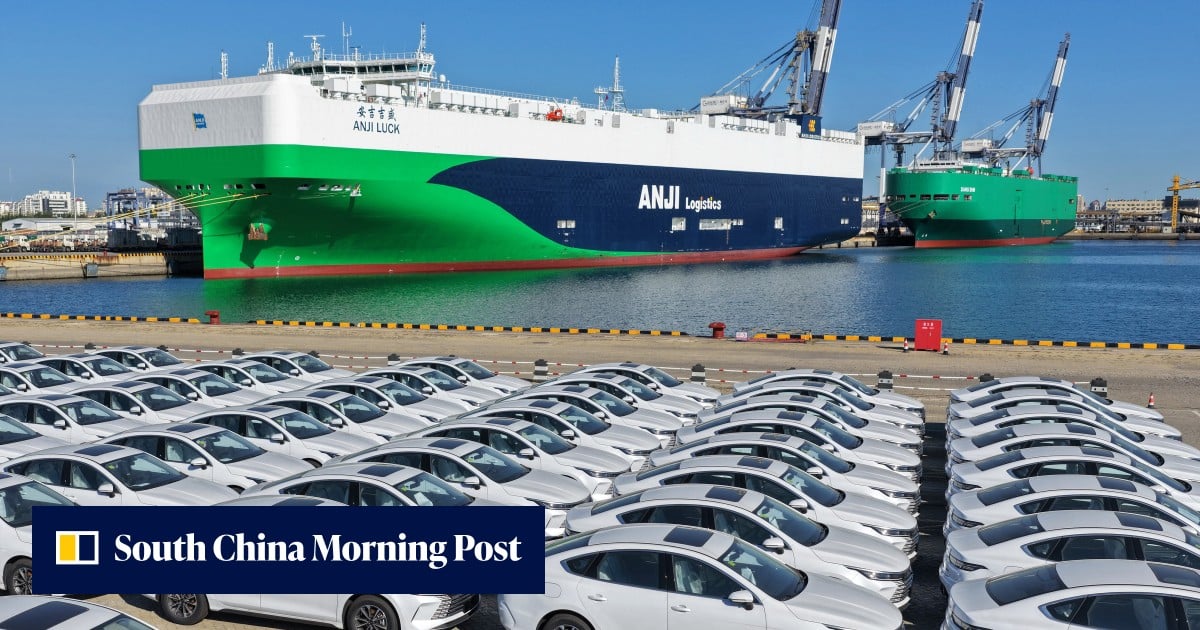
Chinese automobile manufacturers have overtaken their Japanese competitors in vehicle import market share across 14 additional countries this year, according to reporting by industry correspondent Xinyi Wu. The shift expands the total number of international jurisdictions where Chinese automotive brands hold a larger share of foreign vehicle deliveries than Japanese brands to 39. Among the economies crossing that threshold this year are major industrial nations and traditional automotive strongholds, including Germany, Italy, Brazil, and South Korea, marking a significant milestone in the rapid restructuring of the global automotive trade.
Key facts
What happened
According to trade data highlighted in reporting by Xinyi Wu, automotive shipments originating from Chinese brands outpaced those from Japanese manufacturers across 14 previously Japanese-led import sectors over the course of the year. This transition elevated the global tally of markets where Chinese brands maintain an import advantage over Japanese peers from 25 to 39.
Most notable in the latest wave of market shifts is the inclusion of four prominent industrial economies. In Europe, both Germany and Italy—long regarded as two of the world's most mature and brand-loyal vehicle markets—recorded higher import shares for Chinese vehicle marques than for Japanese nameplates. In South America, Brazil, which represents the continent’s largest single automotive market by both volume and production capacity, similarly saw Chinese imports push past Japanese counterparts. In East Asia, South Korea, home to major global automakers Hyundai Motor Group and Kia, joined the ranks of countries where Chinese-built imported vehicles outnumber those arriving from Japan.
While the metric focuses specifically on imported vehicles rather than overall vehicle registrations—which in countries like Germany, South Korea, and Italy remain heavily dominated by domestic manufacturers—the flip demonstrates the speed with which Chinese distribution networks and customer acceptance have grown abroad.
Why it matters
For more than four decades, Japanese automakers such as Toyota Motor Corporation, Honda Motor Company, and Nissan Motor Company served as the benchmark for foreign vehicle reliability, affordability, and market penetration worldwide. The erosion of that primacy across 39 national territories signals a fundamental structural realignment in global manufacturing and consumer demand.
For consumers in the affected markets, the rise of Chinese imports introduces intense price competition, particularly in electrified vehicle segments where Chinese manufacturers benefit from comprehensive vertical integration. Companies such as BYD, SAIC Motor, Geely Automobile Holdings, and Chery Automobile have expanded foreign catalog offerings with high levels of digital and battery technology at pricing points that traditional Asian and Western legacy brands have struggled to match.
For policymakers and legacy automakers, the milestone accelerates trade frictions. In markets with substantial domestic manufacturing bases, such as Germany and Italy, the surge in foreign supply has intensified debates over industrial policy, local employment, and tariff protections. In emerging manufacturing hubs like Brazil, foreign import surges have already triggered regulatory responses, including phased increases in external tariffs to protect domestic assembly investments. For Japanese manufacturers specifically, losing import share in key secondary and tertiary export destinations threatens export revenues that historically balanced cyclical downturns in their domestic market.
The background
China’s trajectory from a net importer of passenger cars to the world’s leading vehicle exporter has unfolded at an unprecedented pace over the past decade. Following extensive state-backed industrial policies initiated in the early 2010s under the "New Energy Vehicle" (NEV) national strategy, Beijing cultivated an end-to-end supply chain spanning lithium refining, cathode production, battery manufacturing, and software integration. Companies like Contemporary Amperex Technology Co. Limited (CATL) and BYD emerged as global battery leaders, providing Chinese vehicle assemblers with structural cost advantages over international competitors.
By 2021, China’s outbound automobile shipments began a steep climb, driven initially by deliveries to developing regions in Southeast Asia, the Middle East, and Latin America, alongside shipments to Russia following the withdrawal of Western and Japanese automakers after the 2022 invasion of Ukraine. In 2023, customs data confirmed that China had officially surpassed Japan as the world's single largest exporter of motor vehicles by volume, shipping more than 5.2 million units abroad.
Japan’s automotive industry, by contrast, achieved its export dominance during the 1970s and 1980s by perfecting efficient internal combustion engines and lean manufacturing. While Japanese brands pioneered hybrid-electric drivetrains—epitomized by the global commercial success of the Toyota Prius—executives at major Japanese automakers long took a cautious, multi-pathway approach toward full battery-electric vehicles (BEVs). That deliberate pacing left Japanese product lines exposed in foreign markets where consumer demand, regulatory incentives, or urban fleet mandates pivoted rapidly toward pure electric and plug-in hybrid options, creating a window that Chinese exporters moved quickly to exploit.
In markets like Brazil, Chinese automakers capitalized on growing interest in hybrid and electric mobility by delivering affordable compact SUVs and urban hatchbacks. In South Korea, Chinese commercial vehicles and budget electric models found footholds in commercial transport and city logistics. In Europe, brands like SAIC’s MG and Geely’s various subsidiaries utilized established local distribution networks to gain rapid consumer visibility.
Reaction
Industry groups and governmental bodies in the affected jurisdictions have closely monitored the shifting trade balance. While Japanese trade officials and the Japan Automobile Manufacturers Association (JAMA) did not immediately issue public statements regarding the latest 14-market tally, Japanese automotive executives have repeatedly acknowledged rising competitive pressure in recent quarterly earnings disclosures, pointing to fierce price wars initiated by Chinese competitors across export destinations.
In the European Union, the presence of growing Chinese imports has already prompted formal trade interventions. The European Commission enacted definitive countervailing tariffs on Chinese-built battery electric vehicles in late 2024 following an anti-subsidy investigation, an initiative that divided member states: Germany, concerned about reciprocal penalties on its luxury marques operating in China, opposed the measures, while nations including Italy supported measures to shield regional manufacturing ecosystems.
In Latin America, the Brazilian government responded to the influx of electrified vehicles by initiating a phased restoration of import taxes on hybrid and electric cars, designed to compel foreign marques to transition from pure shipping models to domestic factory investments.
What we don't know yet
While the reporting confirms that Chinese brands have surpassed Japanese rivals in import market share across 39 total countries, several critical granular details remain unclarified in the available data. The exact proportion of internal combustion engines versus battery-electric and plug-in hybrid powertrains within these Chinese import tallies is not detailed, leaving it uncertain whether the gains are exclusively concentrated in electric models or reflect broader gains in conventional gasoline vehicles.
Furthermore, the data does not specify the precise calendar range of the reporting period or whether the import share calculation is measured strictly by unit volume or by customs monetary valuation. A volume-based lead can sometimes overstate market impact if imports consist predominantly of lower-cost fleet vehicles rather than higher-margin consumer passenger cars. Finally, it remains unclear how many of the 14 newly flipped markets represent permanent structural shifts versus temporary fluctuations caused by shipping logistics, inventory stockpiling ahead of anticipated tariff increases, or localized currency swings.
What to watch
In the coming months, attention will center on full-year bilateral trade releases from customs agencies in Berlin, Rome, Brasília, and Seoul to measure the exact margin of China’s lead over Japan in each jurisdiction. Observers will also track whether higher regulatory barriers—such as the European Union’s countervailing duties and Brazil’s escalating import tariff schedule—curb import momentum or merely accelerate Chinese direct investment into local assembly plants.
Both BYD and Great Wall Motor have committed substantial capital toward establishing vehicle manufacturing facilities inside Brazil, while Chinese automotive groups are actively negotiating manufacturing sites across Europe. If Chinese brands transition from direct vehicle imports to domestic manufacturing within these target markets, their import figures could ironically decline even as their total domestic sales and market footprint expand significantly. Market watchers will also look to Japanese automakers' strategic roadmaps over the 2025–2027 cycle to assess whether accelerated rollouts of next-generation electric and hybrid platforms can stabilize their overseas market positions.
This article includes reporting originally published by Xinyi Wu.
How this story was produced
This report was written by The Global Wire newsroom from reporting first published by Xinyi Wu. We verify the core facts against the original report, write our own account, and add the background and consequences a short wire item leaves out. Drafting is AI-assisted inside an editor-supervised pipeline, and every story is checked for accuracy of attribution, structure and duplication before it appears — full detail in our AI and funding disclosure.
Spotted an error? Tell us at corrections@horizonglobalnews.com and read our corrections policy or editorial standards.






Reader comments
Loading comments…