

Verstappen Captures Third Las Vegas Grand Prix Victory in Four Years After 35 Lead Changes
Max Verstappen overcame constant pressure and record-challenging overtakes on the Strip Circuit to claim his third win in four editions of Formula 1's Las Vegas showcase.
By The Global Wire Newsroom · Reported from Associated Press
Link preview · horizonglobalnews.com
Verstappen Captures Third Las Vegas Grand Prix Victory in Four Years After 35 Lead Changes
Max Verstappen overcame constant pressure and record-challenging overtakes on the Strip Circuit to claim his third win in four editions of Formula 1's Las Vegas showcase.
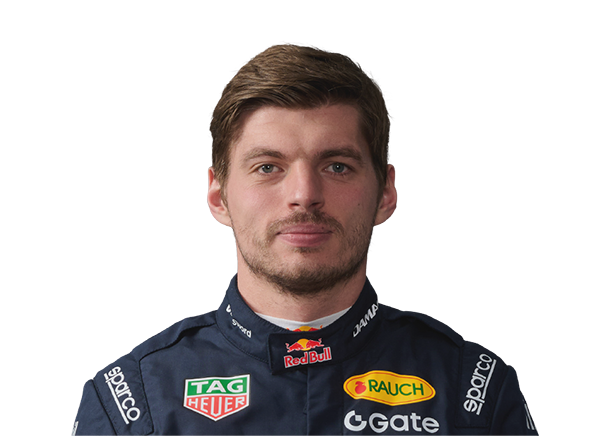
LAS VEGAS — Red Bull Racing driver Max Verstappen captured victory at the Las Vegas Grand Prix on Saturday night, prevailing in an unusually turbulent contest that recorded 35 lead changes over the course of the evening street race. The result marked Verstappen's third win in four editions of the modern Las Vegas event, cementing his command of the high-speed Strip Circuit amid fierce tactical challenges from rival constructors.
Key facts
What happened
Under the lights of the Las Vegas Strip, the Grand Prix unfolded as one of the most volatile races of the modern regulatory era. According to reporting by the Associated Press, the lead rotated an astonishing 35 times across the event, as front-running teams utilized alternating aerodynamic advantages and pit stops to swap positions lap after lap.
From the start of the night session, the layout encouraged constant tactical overtakes. Drivers running in second and third places repeatedly utilized the substantial slipstream generated on the 1.9-kilometer flat-out blast down Las Vegas Boulevard. Max Verstappen, who has built his career on sharp racecraft and defensive positioning, repeatedly relinquished and reclaimed track position as tire conservation and drag reduction system (DRS) towing dictated the front of the field.
Rather than settling into a structured procession, the race transformed into an extended cat-and-mouse duel between Verstappen and his closest competitors. Each time a challenger swept past into the braking zone at Turn 14, Verstappen counter-punched, frequently leveraging superior exit traction out of the slower complexes or undercutting his rivals through well-timed visits to the pit lane. As the laps wound down and tire degradation began to stabilize the order, Verstappen made his decisive pass, fending off late-race attacks to cross the finish line first and lock down his third victory in the desert circuit's four-year history.
Why it matters
A Formula 1 race with 35 lead changes represents an extraordinary statistical outlier in a motorsport that has historically struggled with passing frequency. For decades, the sport has fought against "dirty air"—the turbulent aerodynamic wake shed by high-downforce single-seaters that prevents trailing cars from following closely through corners. While street circuits like Monaco and Singapore often feature single-digit overtakes and minimal lead swaps, the high-speed configuration in Las Vegas, combined with extensive DRS zones, delivered an aggressive, slipstream-heavy dynamic more reminiscent of historic drafting battles.
For Verstappen, claiming a third win in four years at this specific venue underscores his adaptability on low-grip, low-temperature street layouts. Modern ground-effect cars require delicate setup compromises between straight-line velocity and braking stability; Red Bull’s engineering team once again found the operational window that allowed Verstappen to preserve his tires while remaining lethal on corner exits.
On a commercial level, the spectacle of 35 lead changes provides crucial validation for Formula 1’s commercial rights holder, Liberty Media. Unlike traditional Grands Prix where local promoters pay a sanctioning fee, Liberty Media self-promoted the Las Vegas race, investing hundreds of millions of dollars into land acquisition, permanent paddock infrastructure, and municipal coordination. Delivering unpredictable, wheel-to-wheel competition at the heart of the American entertainment capital silences lingering skepticism regarding whether the event could balance lavish showmanship with legitimate sporting quality.
The background
Formula 1’s relationship with Las Vegas dates back more than four decades, beginning with the widely criticized Caesars Palace Grand Prix in 1981 and 1982. Held in a flat, repetitive layout carved out of a hotel parking lot, those early races suffered from blistering daytime heat, poor attendance, and driver exhaustion, prompting the sport to abandon the market for more than 40 years.
The championship returned to Nevada in November 2023 under vastly different circumstances. Engineered as a flagship showcase for Liberty Media's American expansion strategy, the modern Las Vegas Grand Prix was deliberately scheduled as a Saturday night event. This timing was selected to ensure prime-time viewing across North America while permitting European audiences to tune in on Sunday morning.
The circuit measures 6.201 kilometers (3.853 miles) and features 17 turns, running counterclockwise past prominent landmarks including the Sphere and several major casino resorts. Its defining characteristic is the straight down Las Vegas Boulevard, where cars routinely surpass 340 kilometers per hour (211 mph). Because the event takes place late in November in the Mojave Desert, track and ambient temperatures frequently plunge toward single digits Celsius. These conditions create severe challenges for Pirelli’s tire compounds, making it difficult for drivers to generate core heat and frequently inducing heavy front-tire "graining."
Verstappen was initially vocal in his skepticism during the inaugural 2023 weekend, describing the spectacle as "99 percent show and one percent sporting event." However, his on-track execution in Nevada has been nearly flawless. He won the dramatic 2023 race despite serving a time penalty and sustaining front-wing damage, and he has now stood atop the Las Vegas podium in three out of the four editions held through 2026.
Reaction
Official technical debriefs and post-race reactions are handled by the Fédération Internationale de l'Automobile (FIA) and individual constructor media personnel following the checkered flag. While detailed driver quotations were not immediately released in the early wire reports, the competitive atmosphere inside the Las Vegas paddock was one of intense operational exhaustion given the unrelenting positional changes.
In standard post-race proceedings, team principals from the leading constructors typically highlight the extreme tactical burden placed on race strategists during events with frequent overtakes. Pit-wall engineers were forced to calculate tire crossover points and pit-window deltas in real time to prevent their drivers from dropping into defensive DRS trains. Further formal statements regarding the outcome are expected to be registered during the mandatory post-race FIA press conferences, where podium finishers and team executives address international media.
What we don't know yet
The initial race summary leaves several critical technical and competitive details unconfirmed. The wire report did not identify which specific rivals challenged Verstappen for the top spot, nor did it detail the composition of the second- and third-place podium finishers. Whether Verstappen's primary opposition came from Ferrari, McLaren, Mercedes, or another surging constructor remains unspecified in the preliminary dispatch.
Furthermore, the report does not clarify whether the 35 lead changes occurred exclusively among cars running alternate pit-stop strategies or represented direct, on-track overtakes between drivers on equivalent tire life. It is also unknown whether safety car deployments, virtual safety cars, or weather anomalies influenced the record-setting volatility, or if any post-race steward investigations—such as fuel-sample compliance or aerodynamic skid-block plank wear—could alter the final classification in the hours following the podium ceremony.
What to watch
The immediate focus shifts to the FIA’s post-race technical delegate report, authored by Jo Bauer, which certifies the legal compliance of all classified finishers. Scrutineering in Las Vegas is particularly sensitive due to the track’s high vertical loads and long straights, which subject car underfloors to intense abrasion.
In the broader competitive landscape, analysts will examine how the 25-point victory reshapes the World Drivers’ Championship and World Constructors’ Championship tables as the season hurtles toward its traditional concluding rounds in the Middle East. With only limited races remaining on the calendar, points dropped or gained in Las Vegas carry outsized financial and historical consequences for team operations.
Pirelli's post-race engineering analysis will also warrant close inspection. Technical directors will study telemetry data to determine how tire management strategies influenced the unprecedented number of lead changes, generating crucial data for Formula 1’s regulatory and sporting working groups as they plan future race formats.
This report is based on original news reporting by the Associated Press.
How this story was produced
This report was written by The Global Wire newsroom from reporting first published by Associated Press. We verify the core facts against the original report, write our own account, and add the background and consequences a short wire item leaves out. Drafting is AI-assisted inside an editor-supervised pipeline, and every story is checked for accuracy of attribution, structure and duplication before it appears — full detail in our AI and funding disclosure.
Spotted an error? Tell us at corrections@horizonglobalnews.com and read our corrections policy or editorial standards.





Reader comments
Loading comments…