

Villagers Rescue Over 1,000 Stranded Residents as Assam Floods Submerge Settlements
Community members in Sivasagar led rapid evacuation efforts after rising floodwaters inundated villages, as severe monsoonal flooding impacted five districts across Assam.
By The Global Wire Newsroom · Reported from SECTIONS Assam floods Locals rescue over 1
Link preview · horizonglobalnews.com
Villagers Rescue Over 1,000 Stranded Residents as Assam Floods Submerge Settlements
Community members in Sivasagar led rapid evacuation efforts after rising floodwaters inundated villages, as severe monsoonal flooding impacted five districts across Assam.
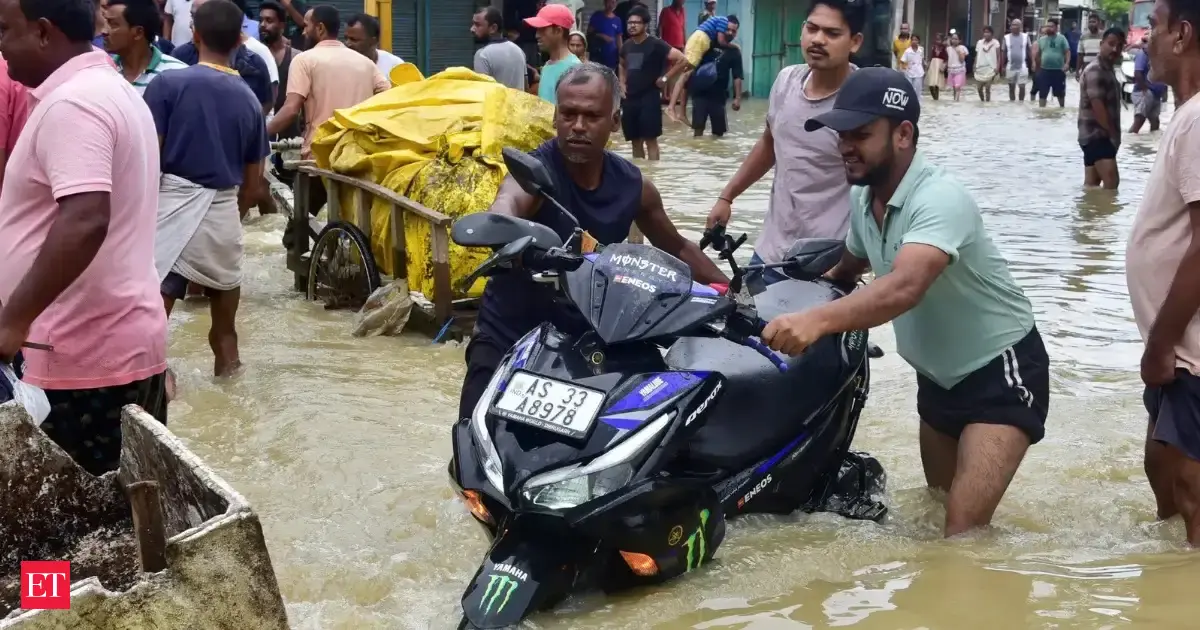
SIVASAGAR — Community-led rescue operations saved more than 1,000 residents stranded by rising floodwaters in Assam's eastern district of Sivasagar, following sudden inundation that rapidly submerged rural settlements, according to reporting by SECTIONS.
The emergency evacuations highlight the worsening flood situation across the northeastern Indian state, where at least five districts are currently experiencing widespread seasonal flooding. Local residents took immediate action as rising waters overwhelmed low-lying communities, forcing thousands to flee as water levels continued to climb across vulnerable riverine zones.
Rapid Inundation in Sivasagar
The crisis intensified rapidly in the village of Nepali Khuti, located in Sivasagar district, where floodwaters surged into residential areas with minimal advance warning. According to reporting by SECTIONS, the swift ingress of water engulfed homes, farm plots, and local access roads within a short period, leaving hundreds of families trapped in deep water.
Faced with rapidly worsening conditions, local community members initiated grassroots rescue missions to reach stranded neighbors. Villagers knowingly abandoned their own homes, personal belongings, and livestock to navigate deep and treacherous floodwaters, prioritizing the safe extraction of residents who were unable to reach higher ground on their own. Operating without heavy machinery, volunteers used locally available boats, makeshift rafts, and manual wading techniques to pull women, children, and elderly residents from inundated structures.
The self-organized effort successfully transported more than 1,000 individuals to safer locations, preventing potential casualties during the initial surge of the flood. However, the rapid abandonment of homesteads meant that many families lost domestic property, stored food grains, and essential belongings as the floodwaters fully submerged the village core.
Extent of Regional Inundation
The surge in Sivasagar is part of a broader hydrological crisis unfolding across Assam during the ongoing monsoon season. Official assessments confirm that at least five districts in the state are currently dealing with severe flood conditions, driven by continuous heavy rainfall across upper catchment areas and regional river basins.
Assam's geography renders it extraordinarily susceptible to seasonal flooding. The state sits within the expansive valley of the Brahmaputra River and its numerous tributaries, which transport massive volumes of water down from the surrounding Himalayan foothills. During peak monsoon periods, these river systems regularly exceed their holding capacities, spilling over natural banks and artificial embankments into adjacent agricultural and residential lowlands.
In districts like Sivasagar, local rivers and smaller channels overflowed their banks, inundating contiguous plains and severing key transportation corridors. The floodwaters have submerged extensive tracts of farmland, threatening standing crops and disrupting local rural economies that rely primarily on agriculture and livestock rearing.
Grassroots Resilience and Local Response
The events in Nepali Khuti underscore the critical role played by local communities during the initial hours of environmental disasters in remote regions. While state disaster response infrastructure exists, the immediate proximity of local residents often makes grassroots intervention the first and most effective line of defense when floodwaters rise without warning.
In rural Assam, community members often form informal emergency response networks during the annual flood season. When flood barriers fail or river levels swell past critical thresholds, these informal groups coordinate warnings, assist vulnerable household members, and secure livestock where possible. In the recent Sivasagar incident, the decision by villagers to put personal property at risk in order to save human lives proved decisive in preventing a severe loss of life.
Despite the success of these community efforts, the immediate aftermath presents severe humanitarian challenges. Rescued residents often arrive at makeshift relief points or elevated embankments with no personal supplies, requiring urgent provision of clean drinking water, dry food rations, medical supplies, and temporary shelter structures.
Systematic Vulnerabilities and Infrastructure Impact
The recurrent nature of flooding in Assam highlights systemic vulnerabilities inherent to riverine communities across the region. Annual inundations cause widespread bank erosion, leading to the permanent loss of arable land and forcing thousands of families into cycles of temporary or permanent displacement.
In flood-affected districts, infrastructure such as roads, culverts, bridges, and power lines frequently suffer heavy structural damage during major water surges. Submerged roadways cut off isolated hamlets from commercial centers and healthcare facilities, complicating both emergency relief distribution and long-term recovery efforts.
Furthermore, the contamination of traditional drinking water sources—such as shallow tube wells and open ponds—by floodwaters poses immediate public health risks, including the potential outbreak of waterborne diseases among displaced populations sheltering in high-density temporary camps.
Disaster Management and Relief Priorities
As floodwaters remain elevated across the five affected districts, public authorities and disaster management teams face the complex task of providing sustained relief while monitoring river levels for further potential crests. State flood management protocols typically involve deploying specialized rescue teams, establishing relief camps, distributing relief material, and assessing structural damage to flood mitigation infrastructure.
Priority concerns in the immediate days following an inundation include establishing safe sanitation facilities at temporary shelters, distributing water purification tablets, and deploying mobile medical units to treat flood-related injuries and illnesses. Long-term recovery requirements will necessitate comprehensive damage assessments to agriculture, housing, and rural road networks once water levels recede.
What Comes Next
With monsoon conditions persisting across northeastern India, weather authorities and local administrations maintain elevated vigilance regarding river discharge rates and weather forecasts. The affected communities in Sivasagar and surrounding districts face an extended period of displacement as they wait for floodwaters to abate before returning to assess the state of their homes.
Rebuilding efforts for residents in areas like Nepali Khuti will require significant resources to restore damaged housing, clear debris, and recover lost livelihoods. Community leaders and local officials continue to monitor river gauges as regional weather patterns dictate the timeline for water recession across the valley.
This report is based on original reporting published by SECTIONS.
How this story was produced
This report was written by The Global Wire newsroom from reporting first published by SECTIONS Assam floods Locals rescue over 1. We verify the core facts against the original report, write our own account, and add the background and consequences a short wire item leaves out. Drafting is AI-assisted inside an editor-supervised pipeline, and every story is checked for accuracy of attribution, structure and duplication before it appears — full detail in our AI and funding disclosure.
Spotted an error? Tell us at corrections@horizonglobalnews.com and read our corrections policy or editorial standards.





Reader comments
Loading comments…