

US Army Evaluates 30mm Armored Multi-Purpose Vehicle to Counter Battlefield Drones
Operational trials of the AMPV 30 prototype test remote weapon stations and 360-degree sensor arrays aimed at defeating low-altitude unmanned aerial threats.
By The Global Wire Newsroom · Reported from Neetika Walter
Link preview · horizonglobalnews.com
US Army Evaluates 30mm Armored Multi-Purpose Vehicle to Counter Battlefield Drones
Operational trials of the AMPV 30 prototype test remote weapon stations and 360-degree sensor arrays aimed at defeating low-altitude unmanned aerial threats.
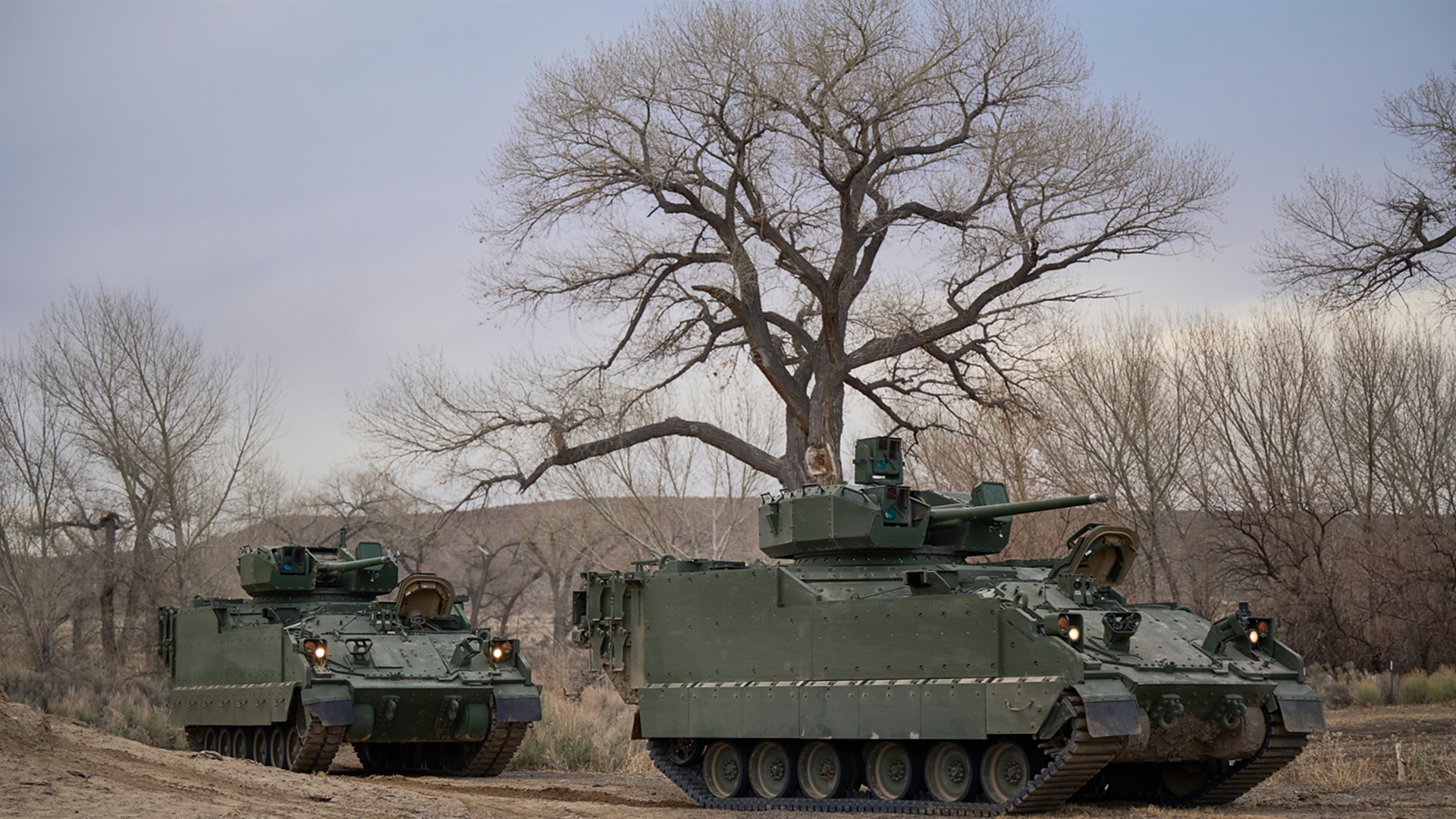
The United States Army has conducted operational testing of an upgraded Armored Multi-Purpose Vehicle variant equipped with a 30mm automatic cannon, integrated counter-drone systems, and all-around sensor suites designed to deliver 360-degree battlefield situational awareness, according to reporting by Neetika Walter. Designated as the AMPV 30 variant, the tracked combat vehicle represents the military's latest attempt to address the escalating threat posed by low-altitude unmanned aerial systems and loitering munitions on modern battlefields. By combining elevated fire control capabilities with specialized tracking optics and remote weapon controls, the platform aims to provide armored formations with organic air defense and direct fire support without requiring crew members to expose themselves outside the hull.
Key facts
What happened
During recent field evaluations reported by Neetika Walter, military evaluators tested the performance of the AMPV 30 variant under simulated combat conditions. The testing focused on the integration of a 30mm remote weapon station mounted atop the vehicle's chassis, working in concert with digital targeting optics and electronic defense systems.
Operators tested the vehicle's capability to track, acquire, and defeat simulated unmanned aerial systems using both kinetic fire from the 30mm cannon and specialized detection software. The remote turret architecture allows crew members stationed inside the armored hull to manipulate the weapon station via multi-function displays and joystick controls. This configuration eliminates the traditional requirement for an exposed gunner standing in an open hatch, significantly increasing crew survivability during live engagements.
The test protocols also evaluated the vehicle's 360-degree situational awareness suite. By using a network of external optical cameras, thermal imagers, and target-tracking sensors, the system feeds real-time video and tactical data directly to internal screens. This allows the crew to monitor surrounding terrain and air space continuously for incoming loitering munitions, ground vehicles, or infantry threats. The trials assessed how effectively the vehicle could transition between direct ground engagements and short-range air defense roles while maneuvered alongside standard armored assets.
Why it matters
The testing of a 30mm counter-drone variant of the AMPV highlights a fundamental shift in land warfare doctrine driven by the rapid proliferation of low-cost unmanned aerial systems. For decades, armored maneuver units relied primarily on high-altitude air superiority provided by tactical aircraft and dedicated high-tier air defense batteries. However, recent conflict zones across Eastern Europe and the Middle East have demonstrated that inexpensive quadcopters, first-person view (FPV) strike drones, and loitering munitions can bypass high-altitude defenses to strike armored vehicles at close range.
Providing organic, short-range counter-drone capabilities directly to frontline armored vehicles changes the survival mathematics for ground forces. A 30mm cannon using airburst or proximity-fuzed ammunition offers a cost-effective countermeasure against swarms of cheap drones, saving high-cost surface-to-air missiles for larger, high-value aerial targets. Furthermore, integrating counter-UAS sensors and remote weapon stations directly into armored troop carriers ensures that mechanized formations retain high mobility and protection without needing to slow down for separate air defense escort vehicles.
From an economic perspective, the adaptation of existing combat vehicle platforms like the AMPV reduces lifecycle costs compared to developing entirely new chassis from scratch. The commonality of parts with standard frontline vehicles simplifies field logistics, maintenance routines, and supply chains for ground commanders operating in contested environments.
The background
The Armored Multi-Purpose Vehicle program was initiated by the U.S. Army to replace its legacy fleet of Vietnam-era M113 armored personnel carriers, which were first introduced into service in 1960. While the M113 served as the backbone of mechanized infantry operations for decades, its aluminum armor and low payload capacity rendered it increasingly vulnerable to modern anti-tank guided missiles, improvised explosive devices, and artillery fragments.
Defense prime contractor BAE Systems was awarded the initial engineering and manufacturing development contract for the AMPV in December 2014. Built using a modified design derived from the Bradley Fighting Vehicle and the Paladin Integrated Management howitzer chassis, the AMPV family shares crucial mechanical components, engine systems, and track assemblies with existing Army armored vehicles. This shared lineage was intentional, designed to streamline maintenance across Armored Brigade Combat Teams (ABCTs).
The base AMPV program encompasses five core production variants: General Purpose, Mission Command, Mortar Carrier, Medical Evacuation, and Medical Treatment vehicles. Low-Rate Initial Production (LRIP) began in 2018, and the Army officially accepted the first production models in 2020. Full-Rate Production approval was granted in mid-2023, signaling a long-term commitment to procure thousands of hulls over the coming decades.
To address emerging battlefield conditions, defense engineers developed modular roof designs and top-deck interface architectures—often referred to as External Mission Equipment Packages. These open-architecture mounts allow military technicians to swap out standard commander hatches for remote weapon stations, radar arrays, or heavy auto-cannons without redesigning the core hull structure. The testing of the 30mm remote turret variant represents a direct application of this modular approach, aiming to fulfill short-range air defense (SHORAD) requirements within mechanized units.
Reaction
Following the evaluation reported by Neetika Walter, defense analysts and military observers note that the test reflects a broader urgency within the U.S. Department of Defense to field field-ready counter-drone solutions. Military leaders have repeatedly emphasized in congressional testimony and defense symposiums that tactical drone threats are evolving faster than traditional acquisition cycles can accommodate.
While official statements regarding specific performance metrics during the latest test firing remain classified, tactical doctrine experts expect positive operational feedback from maneuver units seeking enhanced direct-fire firepower. Infantry and armor commanders have long requested heavier organic firepower than standard .50-caliber heavy machine guns, particularly when operating in complex urban terrain or dense canopy environments where fast reaction times are critical.
Industry partners involved in remote weapon station development and ammunition manufacturing are anticipated to monitor full test results closely to refine auto-tracker algorithms and proximity-fuzed 30mm round development. International allies operating similar armored fleets are also monitoring U.S. Army trial outcomes as foreign militaries scramble to upgrade their own armored vehicles against loitering munition threats.
What we don't know yet
Despite details published regarding the general configuration of the vehicle tested, several critical parameters remain undisclosed in public reports. It is currently unclear which specific model of 30mm cannon and remote weapon station was integrated during this particular test cycle, as multiple defense manufacturers produce competing turrets compatible with the AMPV interface.
Furthermore, reporting has not specified the exact composition of the electronic warfare and counter-drone sensor package installed on the test vehicle. It remains unknown whether the platform relies exclusively on optical and radio-frequency tracking sensors, or if it incorporates active electronically scanned array (AESA) micro-radars or directional radio-frequency jamming systems.
Crucially, the U.S. Army has not publicly outlined a formal timetable or funding allocation for mass-producing and fielding the 30mm AMPV variant across frontline Armored Brigade Combat Teams. Whether this vehicle variant will become a standardized procurement line item or remain a specialized, limited-rate modification for select units remains an open question for defense budget planners.
What to watch
In the coming months, several key indicators will reveal the progression of the 30mm AMPV counter-drone project. Future defense budget requests presented to the U.S. Congress will detail whether specific procurement line items are designated for 30mm remote turret integration packages and specialized C-UAS ammunition.
Defense observers will also monitor upcoming military exercises and National Training Center rotations to see if prototype AMPV 30 platforms are deployed alongside operational combined-arms units for force-on-force combat simulations. Performance outcomes during large-scale live-fire exercises will determine whether adjustments are necessary to the vehicle's targeting software or power distribution networks.
Finally, announcements from the Army's Program Executive Office Ground Combat Systems and contract awards to defense contractors will clarify which specific remote weapon system vendor and counter-drone sensor suite win the final production contracts for broader fleet integration.
This report is based on original reporting by Neetika Walter.
How this story was produced
This report was written by The Global Wire newsroom from reporting first published by Neetika Walter. We verify the core facts against the original report, write our own account, and add the background and consequences a short wire item leaves out. Drafting is AI-assisted inside an editor-supervised pipeline, and every story is checked for accuracy of attribution, structure and duplication before it appears — full detail in our AI and funding disclosure.
Spotted an error? Tell us at corrections@horizonglobalnews.com and read our corrections policy or editorial standards.




Reader comments
Loading comments…