

Trump Threatens New York City Funds Over Omission of Little Italy From Immigrant Guide
Donald Trump threatened to withhold billions in federal funding from New York City after Mayor Zohran Mamdani's administration excluded historic Little Italy from an official immigrant guide.
By The Global Wire Newsroom · Reported from Ishan Jain
Link preview · horizonglobalnews.com
Trump Threatens New York City Funds Over Omission of Little Italy From Immigrant Guide
Donald Trump threatened to withhold billions in federal funding from New York City after Mayor Zohran Mamdani's administration excluded historic Little Italy from an official immigrant guide.
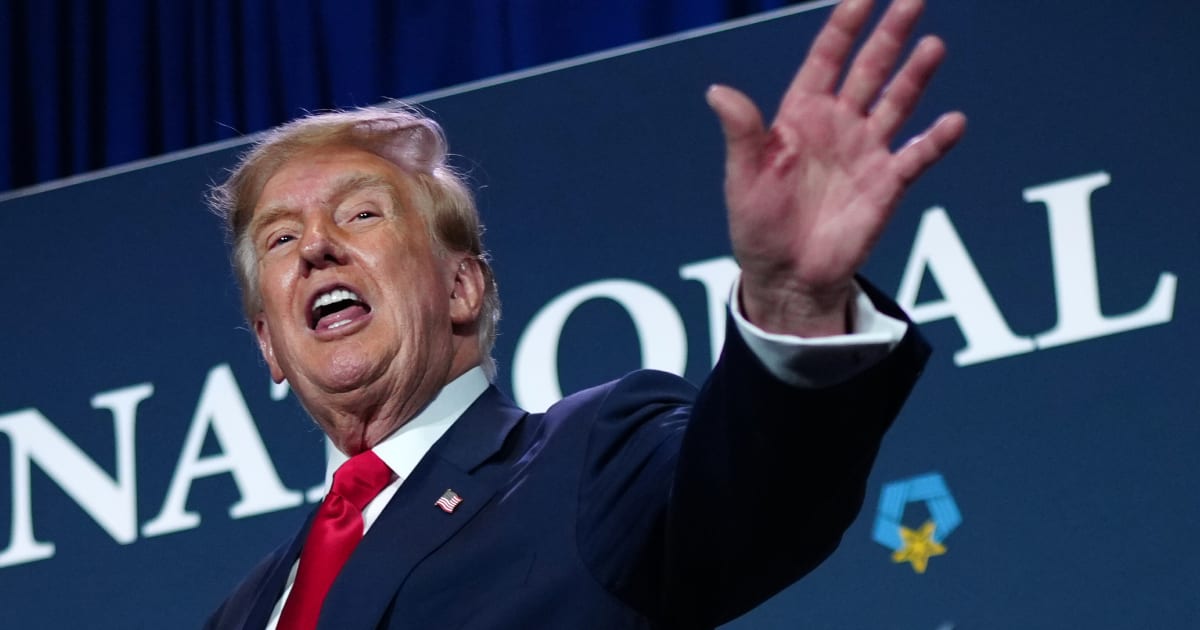
A high-profile dispute emerged between federal authority and municipal governance in October 2026 after Donald Trump threatened to cut billions of dollars in federal funding from New York City over a controversial city publication. The dispute centers on an official immigrant community guide published by the administration of New York City Mayor Zohran Mamdani, which omitted Manhattan's historic Little Italy neighborhood from its directory of cultural enclaves. Publicly condemning the omission of the historic Italian-American district as "a disgrace," Trump indicated that executive powers could be utilized to restrict federal revenue allocations to the nation's largest municipality. The conflict has renewed longstanding legal and constitutional debates regarding federalism, executive impoundment powers, and municipal administrative autonomy.
Key facts
What happened
According to reporting published by Ishan Jain on October 10, 2026, the controversy began when the municipal administration led by New York City Mayor Zohran Mamdani released an official informational guide detailing the city's immigrant communities and cultural neighborhoods. The publication was designed to showcase the geographic and historic contributions of diverse foreign-born populations across New York City.
However, community members and observers quickly noticed that the guide omitted Little Italy, the iconic Lower Manhattan district that has historically symbolized Italian immigration to the United States. The exclusion triggered immediate political pushback from national figures.
Donald Trump publicly criticized Mayor Mamdani and municipal leadership for the decision, asserting that excluding Little Italy ignored the foundational role of Italian Americans in shaping the historic, economic, and cultural landscape of New York City. In his public statements, Trump characterized the administrative decision as "a disgrace."
Escalating the political stakes of the publication dispute, Trump threatened to penalize the city by cutting billions of dollars in federal grants and revenue transfers that support municipal operations. The original reporting by Ishan Jain did not specify the precise forum in which Trump made the remarks, nor did it outline specific administrative mechanisms or agency orders designated to enforce the proposed funding cuts.
Why it matters
The potential withholding of federal aid from New York City involves profound fiscal, legal, and institutional ramifications that extend beyond political rhetoric. New York City operates on a complex annual budget that relies on billions of dollars in direct federal support. Federal funds flow into the city through structured formula grants and competitive awards managed by federal agencies, supporting public transportation infrastructure, housing subsidies, public health programs, disaster readiness, and law enforcement grants. Any sustained attempt to freeze or claw back federal appropriations would create immediate fiscal stress for municipal agencies, potentially forcing municipal budget officials to implement service reductions, freeze hiring, or seek emergency municipal bond financing.
From a constitutional perspective, presidential efforts to condition or withhold Congressional funding from local governments face strict legal boundaries under federal law. Article I, Section 8 of the United States Constitution grants primary power over federal spending to Congress, not the executive branch. High-court precedents establish that executive agencies cannot attach new, unlegislated conditions to federal grants, nor can they exert coercive financial pressure that deprives local governments of constitutional choice.
Landmark decisions such as South Dakota v. Dole (1987) established that conditions on federal funds must be clearly stated by Congress and directly related to the purpose of the federal program. Furthermore, in National Federation of Independent Business v. Sebelius (2012), the Supreme Court ruled that withholding significant existing federal funding amounts to unconstitutional coercion under the Spending Clause. Therefore, any executive action seeking to impound New York City funds over a municipal mapping dispute would face swift, severe legal challenges in federal court under the Administrative Procedure Act and the Tenth Amendment.
The background
To understand the broader context of the dispute, it is necessary to examine both the historic role of Little Italy in New York City and the administrative processes governing municipal publications. Little Italy developed in Lower Manhattan during the late nineteenth and early twentieth centuries, as millions of Southern Italian immigrants arrived through Ellis Island and settled in the area around Mulberry Street, Mott Street, and Grand Street. By the early twentieth century, the neighborhood was the dense cultural, linguistic, and commercial core of Italian-American life in New York City, filled with regional social clubs, artisanal bakeries, and historic places of worship such as the Church of the Most Precious Blood.
Over the past half-century, demographic shifts, suburban movement, and the physical growth of neighboring areas—particularly Chinatown—gradually reduced the residential size of Little Italy. Although the contemporary residential population of Italian ancestry within the neighborhood has declined, the area retains enormous symbolic, historic, and tourism significance. It is officially preserved as a landmark district and continues to host major public events, most notably the annual Feast of San Gennaro, a traditional eleven-day religious and cultural festival first established on Mulberry Street in 1926.
Within New York City government, publications detailing immigrant communities are typically authored by agencies such as the Mayor's Office of Immigrant Affairs (MOIA) or the Department of Cultural Affairs. These agencies regularly publish demographic profiles, heritage maps, and service directories aimed at connecting immigrant residents with language access, legal aid, and social services. Historically, municipal mapping criteria have varied: some directories focus on active foreign-born demographic concentrations identified by census data, while others catalog historic heritage districts regardless of present demographic shifts.
Previous federal-city disputes over funding have primarily centered on substantive policy disagreements, such as immigration enforcement and sanctuary city designations, during prior administrative legal battles in the United States Court of Appeals for the Second Circuit. Extending federal funding threats to local administrative guidebooks represents a novel expansion of federal executive pressure on local civic governance.
Reaction
The initial reporting by Ishan Jain did not detail formal official responses from Mayor Zohran Mamdani, City Hall representatives, or municipal agency leaders regarding Trump's statements or the mapping omission.
In past instances where federal officials threatened municipal funding, local officials typically responded through multi-pronged legal and public strategies. Municipal legal officers usually emphasize the constitutional statutory protections governing federal grant distributions, preparing immediate legal filings in federal district courts to seek preliminary injunctions against any attempted impoundment.
Simultaneously, local community organizations, heritage groups, and members of the New York City Council are expected to address both the content of the municipal guide and the federal executive threat. Heritage advocates often call for administrative revisions to ensure historic contributions are represented in official city literature, while municipal lawmakers routinely defend local governance autonomy against federal oversight.
What we don't know yet
Several critical facts regarding the dispute remain unconfirmed by current reporting. The reporting by Ishan Jain does not state whether the federal executive branch has issued any official executive orders, formal policy directives, or Department of Justice guidelines to initiate funding reductions against New York City.
Furthermore, it remains unclear which specific federal grant programs—whether related to federal transit grants, urban development funding, or emergency management aid—are targeted under the threat. On the municipal side, available information does not specify why the Mamdani administration omitted Little Italy from the publication, including whether the exclusion resulted from an administrative oversight, specific demographic census criteria, or editorial selection guidelines focused on recent immigrant arrivals.
What to watch
In the coming weeks, several key developments will indicate the trajectory of this federal-municipal dispute. First, public statements from Mayor Zohran Mamdani and officials from the Mayor's Office of Immigrant Affairs will show whether the city intends to reprint or update the immigrant community guide to include Little Italy.
Second, legal and budget analysts will monitor federal agency registers and executive communications for any formal administrative actions seeking to withhold municipal funding streams. If formal administrative actions are taken, court dockets in the United States District Court for the Southern District of New York should be watched for immediate declaratory judgment motions or motions for preliminary injunction filed by New York City's legal counsel. Finally, upcoming New York City Council oversight hearings will provide a public forum to examine agency standards for municipal cultural publications.
This report is based on original news reporting published by Ishan Jain.
How this story was produced
This report was written by The Global Wire newsroom from reporting first published by Ishan Jain. We verify the core facts against the original report, write our own account, and add the background and consequences a short wire item leaves out. Drafting is AI-assisted inside an editor-supervised pipeline, and every story is checked for accuracy of attribution, structure and duplication before it appears — full detail in our AI and funding disclosure.
Spotted an error? Tell us at corrections@horizonglobalnews.com and read our corrections policy or editorial standards.






Reader comments
Loading comments…