

Trump Renews Nobel Peace Prize Pitch, Citing Conflict Claims Amid Iran Stalemate
Donald Trump has publicly pressed his case for the Nobel Peace Prize, citing past diplomatic claims while his administration works to resolve ongoing ceasefire hurdles with Iran.
By The Global Wire Newsroom · Reported from John Bowden
Link preview · horizonglobalnews.com
Trump Renews Nobel Peace Prize Pitch, Citing Conflict Claims Amid Iran Stalemate
Donald Trump has publicly pressed his case for the Nobel Peace Prize, citing past diplomatic claims while his administration works to resolve ongoing ceasefire hurdles with Iran.
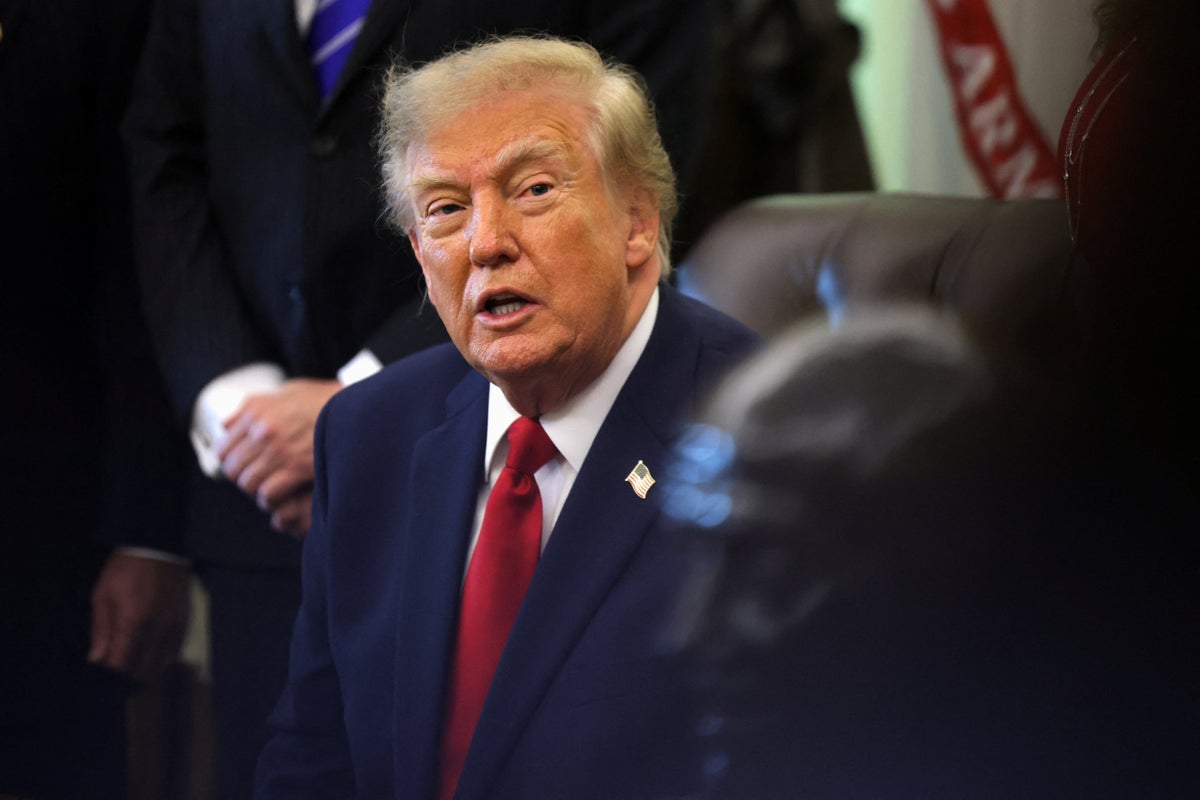
Former U.S. President Donald Trump publicly renewed his push for the Nobel Peace Prize, asserting that his foreign policy initiatives successfully brought an end to eight international conflicts while acknowledging that his administration has not yet secured a durable ceasefire with Iran. Speaking in early October 2026 ahead of the annual prize announcement by the Norwegian Nobel Committee, Trump reiterated long-standing claims regarding his diplomatic achievements, arguing that his approach to foreign policy produced conflict resolutions that traditional international bodies failed to achieve. However, the appeal comes as Washington continues to navigate persistent diplomatic friction and ongoing security stalemates in the Middle East, where a formal peace agreement with Tehran remains elusive despite prolonged diplomatic efforts.
Key facts
What happened
According to reporting by John Bowden, former President Donald Trump made a direct public argument for receiving the Nobel Peace Prize, highlighting what he characterized as an unmatched record of international conflict resolution. Speaking in early October 2026, Trump reiterated his claim of having successfully settled more than a half-dozen foreign wars, offering a public self-assessment of his administration's diplomatic interventions across global friction points.
In his statements, Trump framed his diplomatic record as a series of major negotiations that brought an end to eight distinct armed struggles or bilateral disputes. Characterizing his achievements as major historic accomplishments, Trump asserted that his foreign policy outcomes were worthy of international distinction, specifically pointing to the Nobel Peace Prize awarded annually in Norway. While claiming that he was not seeking personal praise, Trump maintained that the scope of his conflict resolution efforts stood out in modern presidential history.
The timing of Trump's pitch coincided with the annual period when the Norwegian Nobel Committee prepares to reveal its chosen laureate. However, as noted in Bowden's reporting, the former president's claims stand in contrast to ongoing diplomatic challenges facing his foreign policy team. Most notably, the administration has been unable to reach a permanent ceasefire or diplomatic breakthrough with Iran. Despite extensive diplomatic exchanges and public declarations of success elsewhere, the impasse with Tehran highlights the unresolved tensions and security risks still confronting American foreign policy in the Middle East.
Why it matters
The public assertion of having ended eight international conflicts touches upon core questions of how international diplomacy, presidential legacies, and conflict resolution are measured. When a political leader makes explicit claims about resolving foreign wars, it directly impacts public perception of national security policy and alters international expectations regarding American leadership. The debate over these claims highlights two distinct philosophies of global governance: transactional bilateral negotiation led by executive authority versus traditional, institutional multilateralism built on enduring security alliances.
Furthermore, the ongoing inability to reach a lasting ceasefire with Iran carries direct consequences for global security and economic markets. Iran remains a pivotal state actor in the Persian Gulf, and unresolved hostilities pose continuous risks to international maritime commerce, regional energy exports through the Strait of Hormuz, and overall stability across the broader Middle East. The contrast between claims of wide-ranging peace settlements and the reality of an active diplomatic stalemate with Tehran illustrates the severe structural difficulties inherent in resolving long-standing regional rivalries.
From an institutional perspective, public campaigning for the Nobel Peace Prize presents a challenge to the traditional norms of international recognition. While public interest in the award is high, the Norwegian Nobel Committee historically operates with strict independence, evaluating candidates based on established criteria rather than political campaign efforts. Public appeals by high-profile figures can elevate geopolitical debate around how peace is defined, distinguishing between temporary cessation of hostilities and permanent, legally binding peace treaties.
The background
To fully understand the context surrounding Trump's Nobel Peace Prize pitch and his administration's diplomatic record, it is necessary to examine both the established procedures of the Nobel selection process and the history of U.S. foreign policy interventions. The Nobel Peace Prize was established through the 1895 will of Swedish inventor Alfred Nobel and has been awarded annually since 1901. Unlike the other Nobel awards presented in Stockholm, Sweden, the Peace Prize is awarded in Oslo, Norway, by a five-member committee appointed by the Norwegian Parliament, known as the Storting. The committee operates under strict confidentiality, with official nominations closing on January 31 of each year. Following months of internal evaluation, the committee announces the laureate in early October, with the formal award ceremony taking place on December 10, the anniversary of Nobel's death.
Throughout history, four U.S. presidents have been awarded the Nobel Peace Prize while in office or following their tenure. President Theodore Roosevelt was the first American recipient in 1906, recognized for his role in negotiating the Treaty of Portsmouth to end the Russo-Japanese War. President Woodrow Wilson received the prize in 1919 for his leadership in founding the League of Nations after World War I. Decades later, former President Jimmy Carter was awarded the 2002 prize for his post-presidential humanitarian work and historical mediation, including the 1978 Camp David Accords between Egypt and Israel. Most recently, President Barack Obama received the award in 2009 during his first year in office, cited by the committee for his extraordinary efforts to strengthen international diplomacy and promote nuclear non-proliferation.
During his presidency from 2017 to 2021, Trump frequently voiced frustration over not receiving the prize, comparing his foreign policy initiatives to those of previous leaders. Prominent diplomatic achievements cited by his supporters during that period included the 2020 Abraham Accords, which established formal diplomatic relations between Israel and four Arab states—the United Arab Emirates, Bahrain, Sudan, and Morocco—as well as economic normalization agreements brokered between Kosovo and Serbia in late 2020. Throughout his public life, Trump has maintained that his personal diplomatic style achieved results where standard diplomatic channels had failed.
Simultaneously, U.S. relations with Iran have represented one of the most volatile arenas of modern foreign policy. Following the U.S. withdrawal in 2018 from the Joint Comprehensive Plan of Action (JCPOA), commonly known as the Iran nuclear agreement, tension between Washington and Tehran escalated significantly. Re-imposed economic sanctions, regional proxy conflicts, and nuclear enrichment concerns have created persistent friction. Successive diplomatic attempts to negotiate a comprehensive framework covering nuclear constraints, regional military activity, and security guarantees have repeatedly hit deadlocks, highlighting the complexity of achieving a permanent ceasefire.
Reaction
The statements made by Trump regarding his foreign policy achievements and his pitch for Nobel recognition have generated significant discussion among diplomats, political commentators, and foreign policy experts. The Norwegian Nobel Committee maintains a strict official policy of non-comment regarding public statements, self-nominations, or active deliberations. Committee regulations stipulate that all nomination records and committee discussions remain strictly confidential for 50 years, meaning no official acknowledgment or reaction is released from Oslo ahead of the formal announcement.
Supporters of Trump's diplomatic approach argue that his non-traditional, direct negotiation style achieved historic breakthroughs in regions long considered intractable. Advocates point to the normalization of ties under the Abraham Accords as tangible evidence of his ability to bypass traditional diplomatic gridlock and create new regional frameworks. Proponents contend that these accomplishments merit formal international recognition, arguing that practical agreements should be prioritized over conventional multilateral processes.
Critics and international foreign policy analysts, however, maintain a more skeptical stance toward the claim that eight wars were settled. Scholars point out that several of the agreements cited by supporters involved diplomatic normalizations or economic pacts between nations that were not actively engaged in military warfare against each other. Opponents also emphasize that unresolved conflicts, particularly the ongoing standoff with Iran, demonstrate the limits of executive-led bilateral diplomacy. International observers in European capitals and Middle Eastern nations are watching closely to see how the administration's foreign policy claims influence current diplomatic engagements across volatile regions.
What we don't know yet
Several key details regarding Trump's statements and ongoing foreign policy operations remain unverified in available reports. First, reporting by John Bowden does not provide an itemized breakdown of the eight specific conflicts Trump claimed to have settled. It remains unclear which exact treaties, border disputes, or ceasefires make up the stated total, preventing independent verification against established international conflict databases.
Second, the current operational state of diplomatic negotiations between Washington and Tehran remains undisclosed. It is unknown what specific terms, security guarantees, or sanction relief proposals are currently on the table, or whether neutral third-party nations such as Oman or Qatar are actively facilitating secret talks to break the ceasefire stalemate.
Third, because the Norwegian Nobel Committee enforces a strict 50-year secrecy rule, it is not publicly confirmed whether Trump was formally nominated for the 2026 prize prior to the January 31 nomination deadline, nor which qualified nominators may have submitted his name.
What to watch
Several concrete events and indicators will determine the trajectory of these diplomatic claims in the coming weeks and months:
This report is based on original news coverage reported by John Bowden.
How this story was produced
This report was written by The Global Wire newsroom from reporting first published by John Bowden. We verify the core facts against the original report, write our own account, and add the background and consequences a short wire item leaves out. Drafting is AI-assisted inside an editor-supervised pipeline, and every story is checked for accuracy of attribution, structure and duplication before it appears — full detail in our AI and funding disclosure.
Spotted an error? Tell us at corrections@horizonglobalnews.com and read our corrections policy or editorial standards.



Reader comments
Loading comments…