

Survey of Nearly 1,000 Rugby League Athletes Reveals Split Over Season Length
A sweeping survey reveals men's NRL competitors believe their schedule is excessively long, while women's NRLW participants argue their tournament remains far too brief.
By The Global Wire Newsroom · Reported from Adrian Proszenko
Link preview · horizonglobalnews.com
Survey of Nearly 1,000 Rugby League Athletes Reveals Split Over Season Length
A sweeping survey reveals men's NRL competitors believe their schedule is excessively long, while women's NRLW participants argue their tournament remains far too brief.
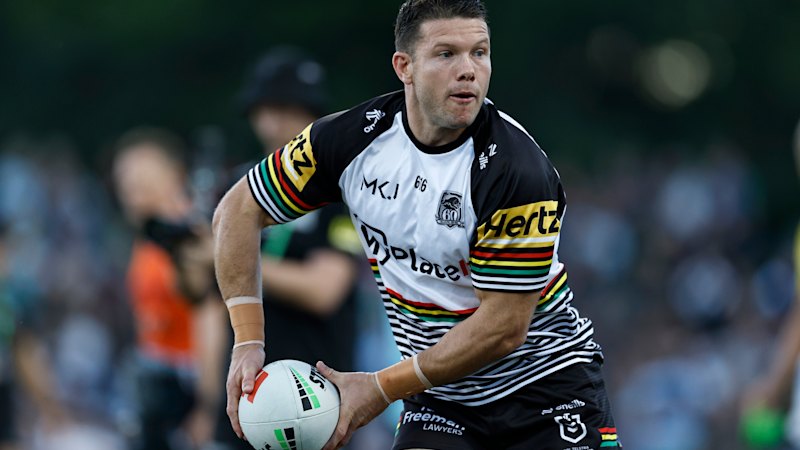
A comprehensive survey of nearly 1,000 professional rugby league players has highlighted a stark structural divide across Australian rugby league, revealing that male competitors view the National Rugby League schedule as excessively demanding while female athletes in the NRL Women's competition believe their calendar is far too compressed. The survey results, first reported by rugby league journalist Adrian Proszenko, capture widespread sentiment across both tiers of elite domestic rugby league. While male participants are expressing growing fatigue and injury anxiety amid a grueling schedule spanning club fixtures, representative series, and international tests, their female counterparts in the NRLW are calling for more matches and expanded fixture lists to foster commercial viability, competitive momentum, and full-time professional security.
Key facts
What happened
According to reporting by Adrian Proszenko, player representatives conducted an expansive polling exercise across the elite professional landscape, collecting perspectives from nearly 1,000 athletes contracted to clubs across the National Rugby League system. The central finding to emerge from the consultation is a sharp divergence between the two senior competitions over the appropriate volume of matches required in an elite domestic campaign.
In the senior men's competition, players raised serious alarms regarding the physical toll and extended timeline of the calendar, according to Adrian Proszenko's account. The men's season, which traditionally extends across seven continuous months of high-impact weekly competition, was singled out by participants as excessively burdensome. Athletes pointed to accumulated physical trauma, mental fatigue, condensed recovery cycles, and the compression of representative obligations as factors making the modern men's schedule difficult to sustain without compromising career longevity.
Simultaneously, the same consultation process documented an inverse frustration among participants in the NRLW. According to the reporting by Adrian Proszenko, female players expressed dissatisfaction with the limited length of their playing window. Unlike the men, who feel overextended, women athletes argued that their current schedule does not offer enough game time, competitive continuity, or earning potential to build durable careers, presenting administrators with two diametrically opposed industrial priorities within the same sport.
Why it matters
The split highlighted by the player survey presents Australian Rugby League Commission administrators with an intricate balancing act between broadcast revenues, physical sustainability, and equity. The modern men's NRL relies heavily on volume to satisfy multi-billion-dollar broadcast contracts held with domestic television networks and streaming platforms. Reducing regular-season rounds for the men's premiership would immediately challenge contractual broadcast minimums, threatening rights fees that underwrite club grants, youth development programs, and player salaries. However, maintaining the current intensity carries documented medical costs, including increased risks of soft-tissue breakdowns, orthopedic surgeries, and accumulated head impacts that heighten long-term neurological liabilities for the code.
For the women's game, the consequences are equally profound. The NRLW has expanded rapidly from an exhibition format into an elite premiership, but its abbreviated calendar limits the commercial and physical development of its athletes. A tournament spanning only a handful of regular-season matches forces elite players to manage hybrid lives, frequently balancing heavy training regimes alongside full-time or part-time employment outside the sport. Without a longer competition schedule, the transition toward fully professional, salaried careers remains stalled, holding back television viewership growth, corporate sponsorship agreements, and athlete retention in an increasingly competitive domestic market where Australian rules football, soccer, and cricket are all contesting the same talent pool.
The background
The debate over fixture scheduling is deeply rooted in the historical evolution of the sport in Australasia. The men's premier club competition, originally founded in Sydney in 1908 as the New South Wales Rugby Football League, has steadily expanded over decades to encompass 17 franchises spanning New South Wales, Queensland, Victoria, the Australian Capital Territory, and New Zealand, with an 18th franchise expected in the near future. The modern men's premiership typically encompasses 27 regular-season rounds, pre-season challenge fixtures, a four-week finals series culminating in the October Grand Final, the high-stakes three-match mid-season State of Origin series, and end-of-year international test matches such as the Pacific Championships.
This calendar means that frontline male international and representative players can participate in up to 30 competitive fixtures each year, absorbing high-velocity collisions across nine months. The Rugby League Players Association previously engaged in protracted industrial disputes with the Australian Rugby League Commission before formalising the landmark 2023–2027 Collective Bargaining Agreement. While that agreement achieved significant gains in financial distribution and minimum wages, lingering tensions regarding calendar density and mandatory rest periods remained unresolved.
Conversely, the NRLW was officially launched in 2018 with only four foundational clubs playing a round-robin schedule over just four weeks, staged alongside the men's finals series. While administrators progressively expanded the tournament to six, then ten, and eventually twelve clubs, the regular season has remained restricted to single-digit rounds plus finals. This structure means female players spend months preparing in intensive pre-season camps for an active competitive window that lasts only two to three months. The industrial framework established under the joint collective bargaining agreement recognized the women's competition under an official pay structure for the first time, yet it left the calendar substantially truncated relative to the men's established footprint.
Reaction
While official statements from governing bodies have not yet been published following the survey's circulation, the results are expected to dominate forthcoming quarterly liaison sessions between the Rugby League Players Association and the Australian Rugby League Commission. The players' union is mandated to reflect the registered preferences of its membership, placing the executive leadership in the complex position of pursuing schedule contraction for men while simultaneously demanding schedule expansion for women.
Club head coaches and high-performance directors are expected to welcome the male players' push for workload reduction. Club coaching staffs across the country have repeatedly criticized short turnarounds between matches, five-day recovery windows, and the disruptive mid-season depletion caused by the State of Origin period, which frequently leaves squads decimated by injury and exhaustion. Conversely, club commercial directors and governing league officials are expected to approach any proposal to reduce men's fixture counts with caution, mindful of the potential penalties or renegotiations demanded by domestic broadcast partners Channel Nine and Foxtel if the total inventory of televised matches is decreased.
In the women's space, coaches, club directors, and player development advocates are expected to strongly endorse the survey's call for a longer NRLW campaign. Former players and current club officials have frequently argued that technical refinement, match tactical awareness, and injury resilience cannot peak when athletes play fewer than a dozen competitive matches per calendar year. Commercial sponsors seeking consistent brand exposure across winter and spring are also expected to support a more continuous women's competition footprint.
What we don't know yet
The reporting leaves several essential operational specifics unaddressed. Foremost among these is the exact mathematical model favored by the surveyed players. The data published does not specify how many rounds men believe should be excised from the premiership calendar, nor does it specify whether players would accept a commensurate reduction in salary caps or club revenues if fewer games are staged and televised. Similarly, the findings do not quantify how many additional rounds NRLW athletes consider necessary to achieve an ideal operational balance.
Furthermore, it remains unclarified whether the survey polled attitudes toward secondary fixtures such as pre-season trials, mid-season representative fixtures, or post-season international tournaments, all of which contribute heavily to annual athlete strain. It is also unclear whether the Australian Rugby League Commission has signaled any willingness to consider structural adjustments before the expiration of the prevailing broadcast contracts and the current Collective Bargaining Agreement at the conclusion of 2027.
What to watch
The immediate development to monitor will be the formal presentation of these survey findings by the Rugby League Players Association to the Australian Rugby League Commission during regular industrial review meetings. Observers should track whether union leadership converts these survey numbers into formal bargaining claims during future calendar reviews.
Attention will also focus on the scheduling announcements for upcoming NRL and NRLW seasons, particularly whether league management introduces standalone representative weekends, additional bye rounds for clubs, or minor expansions of the women's regular-season draw as interim compromises. The long-term resolution will ultimately hinge on the negotiations surrounding the next major broadcast cycle leading up to 2028, where any structural alterations to season lengths, double-headers, or standalone women's scheduling windows will have to be finalized and priced into commercial contracts.
This article incorporates reporting originally published by Adrian Proszenko.
How this story was produced
This report was written by The Global Wire newsroom from reporting first published by Adrian Proszenko. We verify the core facts against the original report, write our own account, and add the background and consequences a short wire item leaves out. Drafting is AI-assisted inside an editor-supervised pipeline, and every story is checked for accuracy of attribution, structure and duplication before it appears — full detail in our AI and funding disclosure.
Spotted an error? Tell us at corrections@horizonglobalnews.com and read our corrections policy or editorial standards.





Reader comments
Loading comments…