

Rahul Gandhi Accuses BJP and RSS of Constitutional Crime Over Alleged Haldwani Cleansing Rituals
The Leader of the Opposition calls for legal action after reported ritual 'purification' ceremonies following Congress party visits in Uttarakhand.
By The Global Wire Newsroom · Reported from ET Online
Link preview · horizonglobalnews.com
Rahul Gandhi Accuses BJP and RSS of Constitutional Crime Over Alleged Haldwani Cleansing Rituals
The Leader of the Opposition calls for legal action after reported ritual 'purification' ceremonies following Congress party visits in Uttarakhand.
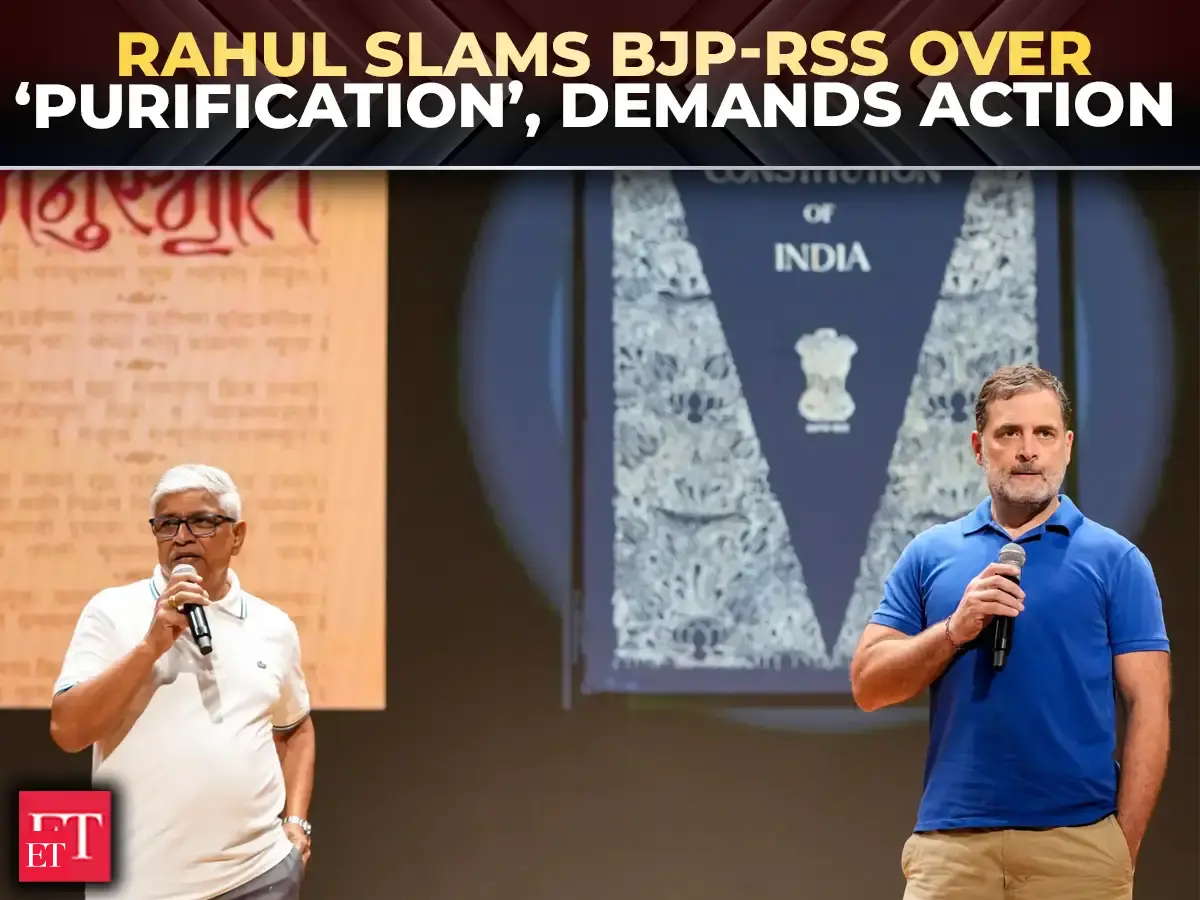
NEW DELHI — Rahul Gandhi, the Leader of the Opposition in the Lok Sabha, launched a sharp political assault against the ruling Bharatiya Janata Party (BJP) and its ideological parent, the Rashtriya Swayamsevak Sangh (RSS), on August 29, 2026, over alleged ritual "purification" ceremonies conducted in Haldwani, Uttarakhand, following visits by Congress leaders. Characterizing the practice as a direct revival of untouchability, Gandhi declared the act a criminal offense under the Constitution of India and called for immediate administrative and legal action against those responsible. The opposition leader's statements marked a fresh confrontation between the Indian National Congress and the BJP-led federal and state administrations, elevating a regional political dispute into a national debate on caste discrimination, civil rights, and constitutional compliance in public spaces.
Key facts
What happened
The political dispute erupted following reports that local groups performed ritual purification ceremonies at a site in Haldwani, located in the Nainital district of Uttarakhand, shortly after a delegation of Indian National Congress figures concluded an official visit. According to reports cited by opposition leadership, participants in the ritual used water and traditional cleansing practices to symbolically "purify" the area after the departure of the Congress representatives.
Addressing reporters and party supporters on August 29, 2026, Rahul Gandhi explicitly linked the Haldwani incident to historical practices of social exclusion and untouchability. Gandhi asserted that such actions are not merely political posturing by rivals but constitute serious violations of Indian law and constitutional guarantees. He stated that the Congress party would not remain silent in the face of targeted social slurs or caste-based exclusionary practices, demanding that state law enforcement authorities initiate criminal proceedings against the perpetrators.
Gandhi directed his criticisms at both the leadership of the Bharatiya Janata Party, which holds power in Uttarakhand, and the Rashtriya Swayamsevak Sangh, the Hindu nationalist volunteer organization that provides the foundational ideology for the ruling party. He alleged that the climate enabling such public rituals stems from the political ideology promoted by these institutions, arguing that the practice of purifying spaces after visits by specific political or social figures reinforces regressive hierarchy and social division.
Why it matters
The controversy touches upon core constitutional principles in India, where untouchability was formally abolished upon the adoption of the national constitution in 1950. Under Article 17, the practice of untouchability in any form is strictly forbidden, and the enforcement of any disability arising out of untouchability is declared a criminal offense punishable in accordance with parliamentary law.
Beyond the constitutional framework, the event carries significant political implications for India’s legislative and electoral landscape. As Leader of the Opposition in the Lok Sabha—a position held by Gandhi following the 2024 general election—his decision to frame local political conflicts through the lens of civil rights and anti-caste legislation signals a strategy to unite lower-caste groups, Dalit communities, and marginalized voters under the Congress banner.
In Uttarakhand, where the BJP has maintained political control under Chief Minister Pushkar Singh Dhami, the incident puts state authorities under intense scrutiny regarding law enforcement and public neutrality. If formal police complaints are registered, state officials will face pressure to determine whether the acts violate the Protection of Civil Rights Act, 1955, or the Scheduled Castes and Scheduled Tribes (Prevention of Atrocities) Act, 1989. Failure by state police to investigate could lead to accusations of selective law enforcement, while aggressive prosecution could inflame political tensions with local Hindu nationalist organizations.
Furthermore, the confrontation highlights how municipal controversies in sensitive regional hubs like Haldwani—a primary commercial gateway to Uttarakhand's Kumaon region—can rapidly scale into national ideological battles between the secular coalition led by Congress and the Hindu nationalist framework represented by the BJP and RSS.
The background
The prohibition of untouchability is one of the foundational pillars of post-independence Indian jurisprudence. Drafted under the chairmanship of Dr. B.R. Ambedkar, Article 17 of the Constitution was specifically designed to eradicate centuries-old practices of social ostracization, physical separation, and ritual purity concepts directed against lower-caste communities and Dalits. To enforce Article 17, Parliament enacted the Untouchability (Offences) Act in 1955, which was later amended and renamed the Protection of Civil Rights Act, 1955. This legal framework was further strengthened by the passage of the Scheduled Castes and Scheduled Tribes (Prevention of Atrocities) Act in 1989, which codified stringent penalties for acts intended to humiliate or dishonor members of marginalized castes in public view.
Haldwani itself has emerged as a key socio-political focal point within Uttarakhand in recent years. Located in the Himalayan foothills, the city is a vital economic node that has experienced heightened political friction over municipal developments, land tenure, demographic shifts, and religious site disputes. Post-cleansing or ritual "purification" ceremonies have occasionally surfaced in Indian political history as a provocative tactic used by local factions to express ideological opposition or caste-based resentment following political or social events.
The Indian National Congress and the ruling BJP have repeatedly clashed over issues of social justice, caste census proposals, and constitutional protections. Following the 2024 parliamentary elections, in which the opposition alliance secured a substantial presence in the Lok Sabha, Congress leadership under Gandhi has consistently positioned itself as a defender of the Constitution, frequently displaying physical copies of the document during public rallies and parliamentary debates. By invoking constitutional provisions against untouchability in response to the Haldwani incident, the opposition continues its efforts to anchor daily political disputes in foundational civil rights laws.
Reaction
The statements by Rahul Gandhi triggered immediate political ripples across regional and national party structures. Congress leaders in Uttarakhand supported Gandhi’s demands, calling on the state government to identify the individuals involved in the Haldwani ritual and register formal cases under applicable civil rights laws. Local Congress representatives argued that allowing ritual cleansings following official visits establishes a dangerous precedent for public space governance and social cohesion.
While official responses from the senior leadership of the Bharatiya Janata Party and the Rashtriya Swayamsevak Sangh were pending at the time of initial reporting, BJP representatives in similar past disputes have routinely dismissed Congress allegations as politically motivated fabrications or exaggerated claims designed to polarize voters along caste lines. BJP regional leaders frequently maintain that administrative actions in Uttarakhand are conducted in strict accordance with law and order, denying systemic institutional support for exclusionary religious rituals.
Civil rights advocates and legal scholars are expected to monitor whether local police in Haldwani open a First Information Report (FIR) regarding the incident. Under Indian criminal procedure, police are required to record an FIR when information discloses a cognizable offense, particularly under statutory provisions protecting civil rights and anti-discrimination mandates.
What we don't know yet
Several critical factual details regarding the Haldwani incident remain unconfirmed in available reports. First, the precise identity of the individuals or organizations who organized and performed the reported "purification" rituals has not been publicly specified, nor has their formal affiliation with the BJP or RSS been legally established.
Second, it remains unclear whether the Congress party or affected individuals have lodged a formal written complaint (FIR) with the Uttarakhand state police in Haldwani. The initiation of official law enforcement proceedings depends largely on the submission of formal complaints detailing the date, exact location, and specific acts committed.
Third, the exact nature of the Congress delegation's visit to Haldwani prior to the ritual—including the specific public or private venue where the visit occurred—has not been fully detailed. Clarifying whether the site was a public municipal property, a place of worship, or a private facility will be central to determining which legal statutes apply to any subsequent judicial or police inquiry.
What to watch
In the coming days, observers should watch for concrete legal and political developments stemming from Gandhi's demand for action:
This report contains information originally reported by ET Online.
How this story was produced
This report was written by The Global Wire newsroom from reporting first published by ET Online. We verify the core facts against the original report, write our own account, and add the background and consequences a short wire item leaves out. Drafting is AI-assisted inside an editor-supervised pipeline, and every story is checked for accuracy of attribution, structure and duplication before it appears — full detail in our AI and funding disclosure.
Spotted an error? Tell us at corrections@horizonglobalnews.com and read our corrections policy or editorial standards.





Reader comments
Loading comments…