

Questions Surround Sheepstealer's Fate in 'House of the Dragon' Season 3
Viewers evaluate the fate of the wild dragon Sheepstealer and Lady Rhaena Targaryen following Episode 7, comparing the television narrative with George R.R. Martin's book source.
By The Global Wire Newsroom · Reported from Shovan Roy
Link preview · horizonglobalnews.com
Questions Surround Sheepstealer's Fate in 'House of the Dragon' Season 3
Viewers evaluate the fate of the wild dragon Sheepstealer and Lady Rhaena Targaryen following Episode 7, comparing the television narrative with George R.R. Martin's book source.
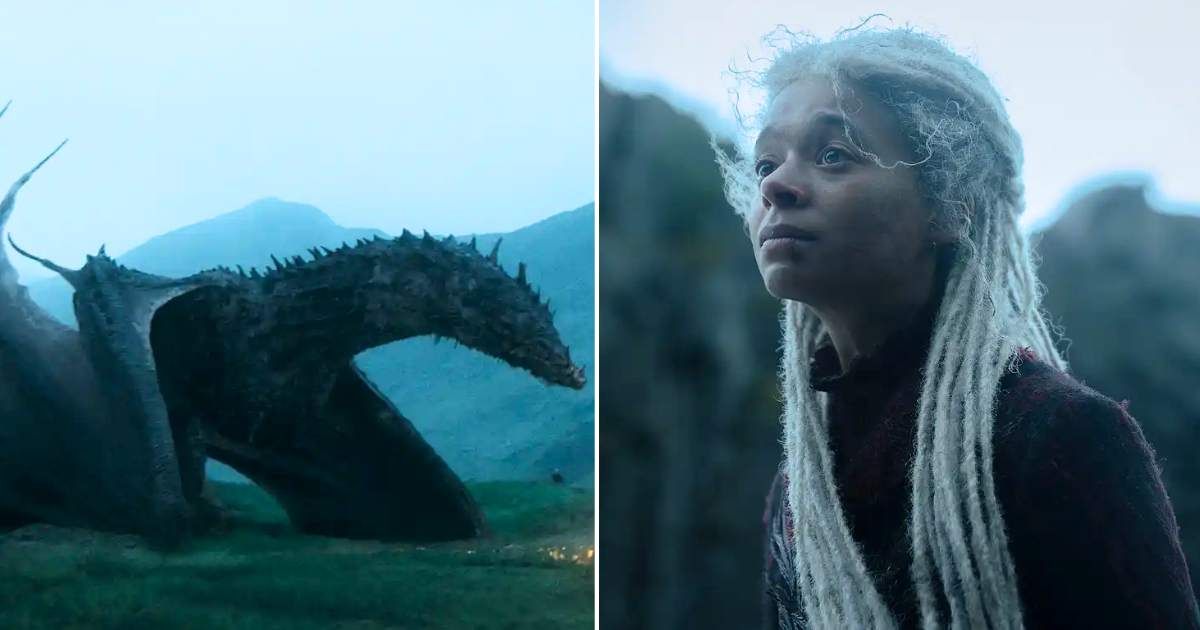
Following the broadcast of the seventh episode of the third season of "House of the Dragon," television audiences and literary analysts have focused attention on the fate of the wild dragon Sheepstealer and the continuing storyline of Lady Rhaena Targaryen, according to reporting by Shovan Roy. The episode presented pivotal moments regarding the creature's status, triggering widespread debate among viewers concerning whether the dragon remains alive and how its trajectory aligns with the written history established by author George R.R. Martin.
Narrative developments in Episode 7
The events depicted in the seventh episode brought the storyline surrounding the wild dragons of Westeros into sharper focus. Viewers were presented with critical scenes in the Vale of Arryn, where Lady Rhaena Targaryen has been pursuing a wild dragon during a period of escalating political and military conflict. According to reporting by Shovan Roy, the episode left Sheepstealer's ultimate condition subject to interpretation, generating significant audience speculation regarding the immediate physical outcome of the encounter.
In the television drama, the search for unbonded dragons represents a strategic priority for Queen Rhaenyra Targaryen’s faction, known as the Blacks, as they seek to counter the aerial dominance of the Greens led by King Aegon II Targaryen and Prince Aemond Targaryen. The depiction of Sheepstealer in Episode 7 highlighted the inherent dangers of attempting to approach untamed beasts, a process that carries severe risks for any prospective dragonrider regardless of Targaryen lineage.
Divergence from George R.R. Martin's text
The broadcast of Episode 7 highlighted notable differences between the HBO television series and George R.R. Martin's 2018 book, "Fire & Blood," which serves as the primary source material for the adaptation. In Martin’s text, the history of the Targaryen civil war, known as the Dance of the Dragons, is presented as an in-universe chronicle written by Archmaester Gyldayn.
In the original literary canon, Sheepstealer is described as a muddy-brown wild dragon that hatched when King Jaehaerys I Targaryen was young. The book places Sheepstealer primarily on the slopes of Dragonmont on the island of Dragonstone, where the beast subsists mainly on mutton stolen from local flocks. Crucially, in "Fire & Blood," the dragon is not claimed by Rhaena Targaryen. Instead, the beast is tamed during the event known as the Sowing of the Dragonseeds by a young lowborn woman named Nettles, who earns the dragon's trust by feeding it freshly killed sheep daily.
The canonical trajectory of Sheepstealer
As noted in the reporting by Shovan Roy, reference to Martin's published lore provides vital context for evaluating the potential future of the creature on screen. In the historical text of "Fire & Blood," Sheepstealer does not perish during the initial encounters or during the early stages of the civil war.
According to Martin's book, Sheepstealer and Nettles participate in major military engagements, including the Battle of the Gullet, before eventually departing the central conflict. Following political accusations levied against Nettles, the pair flees into the wilderness. The text records that Sheepstealer and Nettles were last sighted in the Mountains of the Moon, located within the Vale of Arryn. Local lore within the novel indicates that mountain clans in the region subsequently worshipped a fire witch who lived in a hidden cave alongside a large dragon. Canonically, Sheepstealer survives the civil war entirely, making the creature one of the few dragons to outlive the Dance of the Dragons.
Structural changes to Rhaena Targaryen's storyline
The decision by showrunner Ryan Condal and the series' writing team to combine elements of Nettles' narrative arc into Rhaena Targaryen's journey reflects a broader structural adaptation strategy. In the television adaptation, Rhaena, portrayed by actress Phoebe Campbell, is assigned to accompany the young Targaryen children to the Vale under the protection of Lady Jeyne Arryn.
In earlier episodes of the third season, Rhaena discovers evidence of a wild dragon consuming livestock in the Vale countryside. By substituting Rhaena into the role of the wild dragon's claimant, the television series omits the character of Nettles from the screen adaptation. Reporting by Shovan Roy emphasizes that this structural consolidation directly alters how viewers interpret the stakes of Episode 7. While book readers had anticipated a faithful rendering of the Sowing of the Dragonseeds, the show's consolidated narrative creates new uncertainties regarding whether Sheepstealer's fate will match the book's outcome or diverge entirely to suit Rhaena's revised narrative path.
The mechanics of HBO's fantasy adaptations
Modifications to literary source material are a long-standing feature of HBO's adaptations of Martin's fantasy universe, beginning with the original "Game of Thrones" series and continuing into "House of the Dragon." Television adaptations frequently streamline expansive rosters of minor characters and adjust geographically complex subplots to maintain dramatic focus across limited episode runtimes.
The consolidation of Rhaena Targaryen and Nettles represents one of the most substantial thematic shifts introduced in "House of the Dragon." In "Fire & Blood," Nettles was notable for being a person of non-noble birth who claimed a dragon without clear Valyrian lineage, challenging the Targaryen doctrine of blood purity. By transferring the act of taming Sheepstealer to Rhaena, a highborn Targaryen princess, the show shifts the focus away from the subversion of bloodline lore and toward a personal arc of self-determination for Rhaena, who had previously felt isolated due to her inability to hatch a dragon egg.
Future expectations and narrative balance
As "House of the Dragon" progresses toward the conclusion of its third season, the disposition of dragon forces remains central to the overarching plot. Dragons serve not only as dramatic visual elements but also as the primary strategic weapons governing the outcome of the war between the rival factions.
Whether Sheepstealer emerges from the events of Episode 7 fully bonded to Rhaena Targaryen, injured, or positioned for a different outcome, the resolution will significantly impact the military balance of power. Viewers and analysts continue to monitor coming episodes to see how the production team balances the historical framework of "Fire & Blood" with the modified character trajectories created specifically for the television series.
This article incorporates reporting originally published by Shovan Roy.
How this story was produced
This report was written by The Global Wire newsroom from reporting first published by Shovan Roy. We verify the core facts against the original report, write our own account, and add the background and consequences a short wire item leaves out. Drafting is AI-assisted inside an editor-supervised pipeline, and every story is checked for accuracy of attribution, structure and duplication before it appears — full detail in our AI and funding disclosure.
Spotted an error? Tell us at corrections@horizonglobalnews.com and read our corrections policy or editorial standards.



Reader comments
Loading comments…