

MS Dhoni Concludes IPL Playing Career to Take Mentorship Role at Chennai Super Kings
The former India captain steps down from active competition after an 18-season tenure, transitioning to guide the Chennai franchise from behind the scenes.
By The Global Wire Newsroom · Reported from Pranav Shukla
Link preview · horizonglobalnews.com
MS Dhoni Concludes IPL Playing Career to Take Mentorship Role at Chennai Super Kings
The former India captain steps down from active competition after an 18-season tenure, transitioning to guide the Chennai franchise from behind the scenes.
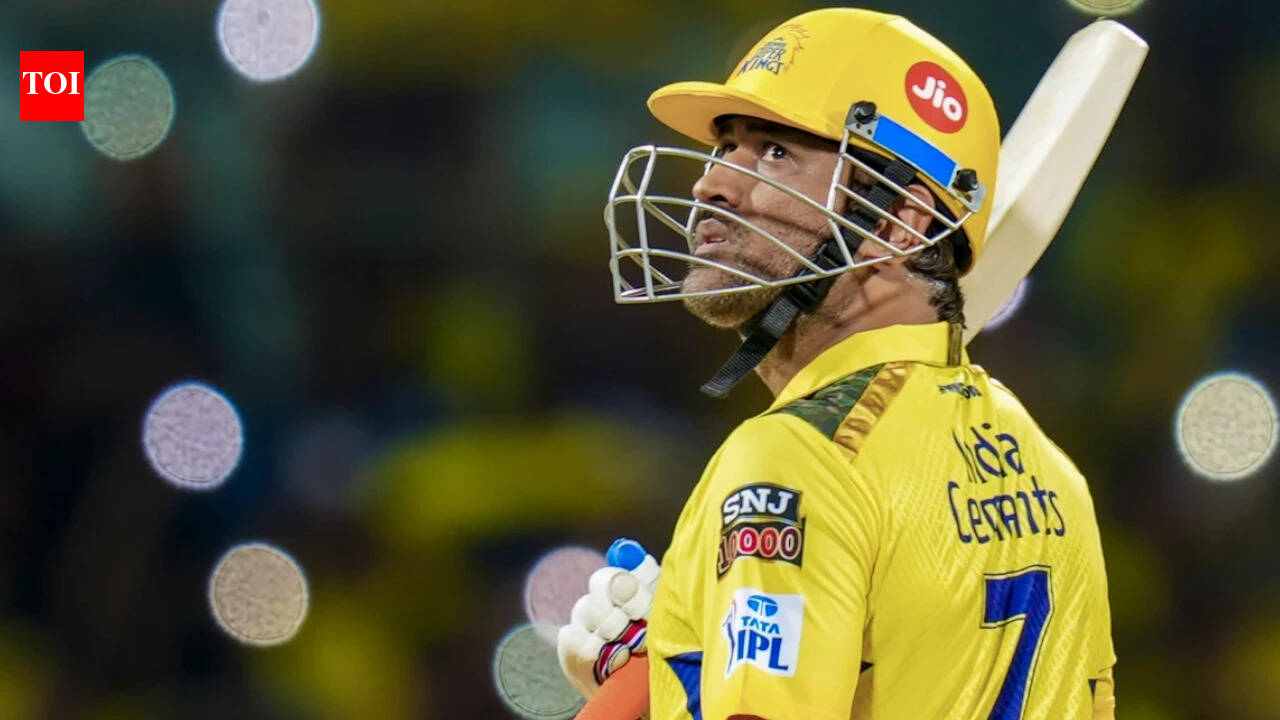
CHENNAI — Mahendra Singh Dhoni has brought an end to his playing career in the Indian Premier League, transitioning into a mentorship role with Chennai Super Kings following an active tenure spanning 18 seasons, according to reporting by sports journalist Pranav Shukla. The move officially closes one of the most durable and decorated chapters in modern Twenty20 cricket, formally taking the 43-year-old wicketkeeper-batsman off the playing field and placing him in an off-field leadership role for the five-time tournament champions.
Key facts
What happened
According to reporting by Pranav Shukla, Dhoni's 18-season run as an active player in the Indian Premier League concluded with his formal appointment as team mentor for Chennai Super Kings. The announcement marks the definitive endpoint to an on-field career that had been subject to annual public speculation following Dhoni's retirement from international cricket in August 2020.
Dhoni had spent the latter years of his tournament career managing physical ailments, including knee surgery following Chennai's fifth title-winning campaign in 2023. During the 2024 tournament, he relinquished the team captaincy to opening batsman Ruturaj Gaikwad, operating primarily as a lower-order specialist batsman and wicketkeeper. While he continued to demonstrate explosive finishing capabilities in limited deliveries during late-innings appearances, his role on the field had grown increasingly circumscribed by physical management and recovery demands.
The shift to mentorship keeps Dhoni within the Chennai Super Kings hierarchy without requiring his registration as an active player on the franchise's squad list. In this capacity, Dhoni will work alongside head coach Stephen Fleming and the wider coaching staff, focusing on player development, tactical planning, and match-day strategy from the dugout rather than on the pitch.
Why it matters
Dhoni's retirement from active competition carries profound commercial, sporting, and operational implications for both Chennai Super Kings and the broader Indian Premier League ecosystem. For nearly two decades, Dhoni functioned as the commercial centerpiece and cultural anchor of the Chennai franchise. His brand value drove immense ticket sales, merchandise revenue, and television viewership across the league, with away fixtures for Chennai frequently turning into de facto home matches characterized by stadiums filled with spectators wearing his number-seven yellow jersey.
From a sporting standpoint, Chennai Super Kings now face the challenge of replacing one of the most prolific wicketkeeper-finishers in Twenty20 history. While Gaikwad had already assumed tactical leadership on the ground, Dhoni remained an indispensable fielding strategist, guiding spin bowlers, setting defensive fields in high-leverage death overs, and executing lightning-fast stumpings. Chennai must now rebuild its match-day roster structure without relying on Dhoni to anchor the lower middle order or manage field placements.
For the league as a business entity, Dhoni's departure from the pitch marks the near-total conclusion of the foundational era of marquee Indian players who launched the competition in 2008. The commercial resilience of the league will increasingly rely on a younger cohort of domestic stars—including Shubman Gill, Yashasvi Jaiswal, Rishabh Pant, and Gaikwad—to command the cultural devotion and ratings pull that Dhoni, Sachin Tendulkar, and Virat Kohli generated over the preceding two decades.
The background
Mahendra Singh Dhoni emerged from Ranchi in the eastern state of Jharkhand to become one of the most transformational figures in world cricket. He made his international debut for India in late 2004, quickly gaining global renown for his unorthodox technique, raw hitting power, and calm demeanor under intense match pressure. In 2007, the Board of Control for Cricket in India appointed Dhoni captain of a youthful national side for the inaugural ICC World Twenty20 in South Africa, which India won in a dramatic final against Pakistan. That victory catalyzed the commercial explosion that led directly to the creation of the Indian Premier League in 2008.
At the inaugural IPL player auction in February 2008, Chennai Super Kings secured Dhoni as their marquee signing and designated him captain. Over the ensuing decade and a half, Dhoni built an unprecedented record of team consistency. Under his captaincy, Chennai qualified for the playoff stage in almost every season they contested, reaching 10 finals and lifting the trophy five times—equaling the record set by the Mumbai Indians. Dhoni also led the franchise to victories in the now-defunct Champions League Twenty20 tournament in 2010 and 2014.
When Chennai Super Kings served a two-year suspension from the competition in 2016 and 2017 following a spot-fixing and betting investigation involving team officials, Dhoni represented the temporary franchise Rising Pune Supergiant. He returned to Chennai in 2018, immediately leading the resurrected team to a championship victory that cemented his revered status among the franchise's supporters, who affectionately dubbed him 'Thala' (leader).
Dhoni retired from all formats of international cricket on August 15, 2020, having captained India through 332 matches across Tests, One-Day Internationals, and T20 Internationals—the most by any captain in history. He remains the only captain to have won all three major global white-ball trophies organized by the International Cricket Council: the T20 World Cup (2007), the ODI World Cup (2011), and the Champions Trophy (2013). However, he continued his IPL career for several additional seasons, winning titles in 2021 and 2023.
Reaction
While formal individual statements from the franchise board and league officials have not been widely published alongside the initial report, prominent stakeholders across Indian cricket are expected to mark the transition extensively. The Board of Control for Cricket in India, franchise management, current and former teammates, and commercial partners routinely release formal tributes when iconic figures conclude their playing days in the world's preeminent domestic league.
Within Chennai, the response from supporters and local fan organizations is anticipated to reflect a mixture of celebration and relief that Dhoni remains embedded in the club's leadership structure. For years, observers noted that whenever Dhoni was asked at post-match presentations whether he would return for another season, his ambiguous responses fueled widespread public debate. The definitive confirmation of his transition to team mentor provides long-sought organizational clarity for Chennai's team building and strategy.
Analysts within the sport have consistently drawn parallels between Dhoni's shift and earlier transitions made by other Indian cricket luminaries. Former national team captains such as Sachin Tendulkar and Gautam Gambhir previously moved from playing roles into advisory or mentorship capacities with Mumbai Indians and Kolkata Knight Riders, respectively, demonstrating how veteran figures can project institutional culture and tactical knowledge without occupying an active playing slot.
What we don't know yet
Several practical details surrounding Dhoni's new capacity remain unclarified in the initial reporting. Chief among these is the specific contractual scope of his mentorship. It is not yet specified whether Dhoni will travel full-time with the traveling squad across all away venues or focus primarily on home preparation, tactical planning sessions, and auction strategy.
Furthermore, the precise impact on Chennai Super Kings' salary cap and player retention accounting under IPL regulations requires official clarification from tournament authorities. Under IPL governance, player retention rules and non-playing staff compensation operate under entirely separate frameworks. How Chennai structures its squad roster ahead of the upcoming player auction—especially regarding their wicketkeeping options and domestic player allocations—will depend heavily on the official roster filings submitted to the IPL governing council.
Finally, the report does not detail whether Dhoni will hold broader executive responsibilities within Super Kings Cricket Ventures, the parent entity that also controls franchise properties in overseas leagues such as Major League Cricket in the United States and SA20 in South Africa.
What to watch
The immediate focus shifts to Chennai Super Kings' squad composition ahead of the next IPL auction cycle. With Dhoni vacated from the wicketkeeper-batsman role, Chennai management and head coach Stephen Fleming must identify a primary wicketkeeper capable of managing Chennai's traditionally spin-heavy bowling attack while providing middle-to-lower order batting stability.
Observers will also monitor the official roster submissions released by the IPL governing council, which will formally confirm Chennai's retention list and player purse allocations under the league's financial regulations. These filings will outline the financial flexibility Chennai gains by removing Dhoni from their playing ledger.
On the field, the upcoming season will serve as the true test of Ruturaj Gaikwad's uninhibited captaincy. Although Gaikwad captained during matches, Dhoni's physical presence behind the stumps provided an ever-present tactical sounding board. Gaikwad's capacity to direct bowling rotations and maintain field disciplines with Dhoni confined to the dugout will be a primary storyline for cricket analysts and supporters alike.
*This report includes information first reported by Pranav Shukla.*
How this story was produced
This report was written by The Global Wire newsroom from reporting first published by Pranav Shukla. We verify the core facts against the original report, write our own account, and add the background and consequences a short wire item leaves out. Drafting is AI-assisted inside an editor-supervised pipeline, and every story is checked for accuracy of attribution, structure and duplication before it appears — full detail in our AI and funding disclosure.
Spotted an error? Tell us at corrections@horizonglobalnews.com and read our corrections policy or editorial standards.




Reader comments
Loading comments…