

Morpho Debuts Desktop UV Printer at IFA 2026 with Live Demonstrations
Hardware manufacturer Morpho showcased its first desktop ultraviolet printer at IFA 2026 in Berlin, demonstrating direct-to-object digital printing capabilities for creative applications.
By The Global Wire Newsroom · Reported from prnewswire.com
Link preview · horizonglobalnews.com
Morpho Debuts Desktop UV Printer at IFA 2026 with Live Demonstrations
Hardware manufacturer Morpho showcased its first desktop ultraviolet printer at IFA 2026 in Berlin, demonstrating direct-to-object digital printing capabilities for creative applications.
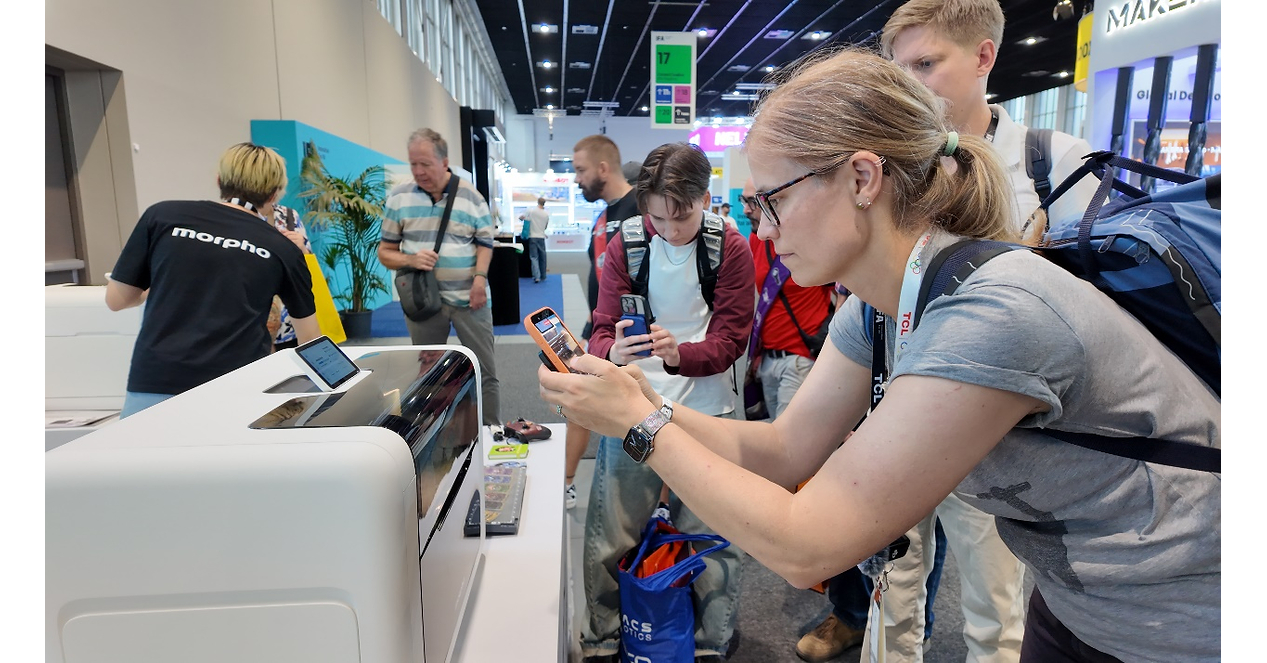
At the IFA 2026 technology exposition in Berlin, hardware maker Morpho introduced its inaugural desktop ultraviolet printer, marking an effort to transition specialized direct-to-object printing technology from industrial factories into compact workshop and studio environments. Demonstrating the new device at booth Hall 17-196 on the Messe Berlin exhibition grounds, the company conducted interactive creation sessions that allowed trade show attendees to witness the step-by-step physical printing and curing process in real time. According to a press announcement released by PR Newswire on September 5, 2026, the public unveiling centers on bringing commercial-grade ultraviolet photo-curing capabilities into a smaller, accessible form factor targeted at creative professionals, small businesses, and desktop fabricators.
Key facts
What happened
According to reporting released by PR Newswire, Morpho selected the IFA 2026 tech fair in Berlin as the global platform to present its entry into the compact fabrication hardware market. Operating within Hall 17-196 at the expansive Messe Berlin complex, the company constructed an interactive demonstration space dedicated to displaying real-time printing operations.
The company's presentation focused on live, hands-on creation demonstrations, inviting fair attendees to interact directly with the hardware. Rather than relying solely on static display models or pre-manufactured promotional samples, the interactive sessions walked participants through the physical workflow of converting digital artwork into fully cured, finished physical items. During these sessions, visitors observed how the printer deposits liquid photopolymer ink onto substrates while immediately exposing the applied ink to focused ultraviolet radiation, curing the material instantly before the object exits the printing area.
Morpho, which focuses on ultraviolet printing equipment, showcased the machine as its premier desktop-scale model. The public demonstration at one of Europe's largest tech trade events emphasizes a growing industry push to adapt direct-to-substrate printing techniques—historically restricted to multi-million-dollar manufacturing facilities—into compact hardware suitable for retail kiosks, design agencies, micro-factories, and small artisan workshops.
Why it matters
The arrival of desktop-scale UV printing equipment reflects an ongoing shift in short-run manufacturing, custom merchandise production, and rapid prototyping. Traditionally, applying durable, high-resolution graphics directly onto rigid, non-porous three-dimensional objects—such as phone cases, acrylic awards, metal tools, glass bottles, or wooden plaques—required large industrial flatbed printers costing tens of thousands of dollars and requiring substantial dedicated floor space. Alternative short-run customization techniques, including screen printing, dye-sublimation, or vinyl transfers, involve multi-step labor processes, specialized heat presses, or manual adhesive applications that increase production costs and limit substrate compatibility.
By shrinking UV printing technology down to a desktop footprint, manufacturers like Morpho lower the financial and spatial entry barriers for independent businesses, creative agencies, and custom fabricators. UV printing offers inherent technical benefits over traditional water- or solvent-based inkjet systems because the ink solidifies immediately through photopolymerization when exposed to built-in ultraviolet light-emitting diodes (LEDs). This rapid drying eliminates ink bleeding, removes post-print drying waiting times, and produces a scratch-resistant, weather-durable finish on surfaces that cannot absorb liquid carriers.
Furthermore, desktop UV hardware supports on-demand, single-unit customization without setup fees, custom screens, or physical stencils. Retail businesses can print customized items on location while customers wait, eliminating the need to maintain extensive pre-printed inventories. As global consumer demand shifts toward personalized products and localized micro-manufacturing, low-barrier UV printing machinery provides a key technological building block for decentralized production networks.
The background
Ultraviolet printing technology was originally developed in the late 20th century to overcome the environmental, health, and operational constraints associated with solvent-based and water-based industrial inks. Traditional printing systems depend on liquid carriers that evaporate into the surrounding atmosphere or soak into porous paper fibers. In contrast, UV-curable inks contain a liquid formulation of photoinitiators, monomers, oligomers, and pigments. When exposed to targeted ultraviolet light wavelengths, the photoinitiators absorb the light energy and trigger a rapid cross-linking chemical reaction known as polymerization, converting the liquid film into a solid, hardened plastic matrix within fractions of a second.
Early industrial UV flatbed printers relied on high-intensity mercury vapor lamps that generated extreme heat, consumed massive amounts of electricity, and produced hazardous ozone byproducts, requiring heavy exhaust ventilation systems. Over the past decade, advancements in solid-state UV-LED technology revolutionized the sector. UV-LED arrays operate at lower electrical wattages, generate negligible radiant heat, and emit precise narrow-band ultraviolet light (typically around 365 to 395 nanometers). This heat-free curing process enabled direct printing onto heat-sensitive substrates, such as thin film plastics or delicate electronic enclosures, without causing physical warping or damage.
The choice of IFA (Internationale Funkausstellung Berlin) as the venue carries historical significance. First established in Berlin in 1924 as a regional German radio exhibition, IFA grew over more than a century into one of the world's most influential trade fairs for consumer technology, home appliances, and personal computing hardware. Held annually at the Messe Berlin center, the event brings together international manufacturers, retail distributors, industry analysts, and tech journalists. In recent years, IFA expanded its scope beyond home entertainment and home appliances to feature personal creation tools, additive manufacturing systems, smart tools, and desktop digital fabrication hardware. Morpho's unveiling in Hall 17-196 highlights how industrial-derived fabrication machinery is increasingly integrating into mainstream technological exposition spaces.
Reaction
Official product reviews, detailed technical teardowns, and independent performance assessments of Morpho's desktop UV printer have not yet been published following the initial product announcement reported by PR Newswire. Nevertheless, trade fair attendees, digital fabrication specialists, and small-business equipment resellers are closely watching the live demonstrations taking place at IFA 2026.
Industry analysts and workshop operators are expected to scrutinize several critical performance metrics as additional details emerge. Key operational concerns include long-term printhead reliability, ink delivery system maintenance, color management capabilities, and the cost of consumable ink cartridges. In addition, health and safety organizations and occupational health experts pay close attention to safety features in desktop UV machinery. Because uncured liquid UV inks contain acrylic monomers and photoinitiators that can cause skin sensitization or respiratory irritation prior to curing, safety observers will monitor whether the hardware incorporates fully enclosed print chambers, active carbon air filtration, and UV-blocking safety shielding.
Furthermore, established manufacturers in the commercial flatbed printing sector are evaluating whether compact desktop units can maintain the optical density, white ink opacity, surface adhesion, and layer thickness required for professional tactile relief printing.
What we don't know yet
While the debut at IFA 2026 introduced the brand's desktop printer to the public, several vital technical and commercial parameters remain unconfirmed in the reporting provided by PR Newswire. The announcement summary omitted crucial financial details, such as the unit's recommended retail price, expected commercial shipping dates, regional market availability, and warranty terms. Hardware pricing will ultimately dictate whether the system can successfully capture the artisan and small-business market or remain limited to specialized print service providers.
Additionally, key hardware and operational specifications remain undisclosed. The report does not detail the maximum physical dimensions or thickness of items that can be accommodated on the print bed, the printer's dots-per-inch (DPI) resolution range, or the specific ink configuration supported—such as whether the unit offers dedicated white ink channels or clear coat varnish for textured, glossy finishes. Information regarding software integration, such as driver support for vector editing software or bundled Raster Image Processor (RIP) software, is also missing from the initial announcement.
What to watch
In the coming weeks, prospective buyers and industry watchers should monitor post-event updates and official product datasheets released following Morpho's exhibition in Hall 17-196 at IFA 2026. Detailed hands-on video reviews, independent print speed tests, and material compatibility demonstrations from trade fair visitors will offer the first concrete evidence of the printer's real-world operational capabilities.
Moving forward, regulatory filings and safety certifications will serve as critical indicators of the product's market readiness. Observers should watch for certifications regarding ultraviolet light shielding, electromagnetic compatibility, and indoor volatile organic compound (VOC) emissions standards required for sale in North American and European markets. Finally, competitive responses from established desktop fabrication companies—such as manufacturers of desktop 3D printers, laser cutters, and vinyl plotters—will reveal whether Morpho's launch triggers a broader expansion of direct-to-object UV printing across the personal fabrication industry.
This report relies on initial product announcement reporting distributed by PR Newswire on September 5, 2026.
How this story was produced
This report was written by The Global Wire newsroom from reporting first published by prnewswire.com. We verify the core facts against the original report, write our own account, and add the background and consequences a short wire item leaves out. Drafting is AI-assisted inside an editor-supervised pipeline, and every story is checked for accuracy of attribution, structure and duplication before it appears — full detail in our AI and funding disclosure.
Spotted an error? Tell us at corrections@horizonglobalnews.com and read our corrections policy or editorial standards.





Reader comments
Loading comments…