

McLaren Outlines £500m UK Expansion Plan to Create 1,000 Jobs by 2032
The luxury supercar maker plans to boost operations in Woking and South Yorkshire over six years to advance manufacturing and technology.
By The Global Wire Newsroom · Reported from David Lynch
Link preview · horizonglobalnews.com
McLaren Outlines £500m UK Expansion Plan to Create 1,000 Jobs by 2032
The luxury supercar maker plans to boost operations in Woking and South Yorkshire over six years to advance manufacturing and technology.
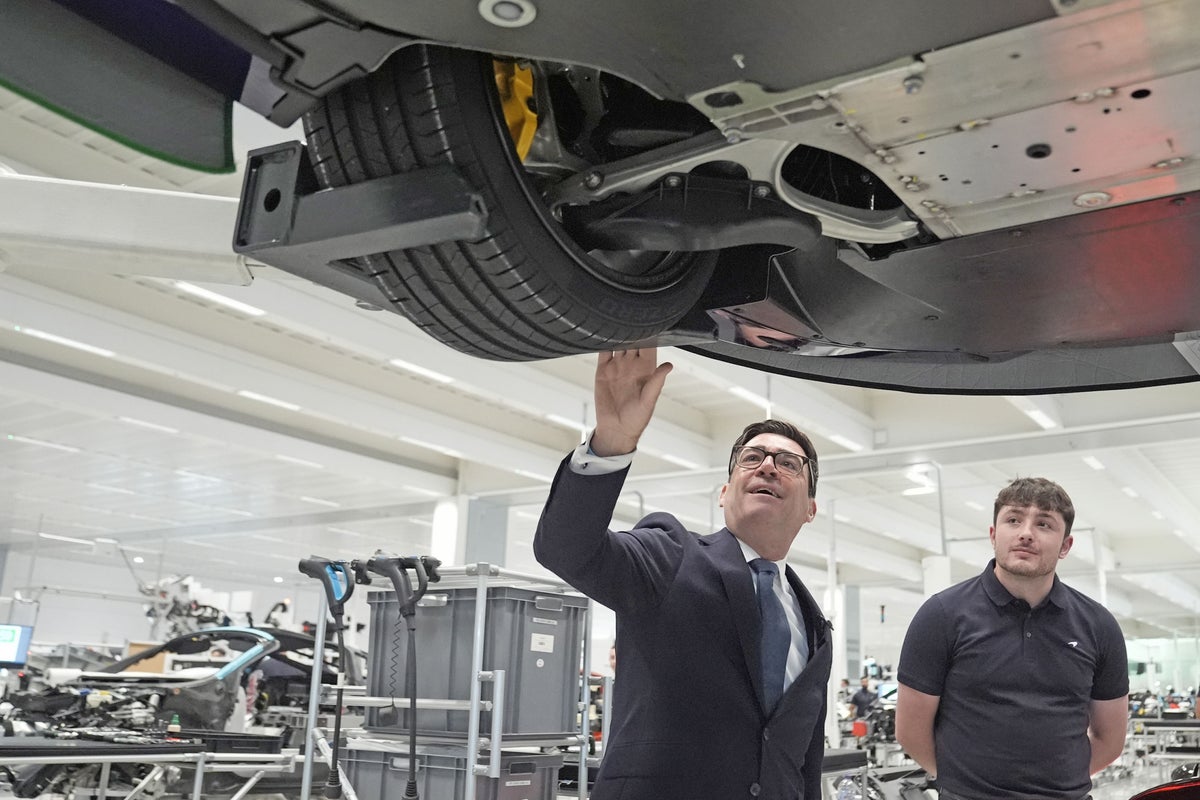
British high-performance car manufacturer McLaren has outlined a major strategic capital expenditure program, committing £500 million to expand its engineering and production operations in the United Kingdom over the next six years. According to reporting by David Lynch, the investment plan targets the automaker’s core facilities in Surrey and South Yorkshire, with company projections indicating the creation of up to 1,000 new positions by 2032. The capital injection represents one of the most significant private industrial commitments to Britain's specialized automotive sector in recent years, reinforcing the country's role as a primary design and manufacturing base for high-end luxury vehicles.
Key facts
What happened
The £500 million funding program announced by McLaren outlines a structured expansion of the company's domestic operational footprint over a six-year period extending through 2032. The capital will be deployed primarily across two strategic nodes in McLaren’s supply and assembly network: its global headquarters and production centre in Woking, Surrey, and its specialized materials facility in South Yorkshire.
In Woking, where McLaren hand-assembles its supercars at the McLaren Production Centre adjacent to its iconic technology complex, the investment will support upgraded assembly lines, enhanced engineering facilities, and expanded research facilities for vehicle electronics and powertrain integration. Meanwhile, the facility in South Yorkshire—the McLaren Composites Technology Centre located near Sheffield and Rotherham—is slated for capacity expansion to increase domestic fabrication of lightweight carbon-fibre chassis structures.
The projected addition of 1,000 jobs by 2032 will expand McLaren’s workforce across multiple disciplines, including advanced composites engineering, software development, aerodynamics, supply chain management, and high-precision assembly. The expansion is intended to support the development and volume production of next-generation hypercars and supercars, while reducing reliance on overseas component manufacturing.
Why it matters
The commitment of half a billion pounds into UK automotive manufacturing carries significant weight for both the national economy and the global luxury vehicle industry. For the United Kingdom, which has faced turbulence in its motor manufacturing sector due to trade realignments, supply chain disruptions, and the massive capital demands of industrial decarbonization, McLaren’s investment provides a crucial vote of confidence in domestic high-value engineering talent.
Automotive manufacturing in the UK has increasingly shifted its focus toward niche, high-margin, and highly specialized production. While mass-market car assembly in Britain has experienced contractions over the past decade, high-luxury and high-performance marques—such as McLaren, Bentley, Aston Martin, and Rolls-Royce—have preserved Britain’s position as a global leader in high-precision automotive engineering. McLaren's planned workforce expansion of 1,000 jobs represents a substantial boost for advanced manufacturing, particularly in South Yorkshire, a region historically central to British industrial production that has actively sought to establish itself as a hub for modern materials science and aerospace-grade engineering.
From a product perspective, high-performance vehicle manufacturers face strict regulatory timelines across major global markets, including Europe, North America, and China, requiring rapid transitions toward hybrid and fully electric powertrains. Developing high-performance powertrains that maintain vehicle dynamics while incorporating heavy battery architectures demands extensive capital investment. By securing £500 million in localized capital expenditure, McLaren strengthens its ability to fund the complex engineering required to keep pace with rivals like Ferrari, Porsche, and Aston Martin.
Furthermore, expanding carbon-fibre fabrication in South Yorkshire reinforces supply chain resilience. Lightweight materials are central to offsetting the weight penalties of electric batteries and hybrid systems in sports cars. In-sourcing chassis production and technical development within the UK shields the automaker from external logistics bottlenecks and foreign trade tariffs, while embedding technical intellectual property within British jurisdiction.
The background
McLaren’s corporate history is deeply entwined with British motorsport and automotive engineering. Founded in 1963 by New Zealand racing driver Bruce McLaren, the organization initially established its reputation in Formula One racing, growing into one of the most successful teams in grand prix history. In the early 1990s, the company ventured into road vehicle production with the McLaren F1, a three-seater supercar that set speed records and established the brand's reputation for advanced carbon-fibre technology.
McLaren Automotive was formally established as a separate commercial road-car business in 2010, operating under the umbrella of the McLaren Group. To accommodate its ambitions, the company opened the McLaren Production Centre in Woking in 2011, designed by Foster + Partners alongside the existing McLaren Technology Centre. This facility became the primary assembly line for models including the 12C, 650S, 720S, and the P1 hybrid hypercar.
To further localize critical technologies, McLaren opened the McLaren Composites Technology Centre (MCTC) in South Yorkshire in 2018. Located on the Advanced Manufacturing Park between Sheffield and Rotherham, the site was built to design and produce lightweight carbon-fibre tubs—termed the McLaren Carbon Lightweight Architecture (MCLA)—replacing foreign suppliers and centralizing chassis development within Great Britain.
Despite its technical success, McLaren faced severe financial strain during the COVID-19 pandemic, which halted global supercar sales and disrupted motorsport operations. The company underwent extensive financial restructuring, including equity sales, sale-and-leaseback agreements for its Woking headquarters, and capital injections from existing shareholders.
A pivotal corporate transition occurred in March 2024, when Bahrain’s sovereign wealth fund, Mumtalakat Holding Company, completed a full takeover of McLaren Group, converting its majority stake into 100% ownership. This consolidation brought long-term financial stability to the company, providing the capital framework necessary to plan multi-year industrial investments such as the £500 million initiative announced for Woking and South Yorkshire.
Reaction
Although official corporate releases and public government responses were pending full formal presentations at the time of initial reports, an investment of this scale typically draws strong engagement from British government departments and regional authorities.
The UK Department for Business and Trade and local enterprise partnerships in Surrey and South Yorkshire are expected to welcome the news, as it aligns with broader national policy goals aimed at boosting private sector R&D spending and supporting advanced engineering corridors outside London. Regional trade bodies, including the Society of Motor Manufacturers and Traders (SMMT), regularly highlight commitments to domestic manufacturing as crucial for sustaining the broader UK automotive supply chain.
Local municipal leaders in Sheffield and Rotherham are anticipated to highlight the job creation aspects of the South Yorkshire expansion, viewing it as reinforcement for the region's designated Advanced Manufacturing Innovation District. Meanwhile, labor unions representing automotive and aerospace engineers in the UK are likely to monitor the quality and permanence of the projected 1,000 positions, seeking assurances regarding long-term skills training, apprenticeships, and competitive compensation structures.
What we don't know yet
While the top-line figure of £500 million and the creation of 1,000 jobs by 2032 establish a clear directional target, several operational details remain undisclosed in available reporting.
First, the specific distribution of the £500 million investment between the Woking headquarters and the South Yorkshire composites plant has not been detailed. It remains unclear how much capital will flow into direct physical infrastructure versus research, digital engineering, software integration, and vehicle testing setups.
Second, the precise product lineup financed by this investment program has not been explicitly confirmed. Automakers routinely conceal upcoming model platforms for commercial reasons, but industry observers will be watching whether this capital supports a brand-new hybrid hypercar platform, an all-electric supercar architecture, or potential expansion into new luxury vehicle segments.
Third, the extent of potential UK government support—such as grants from the Automotive Transformation Fund, tax incentives for research and development, or local infrastructure subsidies—has not been specified. Furthermore, the exact timeline and staging of the 1,000 new job openings over the period leading to 2032 remain unmapped, leaving open questions about the immediate hiring pace versus long-term recruitment goals.
What to watch
In the coming months, several key milestones will indicate how rapidly McLaren's investment plan translates into concrete industrial activity.
Observers should monitor local planning permission filings with municipal councils in both Surrey and South Yorkshire. Any physical expansion of manufacturing facilities or cleanroom engineering spaces in Woking or Rotherham will require public planning approvals, providing detailed blueprints of construction schedules and technical equipment installation.
Product roadmap announcements will offer further clarity on how the investment influences vehicle development. Official reveals regarding new high-performance hybrid or fully electric powertrains will signal the execution phase of the engineering program.
Additionally, upcoming corporate disclosures from Mumtalakat and McLaren Group will reveal the capital deployment schedule and confirm whether additional financial partners or institutional lenders are participating in the £500 million program. Finally, tracking recruitment portals and regional apprenticeship drives in Surrey and South Yorkshire will offer direct verification of the hiring progress toward the 1,000-job target by 2032.
Reporting in this article is based on initial news accounts published by David Lynch on September 16, 2026.
How this story was produced
This report was written by The Global Wire newsroom from reporting first published by David Lynch. We verify the core facts against the original report, write our own account, and add the background and consequences a short wire item leaves out. Drafting is AI-assisted inside an editor-supervised pipeline, and every story is checked for accuracy of attribution, structure and duplication before it appears — full detail in our AI and funding disclosure.
Spotted an error? Tell us at corrections@horizonglobalnews.com and read our corrections policy or editorial standards.





Reader comments
Loading comments…