

Gold Advances as Oil Eases Ahead of Anticipated Federal Reserve Policy Decision
Spot gold posted modest gains on Wednesday as crude oil prices pulled back and markets priced in the U.S. Federal Reserve's upcoming interest rate announcement.
By The Global Wire Newsroom · Reported from thestar.com.my
Link preview · horizonglobalnews.com
Gold Advances as Oil Eases Ahead of Anticipated Federal Reserve Policy Decision
Spot gold posted modest gains on Wednesday as crude oil prices pulled back and markets priced in the U.S. Federal Reserve's upcoming interest rate announcement.
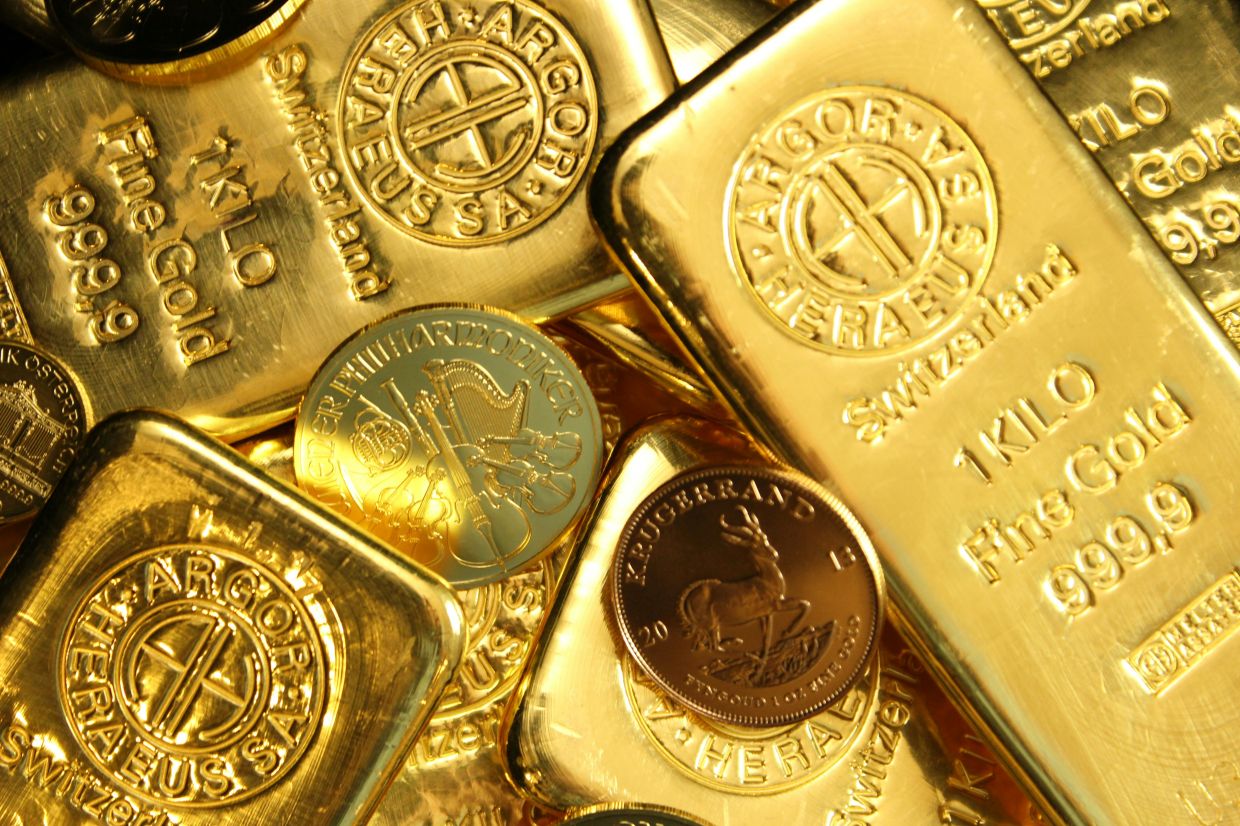
Gold prices registered modest upward momentum on Wednesday, September 16, 2026, trading higher as global crude oil benchmark prices retreated and international investors braced for the upcoming monetary policy announcement from the U.S. Federal Reserve. The slight appreciation in precious metal values unfolded against a backdrop of shifting commodity valuations, with market participants broadly anticipating that the central bank’s decision regarding its benchmark short-term borrowing costs had already been largely accounted for in prevailing market pricing. As energy markets experienced a temporary reprieve from recent cost pressures, financial market participants across Asia, Europe, and North America adjusted their portfolios, recalibrating risk exposures in non-yielding bullion assets, government debt securities, and foreign exchange markets prior to the conclusion of the Federal Open Market Committee meeting.
Key facts
What happened
Trading across international commodity exchanges on Wednesday, September 16, 2026, saw spot gold advance modestly as market liquidity concentrated ahead of the central bank policy decision. The uptick in bullion coincided directly with a pullback in global petroleum values, where both international benchmark crude contracts saw selling pressure moderate energy sector inflation concerns. This inverse divergence between energy products and precious metals provided immediate support for physical gold, which often acts as a financial refuge when broader commodity indices fluctuate.
Throughout the morning and early afternoon trading windows, financial institutions and desk traders monitored order flows across key trading hubs including London, New York, and Singapore. With market participants universally focused on the Washington-based central bank, asset managers maintained cautious positioning. The prevailing consensus across fixed-income and derivative trading desks was that the central bank's rate trajectory had been overwhelmingly incorporated into asset valuations over the preceding trading weeks, minimizing the potential for immediate structural surprises regarding the policy rate figure itself.
Consequently, capital flows shifted into non-interest-bearing precious metals as traders sought protection against prospective shifts in forward guidance, economic forecasts, and the post-meeting press conference remarks. As oil prices receded, lowering short-term inflation expectations, the relative cost of holding physical gold assets improved slightly, allowing spot quotes to register incremental gains ahead of the release of the official policy statement.
Why it matters
The subtle recalibration of gold and oil prices prior to a Federal Reserve rate announcement carries significant implications for institutional asset allocation, inflation hedging, and global cross-market risk management. Interest rate decisions orchestrated by the Federal Reserve set the baseline cost of borrowing worldwide, directly influencing corporate capital expenditures, mortgage financing rates, sovereign debt servicing costs, and currency exchange rates. Because gold is priced globally in United States dollars and pays no regular coupon or dividend yield, its market value maintains an intricate, inverse relationship with real U.S. interest rates and the strength of the dollar index.
When crude oil prices ease simultaneously, input costs for transport, industrial manufacturing, and agricultural production decrease, altering short-term projections for consumer price indices. Lower energy prices can reduce underlying inflationary pressures, which in turn influences how aggressively central banks feel compelled to maintain restrictive monetary policy settings. For private portfolio managers, commercial bullion dealers, and pension funds, even minor fluctuations in spot gold pricing during central bank decision windows provide critical signals regarding how the market evaluates future real yields. If energy costs continue to soften while short-term interest rates reach their cyclical peak, the opportunity cost of holding physical bullion diminishes, making gold an attractive diversification vehicle against macroeconomic volatility.
Furthermore, multinational corporations and international emerging market economies monitor these dual commodity movements closely. Emerging market nations with substantial dollar-denominated debt often face capital outflow pressures when U.S. yields rise. A stabilization in gold alongside reduced energy import expenditures offers temporary economic relief to energy-importing developing nations, helping to balance trade accounts and stabilize sovereign exchange rates.
The background
To fully contextualize the relationship between Federal Reserve policy, gold valuations, and energy market behavior, it is necessary to examine the historical mechanics of central bank policy cycles and global commodity markets. The Federal Reserve's primary mandate, established by the U.S. Congress, is to maintain price stability and foster maximum sustainable employment. To fulfill this dual mandate, the Federal Open Market Committee sets the target range for the federal funds rate—the rate at which commercial depository institutions lend reserve balances to one another overnight.
Historically, periods of aggressive monetary policy tightening, such as the historic rate hike campaign initiated in March 2022 to combat forty-year high consumer price inflation, create severe headwinds for non-yielding commodities like gold. As short-term Treasury bond yields climb, conservative investors typically reallocate capital out of precious metals and into high-yielding cash equivalents, commercial paper, and government debt instruments. Conversely, when central banks signal an end to monetary tightening or prepare to embark on policy easing cycles, gold prices historically undergo sustained upward re-ratings.
Energy prices, particularly West Texas Intermediate and Brent crude futures, serve as a fundamental driver of headline inflation metrics. Historically, elevated petroleum prices pass through into transportation, freight, and supply chain expenses, compounding broader inflationary pressures and forcing monetary policy authorities to maintain higher policy rates for longer durations. When petroleum markets undergo price retracements, central bank governors gain greater confidence that overall inflation metrics will converge toward their long-run target levels, typically pegged at two percent annually.
Over the past decade, central banks themselves—notably the People's Bank of China, the Reserve Bank of India, and the Central Bank of the Republic of Türkiye—have significantly increased their official physical gold holdings. This systemic institutional accumulation serves as a strategic hedge against currency debasement, geopolitically driven asset freezes, and concentrated dollar exposure. Consequently, modern gold markets reflect a complex interplay between institutional central bank demand, consumer jewellery purchasing in key Asian markets, and speculative financial trading linked to Fed interest rate expectations.
Reaction
Following the early trading movements, financial analysts, portfolio strategists, and commodity research desks expressed calibrated expectations regarding the Fed's trajectory. Market participants highlighted that because the rate adjustment was largely anticipated by money market futures, the immediate market impact of the numerical decision itself would likely remain constrained.
Institutional fixed-income managers noted that focus had shifted entirely from the rate figure to the tone of the accompanying policy statement and the economic projection summary. Foreign exchange desks reported that currency traders adjusted dollar pairings in anticipation of potential volatility during the central bank's press conference, while commodity desks observed steady buying interest in physical bullion exchange-traded funds as energy prices eased.
What we don't know yet
Despite the market movements observed on Wednesday, several critical details remain unresolved in available market reporting. The exact numeric changes in spot gold per troy ounce and specific dollar discounts across Brent and West Texas Intermediate crude benchmarks were not specified in initial market summaries.
Furthermore, available reports do not clarify the precise vote distribution among Federal Open Market Committee members, leaving open whether the policy stance was adopted unanimously or faced dissenting votes from hawks or doves within the board. Crucially, the long-term forward guidance language in the policy statement, the updated interest rate projection paths, and the explicit timeline for prospective future monetary adjustments remain undisclosed until official post-meeting releases are published.
What to watch
Moving forward, investors and economic observers should closely track several definitive indicators to gauge the direction of commodity and financial markets:
This account is based on original reporting published by thestar.com.my.
How this story was produced
This report was written by The Global Wire newsroom from reporting first published by thestar.com.my. We verify the core facts against the original report, write our own account, and add the background and consequences a short wire item leaves out. Drafting is AI-assisted inside an editor-supervised pipeline, and every story is checked for accuracy of attribution, structure and duplication before it appears — full detail in our AI and funding disclosure.
Spotted an error? Tell us at corrections@horizonglobalnews.com and read our corrections policy or editorial standards.




Reader comments
Loading comments…