

Maradona Manslaughter Trial Suspended Following Allegations of Swapped Medical Evidence
Proceedings in the trial over Diego Maradona's death have been paused after defense lawyers alleged kidney lab results presented in court belonged to his late father.
By The Global Wire Newsroom · Reported from straitstimes.com
Link preview · horizonglobalnews.com
Maradona Manslaughter Trial Suspended Following Allegations of Swapped Medical Evidence
Proceedings in the trial over Diego Maradona's death have been paused after defense lawyers alleged kidney lab results presented in court belonged to his late father.
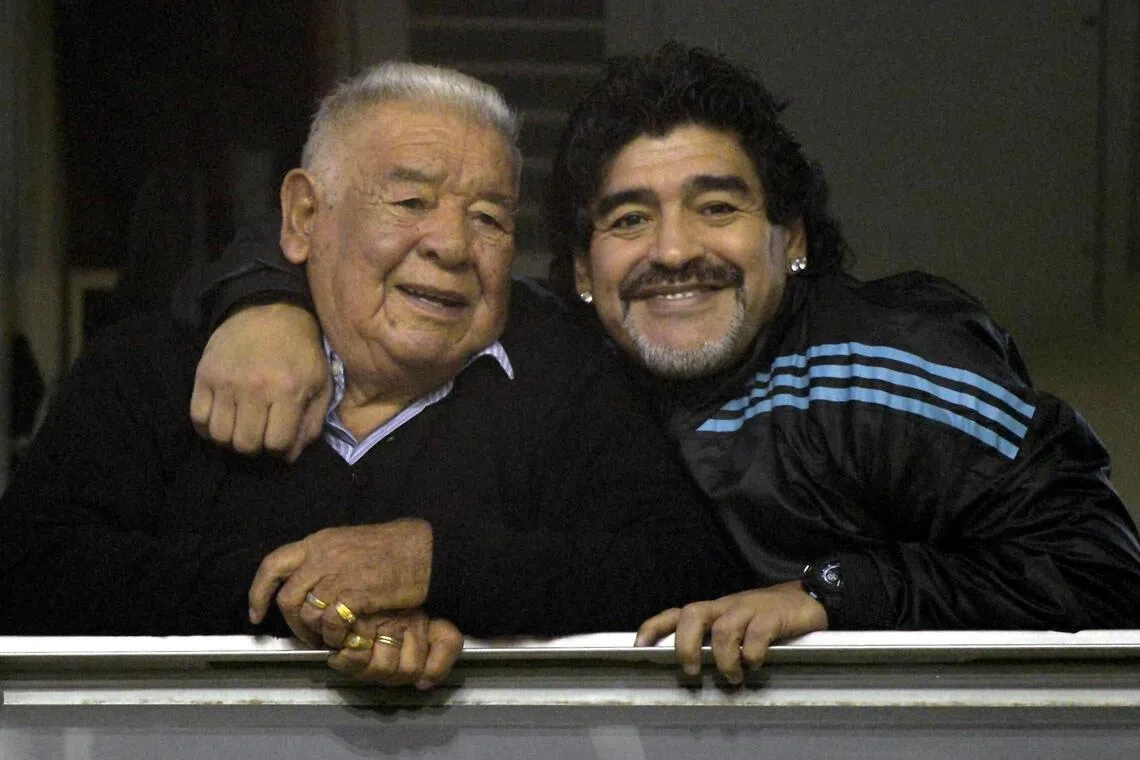
The criminal trial surrounding the 2020 death of Argentine football legend Diego Maradona was temporarily halted following claims by defence attorneys that vital medical evidence submitted to the court had been severely compromised. During proceedings, legal representatives representing members of Maradona’s former medical team asserted that laboratory test results for kidney function introduced into the case record actually belonged to Maradona’s late father, Diego Maradona Senior, rather than the football icon himself. The procedural interruption marks a dramatic complication in a high-profile judicial process in San Isidro, Argentina, where eight healthcare professionals face charges of severe negligence amounting to simple homicide with eventual intent. The suspension underscores persistent controversies over the handling of forensic samples and medical documentation since Maradona’s death at age 60.
Key facts
What happened
The court hearing was brought to an abrupt pause after defense attorneys representing the accused healthcare workers raised a formal objection concerning the provenance of key toxicological and pathological exhibits. According to reporting by Straits Times, defense counsel argued before the judicial panel that forensic results detailing kidney pathology—introduced by prosecutors as evidence of chronic underlying organ failure—were actually performed on tissue samples belonging to Maradona’s father, who died in June 2015.
The defense contention alleges that an administrative or chain-of-custody error occurred during the collation of archived medical files or laboratory testing, resulting in the inclusion of the elder Maradona's diagnostic history into the prosecution's evidentiary docket. The defense argued that relying on mislabeled laboratory samples fundamentally undermines the forensic consensus reached by court-appointed medical panels regarding the progression of Maradona's terminal illness. Upon hearing the objection, the presiding judges elected to suspend trial sessions to allow forensic auditors, prosecution representatives, and court officers to review the chain of custody for all physical samples and verify the authenticity of the laboratory reports in question.
The procedural halt forces the court to conduct a detailed review of all laboratory submissions, cross-referencing specimen tracking tags, hospital archives, and coroner records. The tribunal must now determine whether the administrative discrepancy represents an isolated clerical error involving legacy documents or points to a broader breakdown in how state forensic laboratories categorized specimens linked to the Maradona family.
Why it matters
The pause in the trial has substantial implications for the prosecution's central legal theory, which hinges on proving that Maradona’s medical team was aware of his deteriorating renal and cardiac health yet deliberately failed to provide adequate care. Under Argentine jurisprudence, simple homicide with eventual intent (homicidio simple con dolo eventual) carries sentences ranging from eight to 25 years in prison. To secure convictions, prosecutors must demonstrate not only that the medical care was insufficient, but that the defendants foresaw the likelihood of death resulting from their inaction and acted with indifference.
If laboratory evidence assessing renal function is proven to belong to Maradona's father, the scientific foundation of the prosecution's medical experts could be severely impaired. Renal failure is intricately connected to fluid retention and cardiac strain, key factors in the acute pulmonary edema that led to Maradona’s fatal heart failure. Discarding or re-evaluating kidney pathology reports could force prosecutors to adjust expert testimony regarding how fast Maradona’s condition deteriorated and whether his care team should have detected the symptoms sooner. Furthermore, any acknowledged breach in the chain of custody allows defense teams to challenge the integrity of other forensic evidence submitted in the case, including cardiac tissue tests, toxicology screens, and blood analysis. For the victims' family and the global public following the case, procedural delays prolong an already lengthy legal battle, raising questions about judicial management in one of Argentina's most scrutinized trials.
The background
Diego Armando Maradona died on November 25, 2020, at the age of 60, while recovering at a rented residence in Dique Luján, located in the Tigre municipality north of Buenos Aires. The football star had undergone successful neurosurgery to treat a subdural hematoma on November 3, 2020, at the Olivos Clinic in Buenos Aires Province, after which he was transferred to the residential property to undergo outpatient rehabilitation for alcohol dependency and post-surgical recovery.
Following his death, an official medical board composed of 20 independent forensic experts was commissioned by the San Isidro Prosecutor’s Office to analyze the circumstances of his home care. The board released a comprehensive report concluding that Maradona’s medical treatment was fraught with deficiencies and irregularities. The panel stated that Maradona was left to his fate by his medical team, asserting that he exhibited signs of prolonged agony for at least 12 hours prior to being found unresponsive in his bed.
The findings led to formal indictments against eight healthcare professionals: neurosurgeon Leopoldo Luque, psychiatrist Agustina Cosachov, psychologist Carlos Díaz, medical coordinator Nancy Forlini, nursing coordinator Mariano Perroni, clinical doctor Pedro Di Spagna, and night and day shift nurses Ricardo Almirón and Dahiana Gisela Madrid. Prosecutors alleged that the care arrangement at the rented house lacked basic medical equipment, proper monitoring instruments, and adequate emergency protocols necessary for a patient with complex chronic medical conditions.
Maradona’s father, Don Diego Maradona, passed away at age 87 in June 2015 due to long-standing coronary and respiratory complications at the Los Arcos hospital in Buenos Aires. Because both men shared the same name and received treatment in local hospital networks over various periods, archival records and baseline diagnostic files were stored within similar regional health registers, setting the stage for potential mix-ups if strict biological verification protocols were not maintained.
Reaction
While official court transcripts remain restricted while judges review the evidence, defense lawyers expressed immediate satisfaction with the decision to pause the trial, asserting that basic constitutional guarantees of due process depend on the strict integrity of physical evidence. Legal teams for the primary defendants have argued since the indictment that Maradona's health deterioration was sudden and unpredictable, maintaining that the medical staff acted within accepted professional boundaries under challenging residential care circumstances.
Prosecutorial sources and legal representatives for Maradona’s daughters—Dalma and Gianinna Maradona—and his former partner Veronica Ojeda, who represent his young son Diego Fernando, are expected to press for a rapid forensic audit to clarify the mix-up without jeopardizing the entire trial framework. Representatives for the family have consistently called for accountability, stating in prior public declarations that those responsible for Maradona's care must face justice. Legal analysts in Buenos Aires expect the court to summon the forensic pathologists and laboratory custodians who processed the disputed kidney samples to testify under oath regarding specimen logging procedures.
What we don't know yet
Key questions remain unresolved regarding how the disputed medical records were introduced into the evidentiary record and the extent to which they compromise the case. It is currently unknown whether the mix-up involved actual physical organ tissue samples collected during post-mortem examinations or merely historical diagnostic files integrated into the medical history background provided to the expert board.
Additionally, it remains unclear whether the medical board’s initial conclusions in 2021 relied heavily on these specific kidney test figures to determine Maradona's time of death and level of pre-existing organ dysfunction. If the board's findings were substantially grounded in data belonging to Maradona’s father, the court may need to order a re-evaluation of the forensic report by an independent panel. Conversely, if the error is limited to a single secondary file that does not alter the primary post-mortem toxicological findings, the judges may choose to strike the disputed exhibit while permitting the trial to proceed.
What to watch
In the coming days, the Oral Criminal Court No. 3 of San Isidro is scheduled to issue a procedural ruling detailing the findings of its initial evidentiary review. Court watchers will monitor whether the panel orders a formal administrative investigation into the state forensic laboratory and the hospital record departments responsible for submitting the documentation.
Key milestones to watch include:
This account is based on original reporting by Straits Times.
How this story was produced
This report was written by The Global Wire newsroom from reporting first published by straitstimes.com. We verify the core facts against the original report, write our own account, and add the background and consequences a short wire item leaves out. Drafting is AI-assisted inside an editor-supervised pipeline, and every story is checked for accuracy of attribution, structure and duplication before it appears — full detail in our AI and funding disclosure.
Spotted an error? Tell us at corrections@horizonglobalnews.com and read our corrections policy or editorial standards.


Reader comments
Loading comments…