

Kahlil Gibran's Reflection on Madness and Freedom Highlights Literary Legacy
A spotlight on Lebanese-American author Kahlil Gibran examines his philosophical reflections on solitude, societal conformity, and the price of being understood.
By The Global Wire Newsroom · Reported from economictimes.indiatimes.com
Link preview · horizonglobalnews.com
Kahlil Gibran's Reflection on Madness and Freedom Highlights Literary Legacy
A spotlight on Lebanese-American author Kahlil Gibran examines his philosophical reflections on solitude, societal conformity, and the price of being understood.
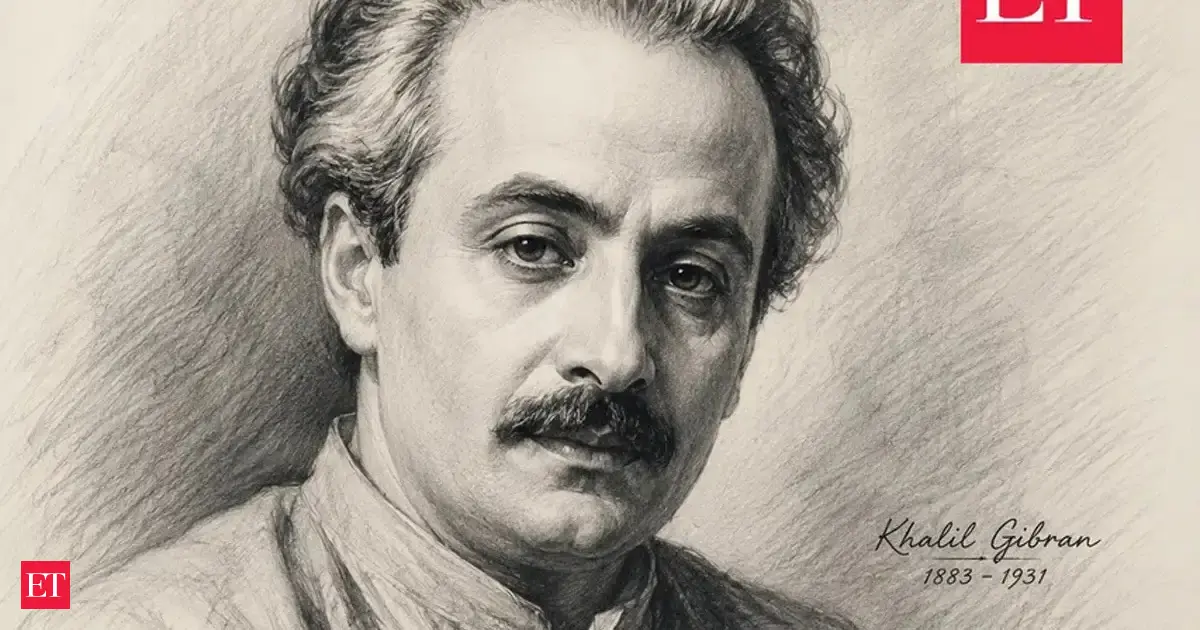
A recent spotlight on Lebanese-American poet and philosopher Kahlil Gibran has renewed attention on his literary reflections concerning human isolation, societal expectations, and personal liberation. As featured in a retrospective selection by economictimes.indiatimes.com, Gibran’s early work The Madman offers a stark examination of the boundaries between social acceptance and personal freedom. The author, best remembered globally for his seminal book The Prophet, argued through his writings that true liberty often requires stepping outside the conventional norms of society, even if such a departure leads to being labeled as distant or irrational by the surrounding world.
Re-examining 'The Madman' and the concept of freedom
In The Madman, published earlier in his career, Gibran articulated a paradox that continues to resonate across literary studies: the notion that an individual can discover both freedom and safety within what society deems madness. According to reporting by economictimes.indiatimes.com, Gibran's commentary focuses on the hidden burdens associated with being fully understood by others. In his view, when a person is completely comprehended by society, they are often subjected to rigid expectations, categorization, and mental constraint.
Conversely, the condition of being misunderstood—or existing in a state of solitude that others label as madness—provides a unique sanctuary. In this unexamined space, an individual gains the liberty to think, feel, and exist without the pressure of public conformity. The text suggests that the illusion of safety provided by social integration comes at the steep price of personal authenticity, whereas the perceived vulnerability of solitude actually grants protection for the inner self.
A life shaped by migration and international study
Gibran's unique philosophical perspective was profoundly influenced by his lived experience as a transnational figure moving between diverse cultures and intellectual centers. Born in Lebanon, his early life was marked by significant displacement when his family emigrated to Boston in the late 19th century. This transition from a Middle Eastern environment to an industrial American city introduced him to the stark contrasts of modern life, social pressure, and human isolation.
His intellectual trajectory was further enriched by subsequent journeys back to the Middle East and Europe. According to details noted by economictimes.indiatimes.com, Gibran returned to Beirut to pursue formal studies in language and literature, grounding himself in the traditions of his heritage. Later, his artistic ambitions took him to Paris, where he engaged with contemporary art and European philosophical movements. This combination of Eastern philosophical traditions and Western literary techniques allowed Gibran to craft a distinct literary voice that challenged conventional boundaries and questioned established social structures.
Themes of solitude, individuality, and societal norms
Throughout his body of work, Gibran consistently critiqued the rigid structures of modern society that demand compliance at the expense of individual expression. The theme of solitude as a constructive force, rather than a punishment, remains a central pillar of his philosophical output. In challenging societal norms, Gibran’s writing emphasizes that true self-realization cannot occur when an individual is constantly seeking approval from the collective.
By examining the relationship between loneliness and freedom, Gibran invited readers to reconsider their fear of isolation. Rather than viewing loneliness as a state of deprivation, his philosophical texts present it as a necessary condition for self-discovery. The quote highlighted by economictimes.indiatimes.com reflects this exact sentiment, positioning the deliberate retreat into one's own private mental world as a rational defense mechanism against a world obsessed with standardization and superficial understanding.
From early writings to global influence
The philosophical foundations laid in early works like The Madman eventually culminated in Gibran’s most famous literary triumph, The Prophet. While his earlier collections took a more skeptical and provocative approach toward society, his later work adopted a poetic, instructional tone, offering reflections on love, work, freedom, and death. Nevertheless, the underlying core of his message remained consistent: the absolute value of human dignity and the necessity of maintaining personal integrity against social pressures.
Over the decades following his death, Gibran's works have been translated into dozens of languages, establishing him as one of the most widely read poets in modern history. His ability to address universal human experiences through accessible, evocative prose enabled his writings to cross cultural, religious, and geographic divides. The continued focus on his early work underlines how his fundamental questions regarding identity and solitude continue to strike a chord across generations.
The enduring relevance of Gibran’s philosophy
In an era dominated by hyper-connectivity and intense social scrutiny, Gibran’s century-old commentary on the cost of being understood acquires renewed significance. Contemporary readers and analysts frequently return to his writings to navigate the pressures of modern life, where visibility and public approval are often prioritized over personal depth.
The selection of Gibran’s reflections on madness and safety serves as a reminder that personal growth often requires a willingness to stand apart from the crowd. By framing nonconformity as a form of liberation rather than a social defect, Gibran’s work continues to offer reassurance to those who find themselves at odds with dominant cultural norms. His legacy remains defined by his persistent call for individual authenticity, regardless of the societal labels that may accompany it.
This story is based on reporting and thematic retrospectives published by economictimes.indiatimes.com.
How this story was produced
This report was written by The Global Wire newsroom from reporting first published by economictimes.indiatimes.com. We verify the core facts against the original report, write our own account, and add the background and consequences a short wire item leaves out. Drafting is AI-assisted inside an editor-supervised pipeline, and every story is checked for accuracy of attribution, structure and duplication before it appears — full detail in our AI and funding disclosure.
Spotted an error? Tell us at corrections@horizonglobalnews.com and read our corrections policy or editorial standards.





Reader comments
Loading comments…