

JioHotstar Launches 'Mad For Each Other' Reality Series Hosted by Sreemukhi
Indian streaming platform JioHotstar has released 'Mad For Each Other,' a 70-day reality television series featuring 10 celebrity couples competing in compatibility challenges.
By The Global Wire Newsroom · Reported from Gadgets ; A Human Will Respond More
Link preview · horizonglobalnews.com
JioHotstar Launches 'Mad For Each Other' Reality Series Hosted by Sreemukhi
Indian streaming platform JioHotstar has released 'Mad For Each Other,' a 70-day reality television series featuring 10 celebrity couples competing in compatibility challenges.
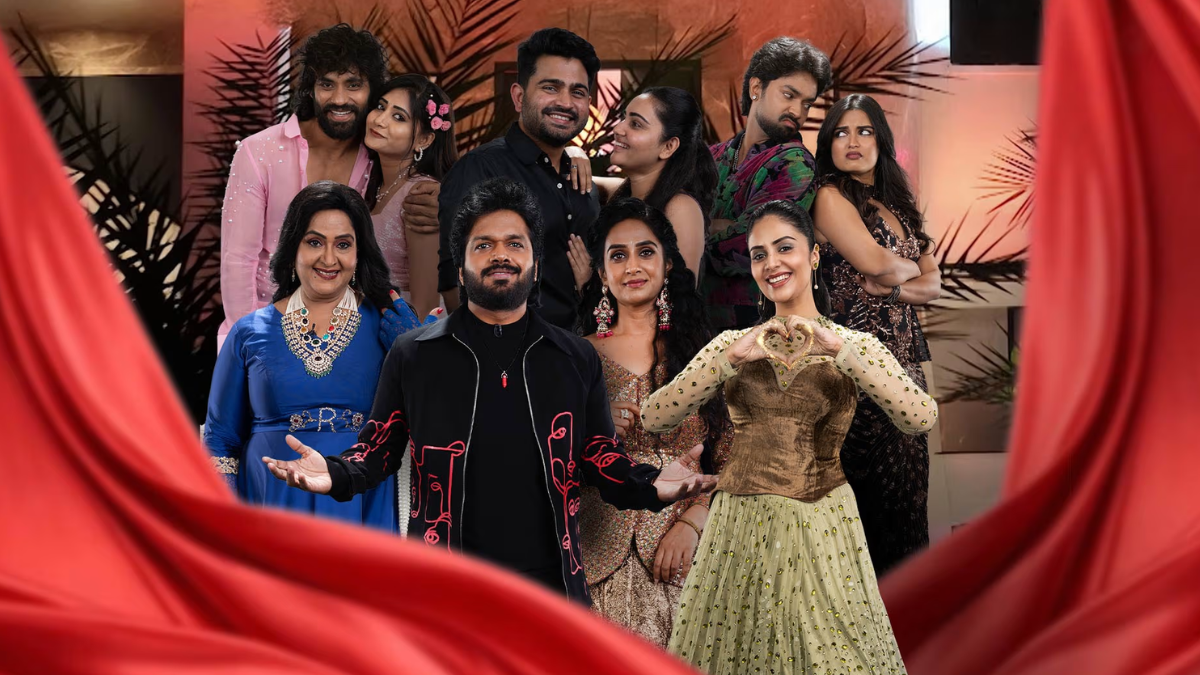
On October 10, 2026, details emerged regarding the Indian reality television series "Mad For Each Other," currently streaming on the digital platform JioHotstar. According to reporting published by Gadgets, the unscripted show features 10 celebrity couples who are required to live together in a shared house environment for a duration of 70 days. Hosted by television presenter Sreemukhi, the series centers on examining interpersonal relationships, romantic compatibility, and emotional resilience through a series of structured physical and psychological competitions. The release marks another addition to the platform's expanding lineup of original unscripted regional and national entertainment content.
Key facts
What happened
The release of "Mad For Each Other" on JioHotstar introduces a long-form cohabitation reality format designed specifically for digital streaming consumers. According to reporting by Gadgets, the production brings together 10 celebrity couples under one roof for an uninterrupted period of 70 days. Throughout this timeframe, the participants are isolated from their standard routines and public lives to undergo continuous evaluation of their romantic bonds and interpersonal compatibility.
The narrative structure of the show revolves around daily life inside the shared residence, interspersed with competitive tasks administered by host Sreemukhi. These challenges test physical endurance, mental coordination, mutual trust, and communication under high-pressure conditions. According to the reported details, the environment is engineered to produce genuine emotional breakdowns and relationship friction, allowing viewers to observe how celebrity partnerships withstand sustained psychological strain and cohabitation challenges.
While traditional reality programming often focuses on individual competition, "Mad For Each Other" anchors its premise on the joint performance of established couples. The show evaluates how partners navigate conflict, manage shared victories or losses, and adapt to competitive elimination cycles over the 70-day production run.
Why it matters
The premiere of "Mad For Each Other" reflects broader economic and strategic shifts within the Indian over-the-top (OTT) media ecosystem. Unscripted reality television has increasingly become a critical driver of subscriber retention and user engagement for major digital platforms. Unlike scripted drama series, which carry high production costs per episode and long development cycles, reality formats offer scalable content capable of generating daily social media discussion and sustained user interaction over multi-week broadcast windows.
For streaming platforms in India, relationship-driven reality shows represent a high-margin programming strategy. The 70-day format ensures that subscribers maintain active accounts over multiple billing cycles to follow their favorite couples through to the finale. Furthermore, by utilizing established public figures and celebrity couples, the show leverages built-in fan bases, effectively reducing initial marketing acquisition costs.
The choice of hosting talent also carries strategic weight. By engaging Sreemukhi—a widely recognized figure in South Indian entertainment—the platform strengthens its regional market penetration. In India's fragmented media landscape, where non-Hindi regional markets account for a rapidly growing share of digital media consumption, bridging regional celebrity appeal with national platform availability is essential for maximizing subscriber growth across Tier-1, Tier-2, and Tier-3 cities.
The background
To understand the context of "Mad For Each Other," it is necessary to examine the evolution of Indian reality television and the structural changes within the country's streaming sector. Reality TV in India gained widespread popularity in the mid-2000s on traditional linear networks, driven by long-running cohabitation formats like "Bigg Boss" (the Indian adaptation of "Big Brother") and relationship dance competitions such as "Nach Baliye." These shows established that Indian television viewers had a strong appetite for observing interpersonal relationships, celebrity vulnerabilities, and real-time conflict.
As smartphone adoption exploded across India in the late 2010s and early 2020s, driven by low-cost high-speed mobile data networks, audience consumption shifted rapidly from linear television to subscription video-on-demand (SVOD) and ad-supported video-on-demand (AVOD) platforms. Streaming services initially focused on original scripted crime thrillers and film acquisitions. However, platform operators soon recognized that unscripted reality television provided higher daily active user metrics and greater viral visibility on digital networks.
The platform airing the show, JioHotstar, represents the consolidation of major entertainment assets in India. Following the strategic merger involving Reliance Industries' Viacom18 (which operated JioCinema) and The Walt Disney Company's Star India (which operated Disney+ Hotstar), the joint enterprise formed the largest digital media entity in the country. This consolidated platform commands extensive rights across live sports, blockbuster cinema, and unscripted original programming in multiple Indian languages.
Host Sreemukhi brings established credentialing to the program. Having built a successful career across Telugu-language television programs, film appearances, and high-profile reality appearances—including finishing as runner-up on "Bigg Boss Telugu 3"—her casting highlights the industry trend of transitioning linear regional broadcast stars into direct-to-digital reality formats.
Additionally, digital reality productions in India operate under the regulatory framework of the Information Technology (Intermediary Guidelines and Digital Media Ethics Code) Rules, 2021. Administered by the Ministry of Information and Broadcasting, these regulations establish a self-regulatory framework for OTT content providers, requiring platforms to enforce content classification ratings and adhere to code of ethics standards regarding broadcast safety and viewer guidance.
Reaction
While specific formal statements from platform executives or public critiques were not detailed in the reporting by Gadgets, reality television launches of this scale routinely draw immediate reactions from digital media analysts, industry observers, and social media audiences.
In the Indian television industry, relationship-focused formats typically provoke strong online debate regarding the authenticity of contestant interactions, the severity of emotional tasks, and the fairness of host interventions. Media commentators frequently analyze how effectively streaming reality shows balance sensationalist interpersonal drama with genuine entertainment value.
Platform users and celebrity fan communities are expected to drive discussion across social media platforms such as Instagram, X (formerly Twitter), and YouTube. In previous comparable cohabitation shows, fan voting and audience commentary have significantly influenced public perception of participating couples, often translating into elevated digital engagement metrics for the streaming provider.
What we don't know yet
Despite the core outline provided, several key operational and editorial details remain unconfirmed in the available reporting. First, the complete list of the 10 celebrity couples participating in the 70-day challenge has not been fully detailed, leaving questions about the specific mix of film, television, and digital content creator talent involved.
Second, the exact identities of any official judges or guest mentors—referenced in initial program categorizations—were omitted from the summarized report. It remains unclear whether evaluation and elimination decisions are determined solely by host Sreemukhi, panel judges, peer elimination votes among contestants, or direct viewer voting via the JioHotstar application.
Finally, verified metrics regarding viewership numbers, production budget scale, and specific release frequencies (such as daily continuous feeds versus weekly episodic drops) have not been publicly disclosed. These undisclosed parameters are critical for assessing whether the format represents a financially viable model for long-form digital reality programming.
What to watch
In the coming weeks, several concrete indicators will determine the trajectory and impact of "Mad For Each Other." Observers should watch for official broadcast schedules and episode drop patterns on JioHotstar to confirm whether the platform will offer 24-hour live streaming feeds—a feature popularized by recent seasons of digital reality programming—or stick strictly to edited daily episodes.
Market analysts will monitor subscriber engagement metrics and app download rankings for JioHotstar to measure the show's impact on platform growth. In addition, audience sentiment on social media during key elimination episodes will offer a clear gauge of viewer retention over the 70-day cycle.
Finally, media monitors will watch for potential regulatory oversight or viewer feedback under India's OTT self-regulatory code, particularly regarding how emotional conflict and relationship challenges are edited and rated for digital audiences.
This report is based on original reporting published by Gadgets on October 10, 2026.
How this story was produced
This report was written by The Global Wire newsroom from reporting first published by Gadgets ; A Human Will Respond More. We verify the core facts against the original report, write our own account, and add the background and consequences a short wire item leaves out. Drafting is AI-assisted inside an editor-supervised pipeline, and every story is checked for accuracy of attribution, structure and duplication before it appears — full detail in our AI and funding disclosure.
Spotted an error? Tell us at corrections@horizonglobalnews.com and read our corrections policy or editorial standards.


Reader comments
Loading comments…