

Japanese Cooling Booth Concept Prompting Calls for Street Installation in India
Indian industrialist Harsh Goenka has proposed adopting Japan's Do Hiemon Box cooling booths across urban streets to protect pedestrians from severe summer heatwaves.
By The Global Wire Newsroom · Reported from Trending Desk
Link preview · horizonglobalnews.com
Japanese Cooling Booth Concept Prompting Calls for Street Installation in India
Indian industrialist Harsh Goenka has proposed adopting Japan's Do Hiemon Box cooling booths across urban streets to protect pedestrians from severe summer heatwaves.
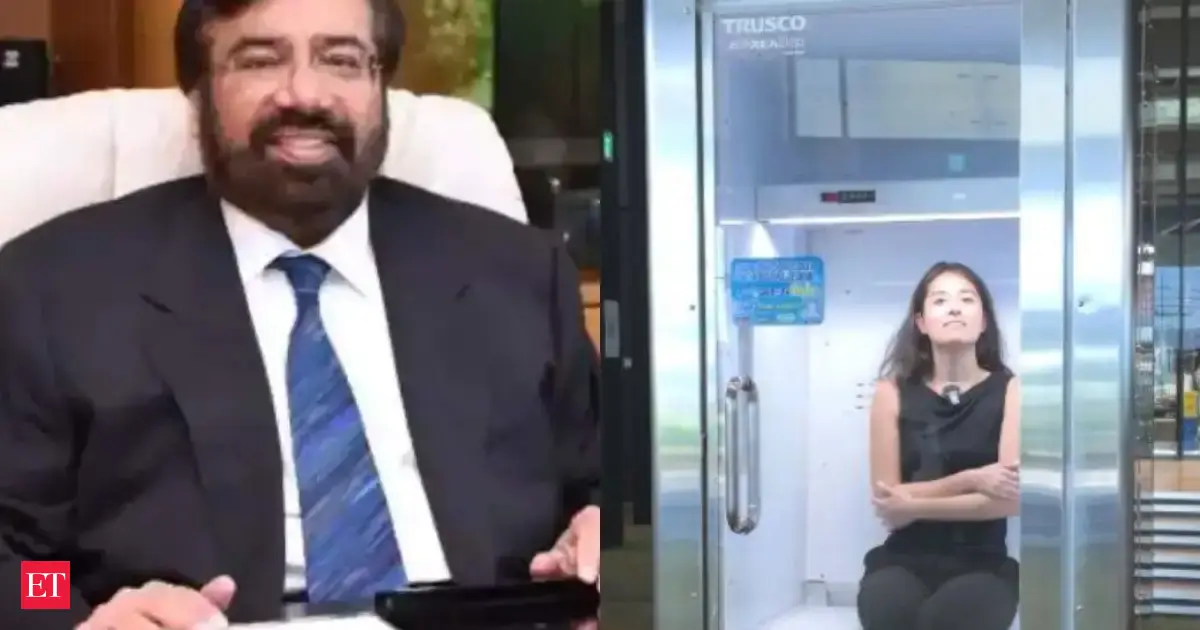
As extreme summer weather continues to impact urban centers across Asia, innovative micro-cooling solutions are drawing international attention from business leaders and urban planners. Indian industrialist Harsh Goenka recently brought widespread visibility to a specialized technological response developed in Japan: standalone personal cooling chambers engineered to provide rapid relief from high outdoor temperatures. Goenka advocated for the deployment of these public cooling booths across street corners in India, where summer heatwaves present severe health risks to millions of outdoor workers and commuters, according to reporting by Trending Desk.
Rapid cooling technology
The initiative centers on a specialized enclosure known as the Do Hiemon Box, designed to quickly bring down human body temperature following prolonged exposure to extreme weather. Referred to informally as "human fridges," these compact, personal cooling booths operate by maintaining a strictly controlled internal climate set at 15 degrees Celsius.
When individuals spend extended periods in scorching outdoor conditions, core body temperatures can rise to dangerous levels, significantly increasing the probability of heat exhaustion, heatstroke, and associated cardiovascular stress. The Do Hiemon Box is engineered to arrest this thermal build-up by offering an easily accessible, refrigerated environment. According to details reported by Trending Desk, individuals entering the booth experience swift thermal reduction, effectively stabilizing their internal body temperature before severe heat-induced medical emergencies can manifest.
Proposal for Indian street corners
Recognizing the potential benefits of the Japanese innovation, Harsh Goenka highlighted the technology as a promising structural intervention for urban centers in South Asia. Taking to public platforms, the industrialist suggested that installing similar automated cooling kiosks across street corners in India could provide essential relief to individuals navigating intense summer heatwaves.
In many Indian metropolitan areas, summer temperatures regularly cross critical thresholds, creating hazardous working and commuting environments. Pedestrians, informal street vendors, delivery workers, and daily wage laborers face continuous, unmitigated exposure to high ambient heat with few opportunities for relief along public thoroughfares. While traditional cooling relies heavily on indoor air-conditioned facilities, public access to such spaces remains highly restricted in busy commercial and transit zones. Goenka's proposal highlights modular, street-level cooling units as a practical mechanism to integrate immediate heat relief directly into the public transit landscape, as noted by Trending Desk.
Rising risks of urban heat islands
The discussion surrounding public cooling booths aligns with growing concerns over the urban heat island effect, which severe summer weather exacerbates in densely populated cities. Built environments characterized by expansive asphalt paving, dense concrete structures, and limited green space absorb substantial solar radiation throughout the day and re-radiate thermal energy into the surrounding environment, keeping local temperatures elevated even during off-peak hours.
Health specialists consistently emphasize that prolonged exposure to high ambient thermal environments overtaxes the human body's natural heat dissipation mechanisms. Perspiration becomes less effective at cooling core temperatures when ambient humidity and temperatures remain high, leading to elevated heart rates, systemic dehydration, and organ strain. Interventions designed to immediately reduce body temperature are increasingly recognized by public health authorities as essential frontline measures during extreme thermal events.
Integrating micro-cooling into public planning
Municipal planning authorities across warm regions have traditionally established emergency cooling centers inside existing civic buildings, such as public libraries, recreation facilities, and municipal offices. While these centralized hubs serve vital community functions during extreme weather alerts, they often require residents to travel away from their immediate work sites or daily transit routes.
Modular micro-cooling infrastructure, such as the Do Hiemon Box concept, offers a decentralized alternative designed for rapid deployment in high-foot-traffic areas. By placing compact cooling stations directly adjacent to sidewalks, bus stops, construction sites, and open-air markets, urban centers can deliver localized thermal relief without requiring major capital investments in broad structural real estate. Similar localized heat-abatement installations are being tested in several international metropolitan regions to ensure public safety in high-exposure urban zones.
Infrastructure and operational considerations
While personal cooling booths present a direct technological solution for acute heat management, scaling such systems across expansive urban networks involves distinct operational considerations for municipal managers. Widespread implementation along street corridors requires consistent electrical connectivity, routine maintenance to preserve indoor air quality, and physical reinforced designs to withstand continuous public use and changing outdoor weather conditions.
Furthermore, operating specialized refrigeration units during periods of extreme external heat requires efficient energy management to avoid placing additional stress on local electrical grids during peak usage times. Urban planners note that technological interventions like localized cooling chambers are most effective when integrated alongside long-term passive heat mitigation strategies, including expanding urban tree canopies, constructing shaded pedestrian walkways, and utilizing cool roof materials across municipal structures.
Climate adaptation across Asia
The interest generated by the Japanese cooling booth model highlights a broader regional trend toward active technological adaptation in response to escalating summer weather patterns. As heatwaves increase in frequency, duration, and intensity across Asian urban centers, demand for scalable, highly accessible cooling infrastructure is reshaping civic engineering priorities.
Whether through automated cooling chambers or refreshed municipal urban design standards, public officials and industry leaders are increasingly analyzing international approaches to safeguard outdoor populations. The concept raised by Goenka underscores how specialized localized solutions designed to mitigate extreme weather in one nation are being evaluated as potential frameworks for public health protection elsewhere.
This article relies on original reporting and details provided by Trending Desk.
How this story was produced
This report was written by The Global Wire newsroom from reporting first published by Trending Desk. We verify the core facts against the original report, write our own account, and add the background and consequences a short wire item leaves out. Drafting is AI-assisted inside an editor-supervised pipeline, and every story is checked for accuracy of attribution, structure and duplication before it appears — full detail in our AI and funding disclosure.
Spotted an error? Tell us at corrections@horizonglobalnews.com and read our corrections policy or editorial standards.




Reader comments
Loading comments…