

Japan Cricketers Reflect on Asian Games Defeat to India as Semi-Finals Take Shape
Host nation Japan exits the Asian Games women's cricket tournament following a quarter-final loss to defending champion India, who advances to face Bangladesh.
By The Global Wire Newsroom · Reported from SECTIONS Japan cricketers hail experience playing India
Link preview · horizonglobalnews.com
Japan Cricketers Reflect on Asian Games Defeat to India as Semi-Finals Take Shape
Host nation Japan exits the Asian Games women's cricket tournament following a quarter-final loss to defending champion India, who advances to face Bangladesh.
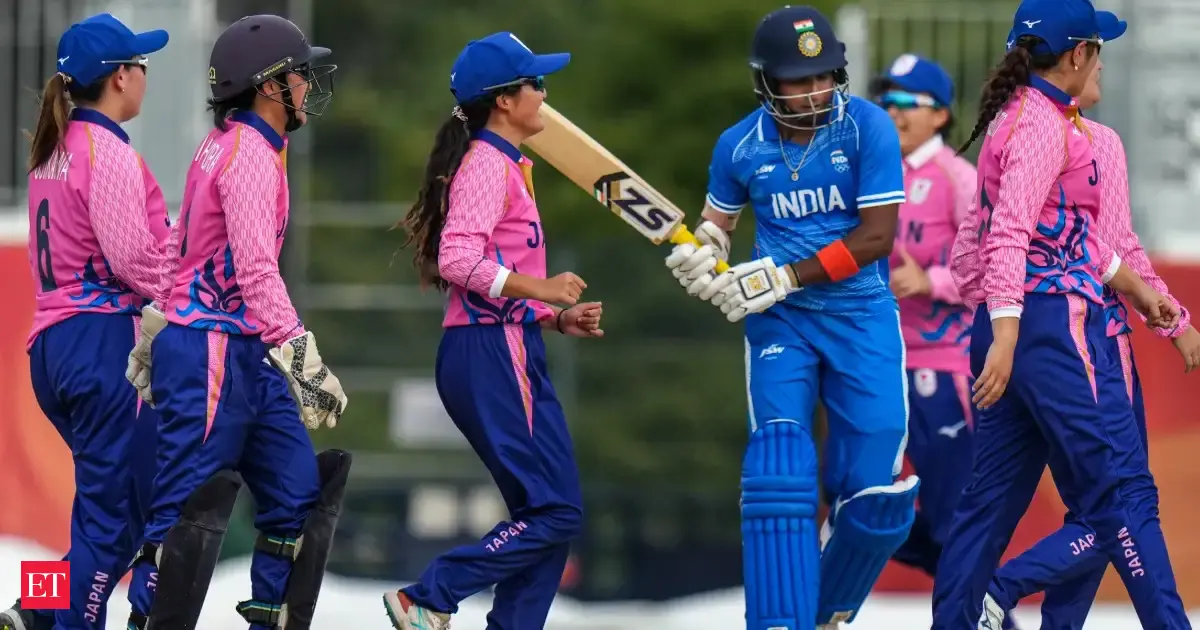
The Japanese women’s national cricket team experienced the stark contrast between emerging international programs and elite world powerhouses on Friday, September 18, 2026, exiting the Asian Games tournament following a heavy quarter-final defeat against India. Playing in front of a home crowd in Japan, the host nation's squad was outmatched by the defending Asian Games champions, who executed a comprehensive victory to secure their place in the medal rounds. Despite the decisive loss, members of the Japanese team described the fixture as an exceptional learning opportunity, emphasizing the value of competing directly against world-class opposition. India's victory advances them to a semi-final matchup against Bangladesh scheduled for Sunday, September 20, while regional rivals Pakistan and Sri Lanka will square off in the opposite bracket.
Key facts
What happened
The quarter-final clash between India and host nation Japan represented a classic matchup between one of world cricket's dominant powers and a rapidly developing associate program. India, entering the multi-sport event as the reigning gold medalists from the previous Asian Games, asserted control early in the contest to secure a commanding victory on Friday. The result brought an end to Japan's campaign in the women's T20 tournament, which served as a headline fixture during the opening stages of the continental sports showcase.
Following the conclusion of the quarter-final round, the tournament structure shifted immediately to the final four. India's dominant performance earned them a semi-final meeting with Bangladesh, a side that has consistently challenged top-tier Asian teams in international white-ball formats. On the other side of the knockout draw, Pakistan and Sri Lanka were set to compete in a high-stakes semi-final on Sunday. Both semi-final winners will advance to contest the gold medal match, while the losing semi-finalists will clash for the bronze medal, completing the podium positions for the women's cricket discipline.
Why it matters
The encounter highlights the widening structural divide—and rare point of intersection—between the Full Members of the International Cricket Council (ICC) and its Associate Member nations. For a developing cricket program like Japan, competitive opportunities against elite opposition are extremely rare outside of major multi-sport events. High-profile fixtures against established international stars provide non-traditional cricket nations with crucial exposure to top-tier pace, spin, and field positioning, serving as an operational benchmark for national high-performance programs.
From a global perspective, the presence of cricket at the Asian Games reinforces the sport's ongoing efforts to expand its footprint across East Asia and secure permanent inclusion in global multi-sport platforms. With cricket officially confirmed for inclusion in the Los Angeles 2028 Olympic Games, national Olympic committees across Asia are closely monitoring performance metrics at regional events. Substantive participation by host nations like Japan can unlock institutional support, government grants, and sports ministry funding that are typically reserved for Olympic discipline sports.
For the tournament powerhouses—India, Pakistan, Sri Lanka, and Bangladesh—the Asian Games offer a critical venue for maintaining continental dominance and evaluating squad depth ahead of global ICC events. A gold medal victory carries significant institutional prestige for national boards, particularly in South Asia where cricket commands immense cultural and economic influence.
The background
Cricket made its Asian Games debut at the 2010 edition in Guangzhou, China, with both men's and women's T20 competitions included on the program. The discipline retained its medal status at the 2014 Games in Incheon, South Korea, before being temporarily omitted from the 2018 event in Jakarta and Palembang, Indonesia. Recognizing the sport's popularity and commercial viability across the continent, the Olympic Council of Asia (OCA) reinstated cricket for the Hangzhou Games held in 2023, where India's women's team captured the gold medal by defeating Sri Lanka in the final. The sport was subsequently retained for the 2026 Asian Games hosted across Japan's Aichi Prefecture and the city of Nagoya.
The organizational disparity between the competing teams in Friday's quarter-final reflects decades of asymmetrical investment. India's women's cricket system is governed by the Board of Control for Cricket in India (BCCI), the wealthiest governing body in world cricket. The launch of the Women's Premier League (WPL) in 2023 dramatically accelerated the professionalization of the women's game in India, creating high-salaried domestic pathways and world-class training environments. This infrastructure has produced a deep talent pool capable of competing at the highest international levels.
In contrast, cricket in Japan operates under the administration of the Japan Cricket Association (JCA), which was established in 1984 and became an Associate Member of the ICC in 2005. Headquartered in Sano, Tochigi Prefecture—widely regarded as the hub of Japanese cricket—the JCA oversees local leagues, youth development initiatives, and regional participation drives. While cricket has grown steadily among Japanese universities and school programs, the sport remains a minority discipline in a country dominated by baseball, soccer, and sumo. Japanese national teams rely primarily on semi-professional or amateur players, with limited access to international-standard grass pitches and regular high-level competition schedules.
Historically, South Asian powers have dominated Asian Games cricket. India, Pakistan, Sri Lanka, and Bangladesh hold Full Member status within the ICC, granting them automatic revenue shares, full voting rights, and predictable international fixture calendars. Associate nations in the East Asia-Pacific region must navigate complex regional qualification pathways to secure competitive matches against elite opposition.
Reaction
Following the quarter-final loss, members of the Japanese squad framed the match as a landmark experience in their athletic careers. Players highlighted the immense technical value of facing world-class bowlers and batters, describing the opportunity to share the field with defending champion India as an invaluable milestone.
While formal post-match media obligations were focused on the immediate experience of the host team, technical directors and administrators within the Japan Cricket Association are anticipated to review the match data to identify gaps in preparation, physical conditioning, and skill execution. The JCA is expected to utilize the visibility generated by the host-nation appearance to advocate for expanded facility investment, including dedicated turf pitches and enhanced high-performance training hubs.
For India's management, victory was received as a necessary step toward retaining their continental crown. The Asian Cricket Council (ACC) and international organizers have consistently commended the inclusion of emerging nations in continental tournaments, viewing such fixtures as vital tools for broadening the sport's global base.
What we don't know yet
Several specific details regarding the match performance remain undisclosed in early reports. The precise numerical outcome—including the exact win margin in runs or wickets, total scores recorded by each side, individual batting top scorers, and specific bowling figures—was omitted from initial wire accounts published by reporting media.
Additionally, specific tactical decisions—such as the result of the coin toss, whether India batted or bowled first, and pitch conditions at the venue—have not been detailed. It also remains uncertain how the Japanese government and local sports authorities will assess the public engagement and attendance figures for the cricket competition, which will influence future state funding allocations for the sport as the 2028 Olympic cycle approaches.
What to watch
Attention now shifts to the semi-final round on Sunday, September 20, 2026, which features two highly competitive encounters:
Following the semi-finals, the tournament will conclude with the medal matches, where the winners will compete for gold and silver, and the defeated semi-finalists will clash for bronze. Beyond the podium results, observers will monitor how the Japan Cricket Association leverages its host-nation participation to secure long-term commercial sponsorships, expanded facility access in Tochigi and Aichi prefectures, and enhanced international tour opportunities with neighboring ICC Associate Members in the East Asia-Pacific zone.
This account includes reporting originally conducted by SECTIONS.
How this story was produced
This report was written by The Global Wire newsroom from reporting first published by SECTIONS Japan cricketers hail experience playing India. We verify the core facts against the original report, write our own account, and add the background and consequences a short wire item leaves out. Drafting is AI-assisted inside an editor-supervised pipeline, and every story is checked for accuracy of attribution, structure and duplication before it appears — full detail in our AI and funding disclosure.
Spotted an error? Tell us at corrections@horizonglobalnews.com and read our corrections policy or editorial standards.





Reader comments
Loading comments…