

Dispute Over Forfeited Parcel Exposes Financial Strain on Victorian Harness Racing
A surrendered tract of land tied to a 100-million-dollar government debt settlement has left Victoria's harness racing sector grappling with long-term solvency.
By The Global Wire Newsroom · Reported from Danny Russell
Link preview · horizonglobalnews.com
Dispute Over Forfeited Parcel Exposes Financial Strain on Victorian Harness Racing
A surrendered tract of land tied to a 100-million-dollar government debt settlement has left Victoria's harness racing sector grappling with long-term solvency.
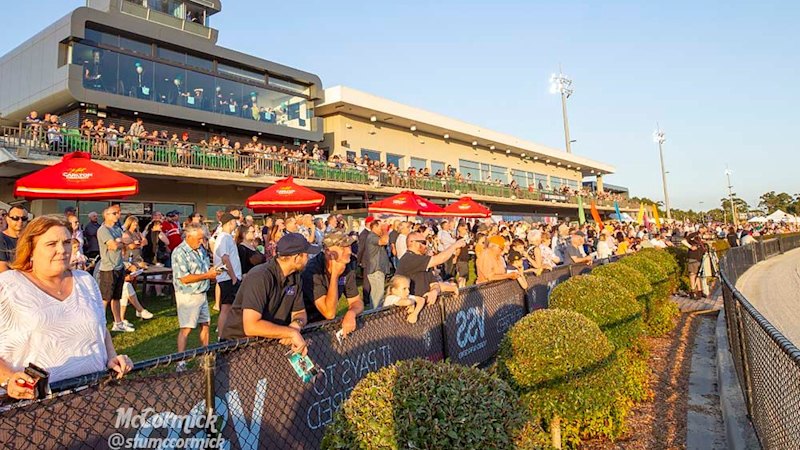
A prime, undeveloped parcel of land has become the focal point of a escalating 100 million Australian dollar dispute between the Victorian state government and the state's harness racing sector, following an arrangement in which industry authorities relinquished real estate assets to clear outstanding public liabilities. The transfer, intended to resolve a ballooning balance-sheet crisis for Harness Racing Victoria, has instead stripped the governing body of a crucial capital cushion, leaving participants, trainers, and breeders facing prolonged operational uncertainty.
Key facts
What happened
According to reporting by Danny Russell, the escalating friction between state officials and racing administrators centres on an untouched tract of land previously owned by the industry, which was forfeited to the Victorian government as part of an agreement to cancel approximately 100 million Australian dollars in accumulated debt. The transaction was executed as a balance-sheet cleanup mechanism designed to relieve the governing body of crippling interest and repayment obligations owed to state authorities.
While the transfer technically satisfied the debt, it excised the sole major unencumbered property holding capable of providing the racing code with a long-term commercial foundation. The transaction effectively converted what had been an appreciating physical asset into a one-time paper reconciliation of state liabilities.
Industry insiders and administrative observers now characterise the deal as a pyrrhic settlement. By relinquishing the property to the Crown or dedicated state development agencies, the sport lost the prospective capital growth, development potential, and recurring rental yields that the parcel could have yielded in Melbourne's expanding urban and suburban development corridors. The governing body now finds itself operating without the collateral necessary to negotiate commercial lines of credit, even as overhead costs and prize money commitments continue to exceed operating margins.
Why it matters
The loss of the property asset represents a structural shift for harness racing in Victoria, carrying severe ramifications for regional employment, community racing clubs, and the broader wagering economy. Unlike thoroughbred racing, which commands dominant market share in domestic betting turnover and media rights distribution, harness racing operates on significantly narrower margins. It relies heavily on central distributions from its statutory authority to fund basic operations, track maintenance, and prize money pools across metropolitan and country circuits.
Without an independent capital base, Harness Racing Victoria must finance its statewide operations almost entirely from wagering revenue distributions, race-day gate receipts, and direct state concessions. As Australian wagering markets adjust to shifting consumer behaviour, tighter restrictions on gambling advertising, and higher state point-of-consumption taxes, wagering turnover on harness fixtures has experienced downward pressure. This contraction directly limits the revenue flowing back to participants.
For the thousands of licensed trainers, drivers, stable hands, and commercial breeders who constitute the harness ecosystem, the liquidation of the sector's land reserves removes an essential safety valve. Prize money levels directly determine whether commercial breeding remains viable and whether regional stables can absorb sharp increases in the costs of feed, veterinary care, and interstate transport. If the governing body cannot secure recurring non-wagering income, industry observers warn of inevitable rationalisation, which could include the consolidation or closure of historic provincial tracks, reductions in maiden and low-grade purse money, and an accelerated exodus of equine talent to rival jurisdictions such as New South Wales and Queensland.
The background
Victoria's racing ecosystem is governed under the provisions of the Racing Act 1958, which divides oversight into three distinct statutory and commercial bodies: Racing Victoria for thoroughbreds, Greyhound Racing Victoria for greyhounds, and Harness Racing Victoria for standardbred trotting and pacing. For decades, the financial bedrock of Victorian racing was anchored by the Victorian Racing Industry joint venture with commercial operator Tabcorp, which pooled betting revenue and distributed predetermined shares among the three codes.
Under this joint-venture arrangement, harness racing historically received a structured allocation—typically around 15 to 18 percent of the joint venture distributions—while thoroughbreds captured the dominant share. However, escalating capital expenditures, stagnant customer participation, and extensive investments in facilities placed severe pressure on Harness Racing Victoria's financial accounts. A central element of this capital burden was the sport's flagship racing and commercial facility at Melton, developed to replace the historic Moonee Valley harness meetings and establish a modern headquarters in Melbourne's western expansion corridor.
While the Melton development established an integrated racing, entertainment, and hotel precinct, the debt incurred to build and sustain metropolitan operations steadily expanded. Successive annual reports revealed deep operational deficits, compounded by changing retail betting patterns that favoured online corporate bookmakers over traditional totalisator pools. Over years of deficits, obligations to the Treasury Corporation of Victoria and related government financing mechanisms accumulated into an unsustainable liabilities column, eventually triggering state-directed restructuring discussions.
The broader structural environment grew more volatile with the renegotiation and subsequent expiration of the state's 30-year exclusive wagering and betting licence in August 2024. The new Victorian wagering licence, awarded to Tabcorp on restructured terms, formally severed the historical joint-venture model. Instead, it transitioned the three racing bodies to separate commercial arrangements, coupled with direct state government industry support mechanisms funded partly through increased point-of-consumption tax rates. This shift forced Harness Racing Victoria to confront its historical debts head-on, leading directly to the property forfeiture arrangement.
Reaction
Reaction across the state's racing sector has been defined by anxiety and frustration, with industry figures questioning why the state government required the forfeiture of real estate rather than restructuring debt repayments or extending long-term loan terms. Participant associations, representing professional trainers and standardbred breeders, have expressed mounting concern that rank-and-file licence holders are paying the price for protracted administrative miscalculations.
While the Victorian Minister for Racing and state treasury officials have defended public balance-sheet prudence, emphasizing that government agencies cannot indefinitely underwrite operating shortfalls across professional sports, sector advocates argue that the government effectively reclaimed land that was intended to secure the industry's intergenerational survival. Formal responses are expected to be tabled during upcoming parliamentary committee hearings and public accounts reviews, where opposition and crossbench members of parliament regularly scrutinise the fiscal management and statutory oversight exercised by the Department of Jobs, Skills, Industry and Regions.
Administrative leadership within the code has largely avoided open hostility toward the government, constrained by its status as a statutory authority whose board members are appointed by the Governor in Council on the recommendation of the racing minister. Nevertheless, informal sentiment across the sport's regional clubs suggests profound disillusionment with the terms enforced by the Department of Treasury and Finance.
What we don't know yet
Key details of the land exchange remain shielded from public inspection, leaving significant gaps in the public record. It is not currently known precisely which corporate or crown entity holds the definitive legal title to the surrendered parcel, nor has the government published the formal valuation methodology that determined how much debt was written down in exchange for the title. Public records do not reveal whether the land was credited at current undeveloped book value, distressed sale value, or future rezoned commercial market valuation.
Furthermore, the state government has not disclosed its long-term development intentions for the site. Observers do not yet know whether the state plans to retain the land for civic infrastructure, transfer it to an urban renewal authority, or subdivide and sell the acreage to private commercial developers. If the land is subsequently sold to private developers for an amount substantially exceeding the debt write-off figure, it will inevitably ignite intense political debate regarding whether the state shortchanged a vulnerable agricultural sector.
What to watch
The most immediate indicator of how this transaction impacts the sport will emerge in Harness Racing Victoria's forthcoming annual financial disclosures and performance reporting. Observers will closely monitor operating cash flow figures, current debt ratios, and the scale of recurring state government operational subsidies required to sustain race programming.
Attention will also focus on the spring and autumn racing schedules, specifically whether central administrators are forced to implement further prize money cuts or reduce race dates across provincial centres such as Ballarat, Bendigo, Cranbourne, and Shepparton. Any move to shut down regional tracks to lower maintenance and stewarding outlays will provide concrete evidence of how the loss of capital reserves has constrained operations.
At the political level, scrutiny will centre on the Victorian Parliament's Public Accounts and Estimates Committee (PAEC). Committee members are expected to question racing and treasury representatives regarding the precise valuation mechanisms, statutory authorizations, and conditions under which the land title was surrendered, as well as whether any clawback provisions or profit-sharing mechanisms exist if the state sells or develops the parcel in the years ahead.
This report is based on original reporting by Danny Russell.
How this story was produced
This report was written by The Global Wire newsroom from reporting first published by Danny Russell. We verify the core facts against the original report, write our own account, and add the background and consequences a short wire item leaves out. Drafting is AI-assisted inside an editor-supervised pipeline, and every story is checked for accuracy of attribution, structure and duplication before it appears — full detail in our AI and funding disclosure.
Spotted an error? Tell us at corrections@horizonglobalnews.com and read our corrections policy or editorial standards.




Reader comments
Loading comments…