

Delhi Building Collapse Triggers Safety Fears and Regulatory Push for Student Housing
A structural failure in South Delhi's Satya Niketan hub has highlighted systemic safety risks in paying guest accommodations, prompting municipal authorities to draft stricter housing oversight.
By The Global Wire Newsroom · Reported from SECTIONS After Satya Niketan building collapse; Delhi PG residents question safety as govt plans tighter rules ANI
Link preview · horizonglobalnews.com
Delhi Building Collapse Triggers Safety Fears and Regulatory Push for Student Housing
A structural failure in South Delhi's Satya Niketan hub has highlighted systemic safety risks in paying guest accommodations, prompting municipal authorities to draft stricter housing oversight.
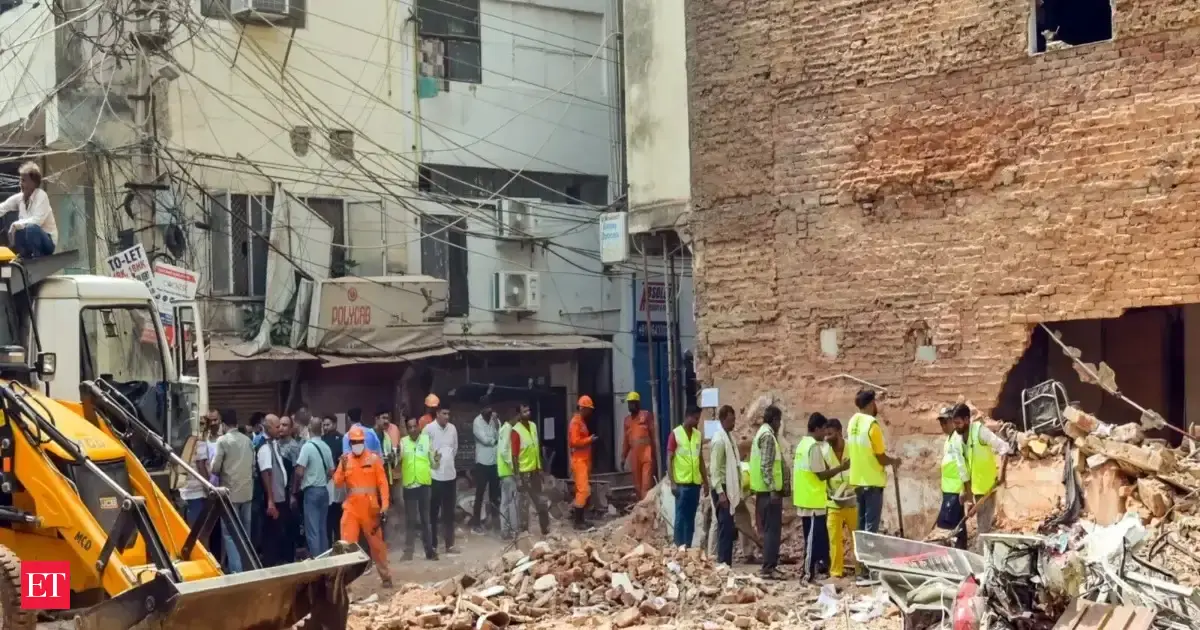
A building collapse in South Delhi’s Satya Niketan neighborhood on September 9, 2026, has ignited acute widespread concern among thousands of university students and young professionals residing in private paying guest (PG) accommodations, prompting the Delhi government to announce plans for stricter regulatory oversight. Satya Niketan, located directly across from Delhi University’s South Campus, serves as one of the national capital's primary residential hubs for non-resident students. The structural failure has re-exposed a long-standing tension in urban housing: the trade-off between affordable rent and basic structural safety in high-density, informally managed residential zones where building modifications frequently proceed without municipal verification.
Key facts
What happened
According to reporting by Asian News International (ANI), the collapse of a building structure in Satya Niketan triggered immediate alarms among neighborhood residents and the surrounding academic community. Satya Niketan functions primarily as a commercialized residential village, where single-family residential plots have been aggressively redeveloped into multi-story dormitories catering to students attending nearby institutions such as Sri Venkateswara College, Atma Ram Sanatan Dharma (ARSD) College, and Jesus and Mary College.
In the hours following the collapse, residents gathered in the narrow corridors of the neighborhood to voice long-simmering complaints regarding the physical condition of their lodgings. Multiple tenants noted that private accommodations in the area routinely suffer from visible structural distress, including cracked walls, water seepage, overloaded electrical wiring, and unapproved vertical extensions.
In response to the mounting public anxiety, representatives of the Delhi government indicated that new, stringent rules are being drafted to impose mandatory safety certifications and operational standards on PG facilities across the capital. The initiative aims to bring the city’s vast, largely unregulated student housing sector under formal administrative supervision, establishing minimum requirements for structural stability, fire safety, occupancy limits, and tenant security.
Why it matters
This incident touches on a critical socio-economic pressure point within India's higher education sector. Every academic year, tens of thousands of students relocate to Delhi from across the country. Because major public institutions like Delhi University offer university-managed hostel beds to only a fraction of their enrolled student body, the vast majority of out-of-station students are forced into the private rental market.
This structural deficit has created a lucrative market for informal PG operators who capitalize on high demand and low supply. To maintain profit margins while keeping room rates within reach of middle-class and low-income families, property owners often minimize expenditure on building maintenance and structural upkeep. Tenants are frequently forced to accept hazardous living conditions—such as windowless rooms, inadequate fire escapes, and compromised load-bearing structures—because safer, fully compliant alternatives carry price tags beyond their financial means.
If the Delhi government carries through with robust regulatory standards, the policy could reshape rental economics across major student neighborhoods, including Satya Niketan, Hudson Lane, Kamla Nagar, and Laxmi Nagar. However, strict enforcement also carries the risk of unintended consequences: if compliance costs drive up operational expenses for landlords, rental prices could spike, further pricing out economically vulnerable students unless accompanied by municipal price caps or expanded institutional housing construction.
The background
Satya Niketan’s development trajectory reflects the broader pattern of urban growth in Delhi's designated "urban villages" or *Lal Dora* areas. Historically exempt from certain standardized building bylaws applied to planned residential colonies, these enclaves evolved into high-density commercial and residential pockets. Over the past three decades, demand for student housing led property owners in Satya Niketan to replace single-story brick homes with four- to six-story structures, often constructed on narrow plots without structural engineering reviews or formal oversight from the Municipal Corporation of Delhi (MCD).
This is not the first time Satya Niketan or Delhi's student quarters have suffered structural emergencies. In April 2022, a three-story building undergoing unauthorized renovation in Satya Niketan collapsed, killing five construction workers and injuring several others. That tragedy prompted brief municipal inspection drives, but long-term structural auditing lapsed as demand for housing remained uninterrupted.
Similarly, in June 2023, a major fire at a student coaching center in North Delhi's Mukherjee Nagar forced students to climb down ropes from top-floor windows, highlighting the absence of fire safety measures in buildings converted for intensive student use. Following that incident, the Delhi High Court issued directives ordering fire safety audits across student hubs, yet enforcement has remained inconsistent across the city's various municipal zones.
Under current provisions of the Delhi Master Plan and MCD building bylaws, multi-story commercial PG operations in residential plots require specific land-use permissions, structural stability certificates, and clearances from the Delhi Fire Services if the building height exceeds specified thresholds. In practice, however, thousands of facilities operate as unregistered domestic tenancies, evading municipal scrutiny and safety inspections altogether.
Reaction
Student groups and youth activist organizations in Delhi have reiterated demands for a standardized rental regulatory framework, arguing that tenant safety should not be left to the discretion of private property owners. Student representatives have called for the immediate creation of a dedicated municipal grievance portal where tenants can report structural defects without fear of arbitrary eviction by landlords.
PG property owner associations in South Delhi have generally urged caution regarding new regulatory mandates, arguing that excessive administrative controls could lead to harassment by inspectors and financial strain on small-scale operators. Landlords maintain that rising electricity tariffs, property taxes, and municipal fees already squeeze operating margins, making extensive structural retrofitting difficult without raising monthly rent rates.
Municipal officials and urban planning experts are expected to convene public consultations as the Delhi government finalized its proposed rules. City planners emphasize that any meaningful policy must combine regular third-party structural audits with clear legal protections for tenants who report non-compliant building practices.
What we don't know yet
The initial reporting by ANI leaves several operational and legal details unconfirmed. The report did not explicitly state whether the September 9 structural failure resulted in human casualties or severe injuries, nor did it clarify whether the building was occupied at the precise moment of collapse.
Furthermore, the exact legislative framework the Delhi government plans to utilize remains unclear. Authorities have not announced whether the forthcoming rules will be enacted as an amendment to the Delhi Rent Control framework, integrated into MCD building bylaws, or introduced as a standalone law governing paying guest establishments. The specific deadline for publishing the draft policy for public comment has also not been disclosed.
What to watch
In the coming weeks, attention will center on whether the Municipal Corporation of Delhi initiates a comprehensive structural audit of multi-story PG accommodations in Satya Niketan and adjacent neighborhoods like Moti Bagh and South Extension. Key indicators to monitor include:
This account is based on original reporting conducted by Asian News International (ANI).
How this story was produced
This report was written by The Global Wire newsroom from reporting first published by SECTIONS After Satya Niketan building collapse; Delhi PG residents question safety as govt plans tighter rules ANI. We verify the core facts against the original report, write our own account, and add the background and consequences a short wire item leaves out. Drafting is AI-assisted inside an editor-supervised pipeline, and every story is checked for accuracy of attribution, structure and duplication before it appears — full detail in our AI and funding disclosure.
Spotted an error? Tell us at corrections@horizonglobalnews.com and read our corrections policy or editorial standards.





Reader comments
Loading comments…