

CJP Founder Demands Apology From Prime Minister Modi Over Student Police Action
Abhijeet Dipke of the Cockroach Janta Party called for the withdrawal of cases against students injured in a July 20 lathi-charge before any political talks on forgiveness proceed.
By The Global Wire Newsroom · Reported from ET Online
Link preview · horizonglobalnews.com
CJP Founder Demands Apology From Prime Minister Modi Over Student Police Action
Abhijeet Dipke of the Cockroach Janta Party called for the withdrawal of cases against students injured in a July 20 lathi-charge before any political talks on forgiveness proceed.
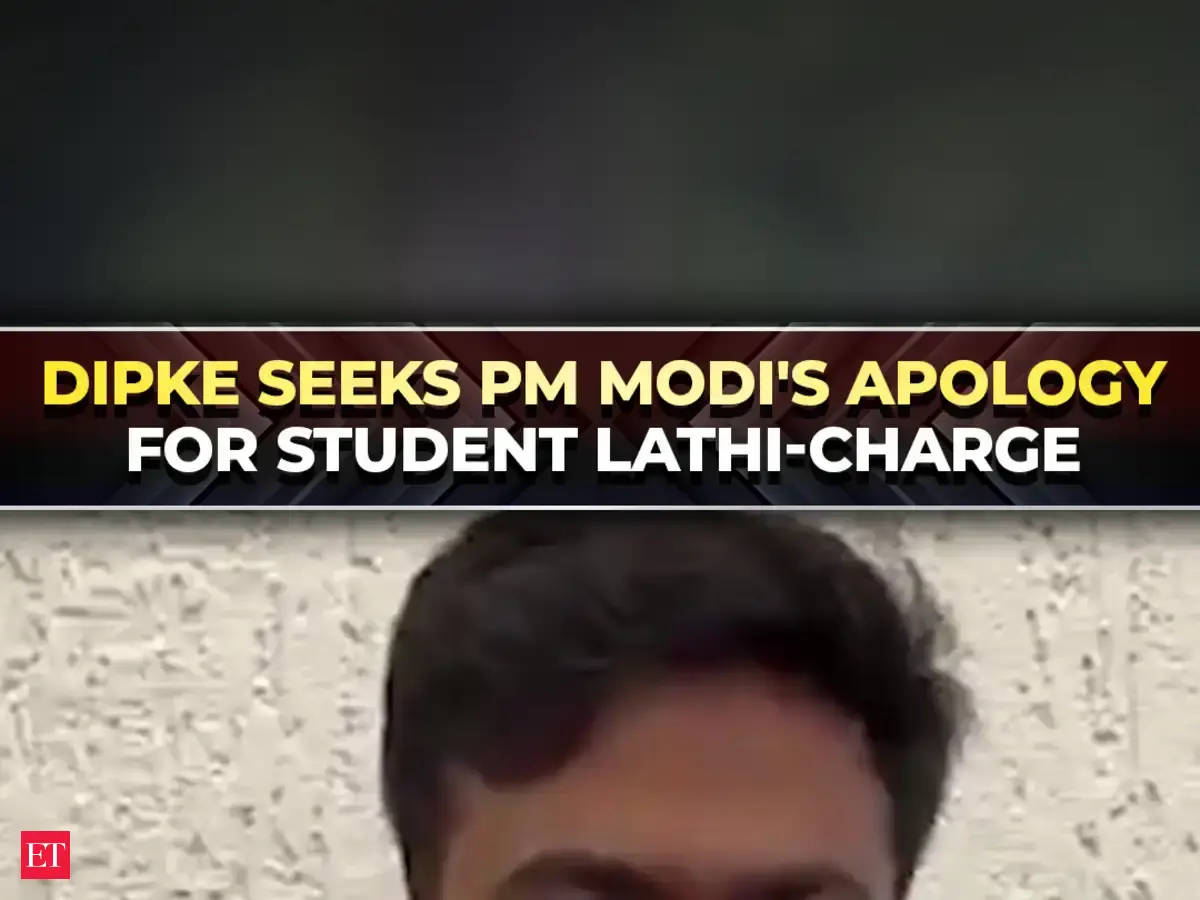
NEW DELHI — The founder of the Cockroach Janta Party, Abhijeet Dipke, has publicly called on Prime Minister Narendra Modi to issue an apology to students allegedly injured during a police lathi-charge on July 20, asserting that executive rhetoric regarding reconciliation or forgiveness remains unconvincing without prior state accountability. In statements reported by ET Online, Dipke urged the central leadership to address the physical force used against student demonstrators and demanded the immediate withdrawal of all legal cases filed against those involved in the protest.
Demands for Executive Accountability and Case Dismissals
Dipke's confrontation with the administration highlights growing political friction over the handling of student-led civil demonstrations. According to reporting by ET Online, the Cockroach Janta Party (CJP) leader argued that any high-level public statements emphasizing national tolerance or mutual forgiveness must be preceded by a formal acknowledgment of government action taken against young protesters. Dipke specifically highlighted the events of July 20, during which security personnel utilized lathi-charges—a traditional baton dispersion method deployed by Indian police forces—to break up gathered groups of students.
In addition to seeking a direct apology from Prime Minister Modi, Dipke pressed government authorities to drop all criminal and civil charges registered against participating students in the wake of the incident. Protesters and organizers contend that pending police complaints and court cases create severe long-term administrative obstacles for young citizens, potentially jeopardizing their academic standing and future employment prospects. Furthermore, Dipke alleged political involvement in the underlying tensions, raising criticisms directed at members of the ruling Bharatiya Janata Party (BJP) regarding their role leading up to and during the security response.
Context of Police Baton Charges in Demonstrations
The police action on July 20 has drawn renewed attention to the crowd control methods employed by law enforcement agencies during public demonstrations in India. The practice of using lathis—heavy wooden or bamboo batons—remains a standard tool for police forces, regulated by regional police manuals and administrative rules. However, civil rights organizations and political opposition figures regularly criticize the deployment of physical force against educational groups, maintaining that such measures unnecessarily escalate peaceful assemblies into violent encounters.
According to reporting by ET Online, the physical injuries sustained by students during the July 20 crackdown formed the primary basis for Dipke's stance against the executive branch. Standard police protocol typically mandates progressive warnings and the minimal necessary force to manage public order. Critics, however, argue that enforcement officers frequently resort to physical dispersion prematurely, resulting in severe injuries and heightened civic unrest. Dipke's demand for administrative accountability reflects a broader political debate over how security agencies balance public order mandates with constitutional protections for public assembly.
Legal Consequences for Student Activists
A central focus of the CJP's demands concerns the formal legal proceedings initiated against students following the July 20 event. In the aftermath of public demonstrations, local law enforcement agencies routinely log official reports that can lead to criminal charges ranging from unlawful assembly to obstruction of public duty. The initiation of these formal legal mechanisms requires individuals to navigate legal representation, court appearances, and potential bail proceedings.
As reported by ET Online, Dipke explicitly called for the withdrawal of these cases as a necessary step before any dialogue regarding social harmony or forgiveness can occur. Political observers note that criminal records stemming from student activism can carry enduring consequences. Active police cases often complicate background verification processes required for university enrollments, government employment examinations, and corporate careers. Opposition figures frequently argue that aggressive legal action against student organizers serves as a deterrent to political participation among youth.
Political Friction and Party Alignment
The public stance taken by the Cockroach Janta Party illustrates the dynamic landscape of political opposition in India, where emerging parties frequently leverage civil rights issues to challenge major governing bodies. By addressing Prime Minister Modi directly, Dipke sought to frame a localized law enforcement action as a matter of national administrative ethics and government responsibility.
According to reporting by ET Online, Dipke's statements also contained specific allegations against BJP members, attributing political motivations to the crackdown. In contemporary Indian governance, disputes over law enforcement conduct routinely spark partisan disagreement. While governing authorities typically maintain that police interventions are neutral actions required to uphold public safety and prevent disruption, opposition leaders characterize harsh security measures as targeted efforts to suppress political dissent.
The Framework of Official Forgiveness and State Action
Dipke's comments directly targeted the concept of official forgiveness, contrasting public rhetoric with administrative reality. The CJP founder asserted that political leaders cannot credibly advocate for national reconciliation while active legal proceedings and unaddressed injuries persist among student populations. This argument touches on fundamental questions regarding the responsibilities of state officials when civilian populations suffer harm during routine policing operations.
When police operations result in civilian injuries, public pressure often builds for government inquiries, formal reviews, or executive apologies. Historically, high-ranking administrative officials remain cautious regarding formal apologies for police conduct due to legal precedent and operational considerations. Nevertheless, political groups like the CJP maintain that without concrete remedies—such as the dismissal of pending charges and explicit public accountability—government calls for unity remain incomplete.
Future Outlook on Student Protest Policy
The controversy surrounding the July 20 lathi-charge ensures continued focus on the policies governing civil protests and student movements. Observers anticipate ongoing calls from youth organizations and political parties for official inquiries into the conduct of the law enforcement officers involved in the operation. Whether central or state administrative authorities will respond to the demands outlined by the CJP remains undetermined.
The debate surrounding police reform, the rights of student demonstrators, and the exercise of executive authority remains a recurring feature of Indian civil discourse. The demands articulated by Dipke underscore the persistent friction between state security enforcement and civil liberties, indicating that the consequences of the July 20 incident will continue to figure in political debates.
This article relies on original reporting conducted by ET Online.
How this story was produced
This report was written by The Global Wire newsroom from reporting first published by ET Online. We verify the core facts against the original report, write our own account, and add the background and consequences a short wire item leaves out. Drafting is AI-assisted inside an editor-supervised pipeline, and every story is checked for accuracy of attribution, structure and duplication before it appears — full detail in our AI and funding disclosure.
Spotted an error? Tell us at corrections@horizonglobalnews.com and read our corrections policy or editorial standards.





Reader comments
Loading comments…