

China Plans 74,000-Ton Semi-Submersible Marine Research Island
The unprecedented deep-sea facility will house six laboratories and accommodate 238 personnel, expanding long-duration oceanographic and ecological monitoring.
By The Global Wire Newsroom · Reported from Bojan Stojkovski
Link preview · horizonglobalnews.com
China Plans 74,000-Ton Semi-Submersible Marine Research Island
The unprecedented deep-sea facility will house six laboratories and accommodate 238 personnel, expanding long-duration oceanographic and ecological monitoring.
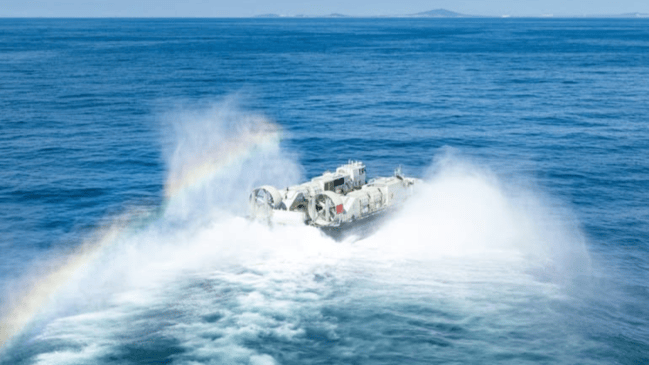
Chinese shipbuilders and marine scientists are advancing plans to construct a massive 74,000-ton floating research platform, designed to operate as a self-sustaining offshore base for scientific investigation. The vessel, billed as an artificial research island, will incorporate six onboard laboratories and provide living quarters for 238 crew members and scientific personnel, according to reporting by Bojan Stojkovski. Intended to support extended deep-sea research campaigns, the project represents an unprecedented scaling-up of mobile oceanographic infrastructure, bridging the gap between conventional survey vessels and stationary offshore structures.
Key facts
What happened
Plans detailing the 74,000-ton floating research facility outline an expansive marine platform aimed at revolutionizing extended scientific missions at sea. Unlike traditional oceanographic vessels that must return to port frequently to replenish consumables and cycle research personnel, this installation is engineered to function as a persistent research base in open waters. According to reporting by Bojan Stojkovski, the platform will integrate six laboratories spanning critical marine disciplines alongside residential quarters, workspaces, and support systems for 238 personnel.
The scale of the installation places it in a category of its own within civil marine science. At 74,000 metric tons of displacement, the platform rivals the dimensions of mid-size aircraft carriers and substantial commercial semi-submersible drilling units. The structure is configured to balance high deadweight capacity with operational stability, providing a steady baseline for sensitive analytical instrumentation, acoustic monitoring systems, and heavy deep-sea deployment gear. Although naval architects have previously deployed very large floating structures (VLFS) for industrial oil and gas extraction and experimental municipal platforms, allocating an installation of this magnitude entirely to civil ocean science marks an unprecedented commitment of engineering resources.
Technical details indicate the platform will support concurrent marine biology, physical oceanography, atmospheric chemistry, and seabed geology programs. The integration of six discrete laboratory modules ensures that scientific teams can process perishable biological and physical samples on site without waiting for shore-based transfers, significantly reducing sample degradation during long voyages.
Why it matters
Building an oceanographic platform displacement of 74,000 tons fundamentally shifts how scientists can interact with the open ocean. Conventional oceanographic research vessels typically displace between 3,000 and 10,000 tons, carrying small teams of 20 to 50 scientists on cruises that rarely exceed 60 days. These physical limits constrain long-term observational campaigns, especially those studying deep-sea biodiversity, seasonal ocean-atmosphere carbon exchange, and benthic geological processes. By accommodating 238 researchers and maritime technicians simultaneously across six dedicated laboratory facilities, the new platform permits uninterrupted, multi-season studies in remote ocean regions.
Beyond basic academic research, large-scale deep-ocean access carries direct strategic and resource implications. The abyssal plains and mid-ocean ridges of the global commons contain polymetallic nodules, cobalt-rich ferromanganese crusts, and seafloor massive sulfides, which hold significant commercial value for renewable energy supply chains. Comprehensive geological and baseline ecological mapping are prerequisites established by the International Seabed Authority (ISA) before any exploitation can be authorized. A platform of this scale could accelerate the gathering of mandatory ecological baseline data, while simultaneously expanding a state’s technical ability to monitor hydrothermal vents, ocean currents, and climate change dynamics across remote expanses of the global maritime domain.
For the maritime engineering and shipbuilding industries, the vessel demonstrates how heavy offshore engineering can be repurposed away from conventional oil and gas extraction toward climate and environmental observation. Successfully constructing and operating a civil installation of this magnitude provides an operational template for international climate monitoring networks, demonstrating that large-scale floating infrastructure can perform long-term surveillance of deep ocean systems vulnerable to rising global temperatures and ocean acidification.
The background
Over the past two decades, China has systematically modernized and expanded its scientific maritime fleet, commissioning cutting-edge icebreakers such as the Xue Long 2 and specialized deep-sea research ships like the Tan Suo 1 and Tan Suo 2. These ships serve as operational motherships for crewed submersibles, most notably the Fendouzhe, which reached the bottom of the Mariana Trench at depths exceeding 10,900 meters in November 2020. This coordinated push is central to Beijing's national maritime strategy, which identifies the deep ocean as an essential frontier alongside outer space and polar exploration.
The technological foundation for the 74,000-ton platform draws from the offshore energy sector. Decades of engineering experience with deep-water semi-submersible platforms, floating production storage and offloading (FPSO) units, and heavy semi-submersible transport ships have given major shipbuilders the structural capability to build massive floating platforms. Facilities such as China State Shipbuilding Corporation (CSSC) have previously produced offshore installations exceeding 50,000 tons displacement for deep-water fossil fuel recovery, including the deep-water semi-submersible oil production platform Shenhai Yihao (Deep Sea No. 1), which entered service in the South China Sea in June 2021.
Globally, the concept of a stationary or semi-stationary floating research outpost has periodically captured the imagination of marine scientists. The French oceanographer Jacques Cousteau pioneered early underwater habitats, while modern initiatives such as the French-designed SeaOrbiter proposed a vertical drifting oceanographic laboratory, though funding constraints hindered full-scale realization. The United States has historically operated the Floating Instrument Platform (FLIP), a specialized 108-meter spar buoy designed by the Scripps Institution of Oceanography, which was launched in 1962 and retired in 2023. However, FLIP was a lightweight platform displacing barely 2,000 tons when horizontal, intended primarily for fine acoustic measurements. The transition from spar buoys and standard research vessels to a 74,000-ton installation represents an exponential increase in physical scale and operational ambition.
Reaction
News of the project has generated significant interest across the international oceanographic and marine engineering sectors, alongside scrutiny from maritime policy analysts. Marine biologists and climate scientists routinely lament the scarcity of deep-ocean observational berths and the high daily charter rates of specialized research vessels, which frequently exceed $50,000 to $80,000 per day. An offshore base accommodating 238 people represents a major expansion of observational capacity, potentially providing deep-water access for extensive collaborative programs.
Simultaneously, maritime security analysts and international legal experts are expected to examine the platform's prospective operational zones and jurisdictional classification under the United Nations Convention on the Law of the Sea (UNCLOS). Because large oceanographic vessels gather hydrographic, bathymetric, and acoustic data that possess dual-use applications for naval operations—specifically submarine navigation, passive acoustic mapping, and anti-submarine warfare—regional neighbors often monitor major oceanographic deployments closely. When formally presented at international forums like the Intergovernmental Oceanographic Commission (IOC) of UNESCO or meetings of the International Seabed Authority, international delegates are likely to seek clarification regarding how the platform will operate in international waters and whether multinational scientific teams will be invited to participate in missions.
What we don't know yet
While the foundational metrics of displacement, laboratory count, and crew capacity have been disclosed, several essential technical and operational details remain unverified in the public domain. The specific shipyard tasked with laying the keel has not been formally announced, nor has a definitive construction timeline or projected launch date been confirmed. It also remains unclear whether the platform will feature autonomous propulsion systems for self-transit or will rely entirely on heavy-lift tugboats for long-distance repositioning.
Financially, the overall construction capital expenditure and annual operational budget have not been made public. Operating a 74,000-ton installation in harsh offshore conditions requires complex logistical supply chains, frequent replenishment of marine fuel or integration of alternative power systems, and regular helicopter or tender transfers. Furthermore, the precise operational footprint of the platform—whether it will be permanently moored in specific marginal seas, positioned along the edge of the continental shelf, or deployed internationally in open waters across the Pacific or Indian Oceans—remains unstated. The extent to which scientific data gathered aboard the six laboratories will be openly accessible to the broader international academic community also remains to be clarified.
What to watch
The immediate milestones to monitor include official announcements from maritime authorities regarding the formal signing of construction contracts, structural design approvals, and steel-cutting ceremonies at designated shipyards. The engineering design specifications will clarify whether the vessel utilizes a semi-submersible column-stabilized architecture or a modified barge hull form, which will dictate its behavior in heavy seas and typhoon conditions.
Observers should also watch for scientific program announcements from academic bodies such as the Chinese Academy of Sciences (CAS) and the Ministry of Natural Resources, detailing the primary mission profiles assigned to the platform's six laboratories. If the platform is designated for open-ocean work, initial permit applications and notifications submitted to relevant international maritime bodies will outline its early deployment areas. Announcements concerning international scientific partnerships will also serve as a crucial indicator of whether the world’s largest floating laboratory will operate as a collaborative global research outpost or primarily serve domestic scientific and industrial objectives.
This report is based on original reporting by Bojan Stojkovski.
How this story was produced
This report was written by The Global Wire newsroom from reporting first published by Bojan Stojkovski. We verify the core facts against the original report, write our own account, and add the background and consequences a short wire item leaves out. Drafting is AI-assisted inside an editor-supervised pipeline, and every story is checked for accuracy of attribution, structure and duplication before it appears — full detail in our AI and funding disclosure.
Spotted an error? Tell us at corrections@horizonglobalnews.com and read our corrections policy or editorial standards.




Reader comments
Loading comments…