

Australian Disability Arts Sector Confronts Threat as NDIS Reforms Constrict Support
Funding reductions under the National Disability Insurance Scheme are putting pressure on Australian disabled artists and creative studios that rely on individualized care packages.
By The Global Wire Newsroom · Reported from Eliza Westhusing
Link preview · horizonglobalnews.com
Australian Disability Arts Sector Confronts Threat as NDIS Reforms Constrict Support
Funding reductions under the National Disability Insurance Scheme are putting pressure on Australian disabled artists and creative studios that rely on individualized care packages.
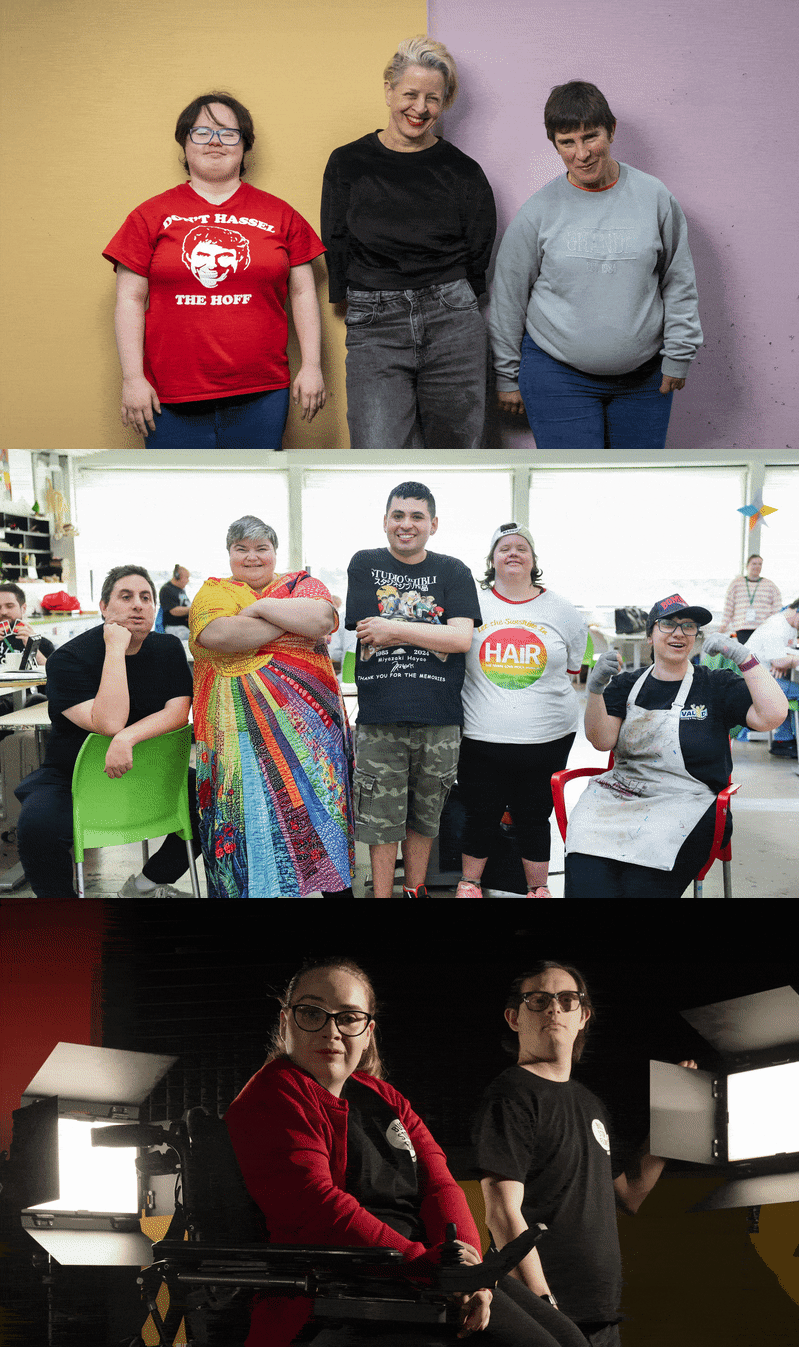
CANBERRA — Australian artists with disabilities and specialized cultural organizations are facing structural threats to their professional sustainability as tightening eligibility rules and budget caps under the National Disability Insurance Scheme reshape the country's cultural landscape. According to reporting by journalist Eliza Westhusing, policy shifts and funding contractions within the multi-billion-dollar social insurance framework are disrupting the daily operational support that has allowed Australia's disability arts community to achieve international acclaim. The retrenchment comes amid broader government efforts to rein in the overall expenditure of the scheme, generating widespread uncertainty for creative professionals who rely on funded support workers to travel, rehearse, access studios, and sustain independent artistic practices.
Key facts
What happened
Australia's disability arts sector is confronting a systemic crisis driven by administrative and financial adjustments across the National Disability Insurance Scheme, according to reporting by Eliza Westhusing. In recent months, disabled artists, performers, and creative collectives have reported substantial reductions in their approved plan allocations, particularly in categories that cover support workers and community participation assistance.
Under the administrative guidelines enforced by the National Disability Insurance Agency (NDIA), assessors have increasingly scrutinized line items related to vocational, artistic, and community activities. Independent creative workers who depend on specialized assistance to prepare materials, operate equipment, manage physical needs in studio spaces, or travel to performance venues have found these supports classified as non-essential, vocational expenses outside the strict purview of the scheme, or duplicative of mainstream arts funding.
These individual funding reductions reverberate across the network of disability-led theatre companies, visual arts studios, and dance ensembles that operate across Melbourne, Sydney, Adelaide, and regional centers. Because these organizations often rely on their company members utilizing personal NDIS support packages to cover the personal care workers who accompany them to rehearsals and tours, contractions in individual funding directly impede their capacity to stage productions or maintain open studio programs.
Why it matters
The policy constriction carries immediate cultural and economic consequences for an Australian artistic movement widely regarded as among the most innovative in the world. Over the past two decades, Australian disability-led organizations have demonstrated that inclusive creative practices produce elite, commercially viable, and critically lauded art rather than merely therapeutic or community-care outcomes. When support worker hours are reduced or eliminated, affected artists are frequently forced out of professional circulation, reversing decades of hard-won progress in representation and professional equality.
Beyond the cultural loss, the constriction highlights a persistent structural failure at the intersection of social welfare and cultural policy. Australia's formal arts funding bodies, including Creative Australia (formerly the Australia Council for the Arts), operate with competitive grant budgets designed to subsidize artistic production, venue hire, and project development. These bodies are not structurally equipped or capitalized to provide lifelong personal care, mobility assistance, or individual physical support. When the NDIS disqualifies these essential activities as artistic or vocational costs rather than foundational disability needs, artists are caught in an administrative divide between the health and arts portfolios, with neither system assuming responsibility for the ongoing costs of physical access.
This squeeze also jeopardizes the economic livelihoods of disabled arts workers who generate income through performance fees, royalties, artwork sales, and teaching appointments. Without predictable daily physical assistance, many practitioners risk dropping out of the workforce entirely, which contradicts the stated objective of the NDIS to increase social and economic participation among Australians with severe and permanent disabilities.
The background
The National Disability Insurance Scheme was legislated under the Gillard Labor government through the National Disability Insurance Scheme Act 2013, with cross-party support designed to replace a fragmented, underfunded system of state-administered disability grants. The program shifted disability provision from block-funding welfare charities to an individualized insurance model, granting participants personal budgets to purchase their own supports based on the principle of choice and control.
Over the subsequent decade, the scheme grew rapidly in scale, participant volume, and fiscal impact. By 2024, scheme expenses exceeded 40 billion Australian dollars annually, making the NDIS one of the largest expenditure items in the Australian federal budget, rivaling Medicare, defense, and the age pension. In response to actuarial projections indicating future annual costs could surpass 60 billion Australian dollars without systemic changes, the Albanese federal government initiated an independent review of the scheme, chaired by Bruce Bonyhady and Lisa Paul, which released its final recommendations in late 2023.
The review urged federal and state authorities to restore the sustainability of the scheme, curb provider price inflation, and establish clearer boundaries around what the NDIS is designed to fund. In 2024, the federal parliament enacted the National Disability Insurance Scheme Amendment (Getting the NDIS Back on Track No. 1) Act. The legislation introduced binding definitions of "NDIS supports," capped overall annual expenditure growth targets at 8 percent, and granted the NDIA greater authority to reassess participant plans based on functional impairment rather than primary diagnosis.
Concurrently, Australia's disability arts sector had flourished under the individualized funding architecture. Ensembles such as Geelong's Back to Back Theatre—which features neurodiverse actors and won the Golden Lion at the 2024 Venice Biennale—alongside Restless Dance Theatre in Adelaide and supported visual art studios such as Arts Project Australia in Melbourne, achieved international prominence. These organizations functioned through a complementary funding model: project grants and philanthropic donations financed creative direction and venue costs, while actors and studio artists drew upon their NDIS budgets for personal support, ensuring their physical and functional needs were met during daily creative work.
Reaction
The adjustments across NDIS assessments have triggered mounting alarm among disability arts advocates, peak industry bodies, and community organizations. Advocacy groups representing creative practitioners have argued that administrative assessors frequently demonstrate a fundamental misunderstanding of professional creative work, mistakenly treating studio time and stage rehearsal as casual recreational hobbies rather than legitimate, income-generating labor.
Industry organizations, including Arts Access Australia and regional disability arts networks, have consistently urged federal ministers to protect support allocations that enable civic and economic contribution. Representatives have pointed out that denying a visual artist support to access their studio or withholding travel support for a touring actor undermines the core legislative purpose of the NDIS Act, which formally recognizes the right of disabled individuals to realize their potential through full community participation.
The National Disability Insurance Agency and federal disability ministers have defended administrative tightening by underscoring the legal necessity of preserving the financial integrity of the scheme for future generations. Government officials have emphasized that the NDIS was never designed to substitute for general public infrastructure, state-level services, or mainstream industrial costs, reiterating that core NDIS funds must remain directly tied to functional impairment and personal support rather than sector-specific career expenses.
What we don't know yet
Significant gaps remain regarding the precise operational scale and demographic concentration of these funding reductions. The National Disability Insurance Agency does not publish disaggregated data detailing how many participants classify themselves as professional artists, making it difficult to assess the exact number of creatives whose plans have been cut or denied renewal.
It also remains unresolved how the federal government and state and territory administrations will operationalize "foundational supports"—a proposed tier of community-wide services recommended by the 2023 NDIS Review to support individuals outside the formal insurance scheme. Because negotiations between the Commonwealth and state governments regarding the division of costs for foundational supports remain active, artists who lose individualized plan components have no alternative safety net to access physical assistance for creative work.
Furthermore, Creative Australia has not established an ongoing mechanism or dedicated funding pipeline to offset personal care shortfalls for disabled artists, leaving unclear whether cultural authorities will be allocated additional capital to absorb these costs.
What to watch
The operational trajectory of Australia's disability arts ecosystem will be dictated by several forthcoming legislative and administrative milestones. Observers are closely tracking the release of final secondary rules and legislative instruments under the amended NDIS Act, which will formalize the precise legal definitions of approved supports and determine whether specialized assistance for creative work is permanently excluded.
Attention is also focused on the Administrative Review Tribunal (ART), the federal appeals body that replaced the Administrative Appeals Tribunal in late 2024. A series of precedent-setting test cases brought by disabled professionals challenging plan reductions could force the NDIA to clarify or adjust its guidelines regarding community and economic participation.
On the cultural policy front, observers are watching for the implementation updates of Revive, the Australian federal government's five-year national cultural policy launched in 2023, which explicitly placed inclusivity and equity at the center of national creative priorities. The degree to which Creative Australia and the federal arts ministry coordinate with the Department of Social Services will indicate whether Canberra can reconcile its artistic diversity mandates with its disability spending targets.
This report is based on original reporting by journalist Eliza Westhusing.
How this story was produced
This report was written by The Global Wire newsroom from reporting first published by Eliza Westhusing. We verify the core facts against the original report, write our own account, and add the background and consequences a short wire item leaves out. Drafting is AI-assisted inside an editor-supervised pipeline, and every story is checked for accuracy of attribution, structure and duplication before it appears — full detail in our AI and funding disclosure.
Spotted an error? Tell us at corrections@horizonglobalnews.com and read our corrections policy or editorial standards.




Reader comments
Loading comments…