

Aureka Uncovers Visible Gold at Victorian Project, Targeting 1-Million-Ounce Mark
Exploration drilling at the Irvine project in Victoria has encountered shallow, visible gold as Aureka Ltd seeks to expand its 398,300-ounce inferred resource.
By The Global Wire Newsroom · Reported from Penny Taylor
Link preview · horizonglobalnews.com
Aureka Uncovers Visible Gold at Victorian Project, Targeting 1-Million-Ounce Mark
Exploration drilling at the Irvine project in Victoria has encountered shallow, visible gold as Aureka Ltd seeks to expand its 398,300-ounce inferred resource.
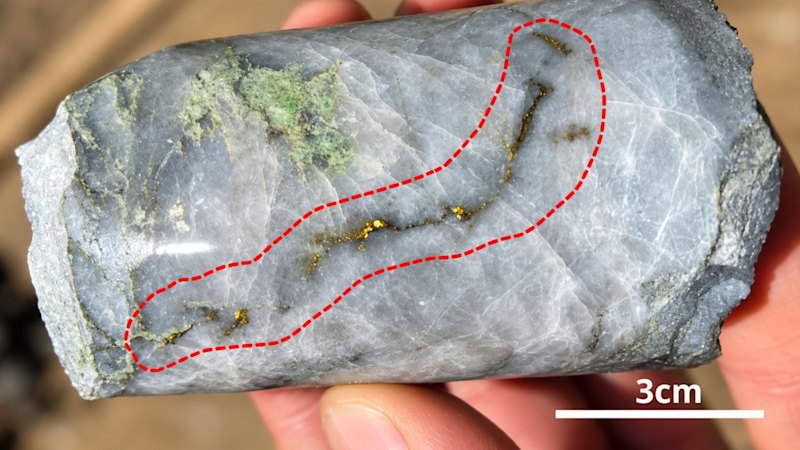
Exploration firm Aureka Ltd has intersected shallow, visible gold during drilling operations at its Irvine project in the Australian state of Victoria, boosting company ambitions to expand its existing 398,300-ounce deposit toward a million-ounce inventory. The discovery of mineralisation close to the surface provides new geological data for the company as it attempts to significantly enlarge its resource footprint within one of Australia's historic gold-producing provinces.
Key facts
What happened
During recent exploration activity at the Irvine project in Victoria, drilling intercepted intervals featuring visible gold located at shallow depths, according to reporting by Penny Taylor. Visible gold refers to gold particles that are macroscopic and can be identified by the naked eye or under low magnification in drill core or drill chips before laboratory chemical analysis takes place.
At present, the mineral inventory at Irvine stands at an inferred resource of 398,300 ounces. An inferred resource represents the initial, baseline confidence tier under mineral reporting standards, where tonnage, densities, shape, and grade can be estimated with sufficient confidence to imply geological continuity, but without sufficient detail to verify it rigorously. The intersection of shallow mineralised zones provides the project's technical team with targets to test strike and dip extensions of known lodes, forming the basis for an ambitious push to more than double the project's current resource inventory toward the one-million-ounce mark.
Drilling at shallow levels is typically pursued by mineral explorers to establish near-surface volume that could potentially be amenable to open-pit mining or low-cost initial underground portal development. While the company observed visible mineralisation, specific intersection widths, true thicknesses, and precise gold grades per tonne require complete geochemical assay analysis from accredited testing laboratories.
Why it matters
In junior mineral exploration, the transition from an exploration prospect to a deposit holding one million ounces of gold is widely regarded across capital markets as a defining threshold. Deposits below half a million ounces often struggle to justify the substantial upfront capital expenditure required to construct standalone processing infrastructure, such as carbon-in-leach or carbon-in-pulp processing mills, tailing storage facilities, and grid connections. A resource base of one million ounces or more frequently serves as the benchmark that attracts institutional investment, secures project debt financing, or draws acquisition interest from mid-tier and senior producing mining companies.
For regional stakeholders and the Australian mining sector, drilling success in Victoria reinforces interest in the state's orogenic gold systems. Shallow discoveries are particularly consequential from an economic standpoint. Mineralisation close to the surface lowers the cost of exploration drilling, as shorter drill holes require less time and lower fuel and rig-operating expenditures compared to deep diamond drilling. Furthermore, if shallow deposits eventually advance to development, they typically feature lower initial strip ratios and reduced pre-stripping capital expenditures during the opening phases of open-cut operations.
However, market analysts consistently note that visible gold, while encouraging, can introduce what geologists term the "nugget effect." In coarse gold deposits, erratic high-grade particles can distort initial visual impressions or create sample variance. Achieving a compliant, reliable expansion from roughly 400,000 ounces to one million ounces requires rigorous, close-spaced grid drilling to confirm that visual intersections translate into continuous, mineable grade and tonnage across measurable geological structures.
The background
Victoria has a distinguished mining history that began during the Victorian gold rush of 1851, which transformed the economy of colonial Australia and founded major regional centers such as Ballarat and Bendigo. Over the course of the late nineteenth and early twentieth centuries, the state yielded tens of millions of ounces of gold, largely from high-grade quartz-reef systems hosted within folded sedimentary sequences of the Lachlan Fold Belt.
Despite this rich historical legacy, modern hard-rock exploration across Victoria experienced decades of subdued activity toward the end of the twentieth century, as global exploration capital shifted toward large-scale open-pit deposits in Western Australia and international jurisdictions. In recent years, however, modern exploration methodologies, advanced structural geology models, and high-resolution geophysical surveys have driven a renaissance across the Victorian gold sector. The dramatic success of major underground operations such as the Fosterville mine—famed for its ultra-high-grade quartz veins and visible gold occurrences—demonstrated that Victoria's deeply rooted structural systems still harbor significant, high-grade mineralisation that had escaped historical prospectors.
Mineral projects in Australia are governed by strict public reporting guidelines codified by the Joint Ore Reserves Committee, universally known as the JORC Code. The JORC framework divides mineral estimates into Mineral Resources and Ore Reserves based on increasing levels of geological knowledge and confidence. Within Mineral Resources, the categories advance from Inferred to Indicated and Measured. An Inferred Resource—the category currently held by Aureka at the Irvine project—is based on limited sampling and geological evidence. Under regulatory rules, an inferred resource cannot be used directly in definitive economic feasibility studies or converted directly into commercial ore reserves without infill drilling that upgrades it to indicated status.
Advancing an asset from an inferred baseline to a one-million-ounce total resource requires a systematic exploration lifecycle. Explorers must undertake systematic reverse circulation and diamond core drilling, maintain rigorous quality assurance and quality control (QA/QC) protocols, run directional survey checks, and execute multi-element assay suites alongside specific gravity testing. Only after these data are compiled into three-dimensional geological domain models can an independent qualified competent person certify an upgraded resource calculation.
Reaction
Following the disclosure reported by Penny Taylor, formal market and corporate reactions will center on the forthcoming release of detailed assay certificates. Exploration companies trading on public exchanges typically file comprehensive technical releases via official market announcement platforms, accompanied by JORC Table 1 checklists that outline drilling techniques, sampling methodologies, and survey data.
Industry analysts and institutional mining funds will look for detailed disclosures outlining whether the visible gold is hosted within discrete narrow quartz veins or broader disseminated alteration halos. Community and local government stakeholders in Victoria's regional shires are also expected to monitor subsequent announcements closely, as any long-term shift from exploration drilling to scoping and feasibility studies necessitates comprehensive environmental permitting, heritage surveys, and community consultation under state minerals legislation.
What we don't know yet
While the discovery of visible, shallow gold is an operational milestone, several critical pieces of technical information remain unknown from the initial report. The exact intervals, downhole depths, and true widths of the intersections have not yet been detailed, nor have the quantitative assay values, which must be confirmed through laboratory fire assays or screen fire assays designed to account for coarse gold.
It is also unclear how many drill holes penetrated the shallow zone, what specific drill rigs were deployed, and whether the mineralisation remains open along strike and at depth. Furthermore, the geometric continuity between this newly drilled shallow mineralisation and the existing 398,300-ounce inferred resource model has not been published. Until comprehensive cross-sections and assay tables are released, technical observers cannot determine how much additional tonnage this discovery represents or what capital expenditure will be necessary to execute the infill and extensional drilling required to achieve the one-million-ounce objective.
What to watch
In the coming weeks and months, several concrete milestones will dictate the progression of the Irvine project:
This account is based on original reporting published by Penny Taylor on November 17, 2026.
How this story was produced
This report was written by The Global Wire newsroom from reporting first published by Penny Taylor. We verify the core facts against the original report, write our own account, and add the background and consequences a short wire item leaves out. Drafting is AI-assisted inside an editor-supervised pipeline, and every story is checked for accuracy of attribution, structure and duplication before it appears — full detail in our AI and funding disclosure.
Spotted an error? Tell us at corrections@horizonglobalnews.com and read our corrections policy or editorial standards.






Reader comments
Loading comments…