

Anuj Shrivatri Wins ASEAN Plus Open to Become India’s 100th Grandmaster
The Madhya Pradesh player secured the country’s centenary Grandmaster title by winning the 7th ASEAN Plus Individual Open Chess Championship.
By The Global Wire Newsroom · Reported from Jyotirmoy Halder
Link preview · horizonglobalnews.com
Anuj Shrivatri Wins ASEAN Plus Open to Become India’s 100th Grandmaster
The Madhya Pradesh player secured the country’s centenary Grandmaster title by winning the 7th ASEAN Plus Individual Open Chess Championship.
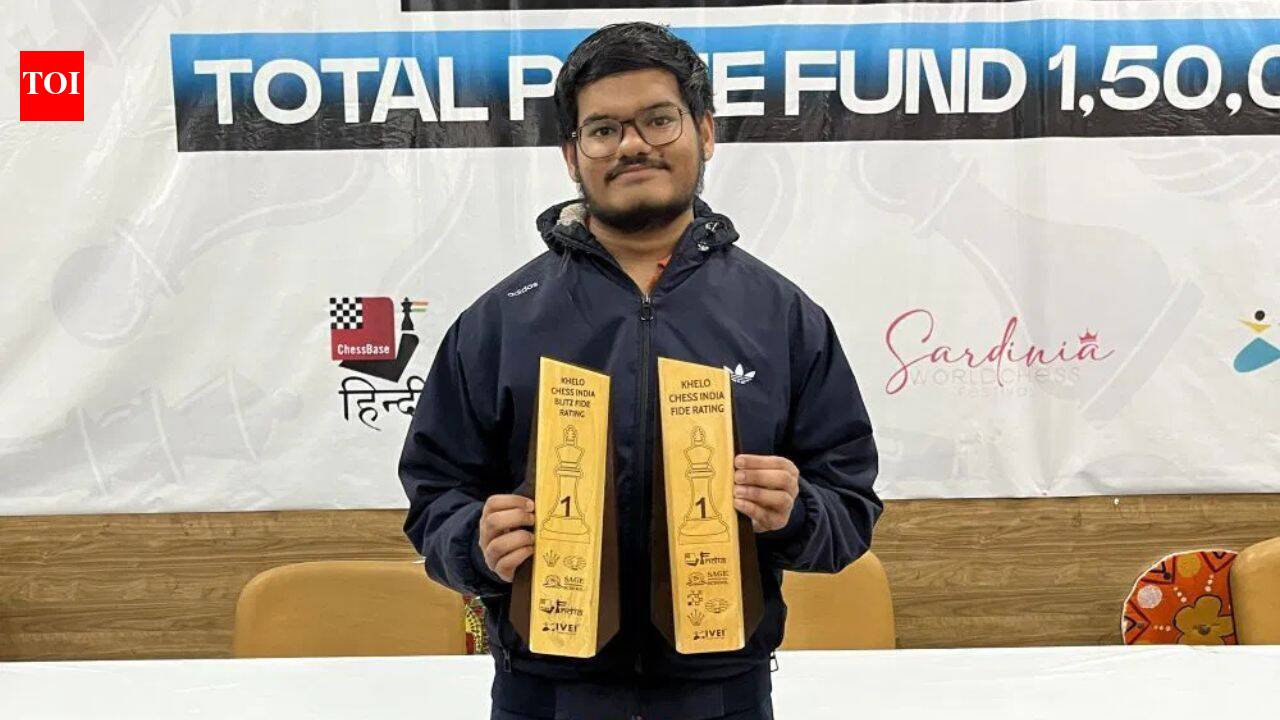
Anuj Shrivatri has become India’s 100th chess Grandmaster after winning the 7th ASEAN Plus Individual Open Chess Championship, reaching the final performance benchmark required for the sport’s ultimate lifetime title. In securing the milestone on Sunday, Shrivatri also made sporting history at the provincial level by becoming the first player from the central state of Madhya Pradesh to attain Grandmaster status, concluding a decades-long pursuit by the state's chess federation to produce an elite-tier player.
Key facts
What happened
Shrivatri entered the 7th ASEAN Plus Individual Open Chess Championship needing to convert an exceptional tournament performance into the final criteria mandated by the International Chess Federation, universally known by its French acronym FIDE. Over the course of the multi-round international competition, he sustained an undefeated or high-scoring run against an international field that contained the requisite proportion of titled Grandmasters, International Masters, and foreign federations.
By taking clear first place in the open category, Shrivatri cleared the final statistical hurdle of his career. Achieving the Grandmaster title demands both an official or live FIDE Elo rating of at least 2500 and the accumulation of three separate title "norms"—performances rated at 2600 or above across eligible tournaments of at least nine rounds each. Shrivatri’s championship victory provided the necessary rating performance and points, formally completing the triad of requirements.
The tournament win concluded a sustained campaign by Shrivatri across domestic and overseas open circuits. By capturing the title at the ASEAN Plus event, he crossed the threshold that elevated India to a century of Grandmasters, while simultaneously resolving a long-standing void for Madhya Pradesh, which had produced several International Masters and junior champions over previous decades without breaking through to the sport’s highest rank.
Why it matters
India’s crossing of the 100-Grandmaster threshold marks an extraordinary demographic and competitive shift in global chess. When Viswanathan Anand earned the title in 1988, competitive chess was overwhelmingly dominated by the Soviet Union and Eastern European federations. By reaching triple digits, India has cemented its position alongside Russia as one of only two countries in modern chess history to produce 100 Grandmasters. The milestone reflects an institutional pipeline that has systematically shortened the time required to mint elite players; while it took India nearly two decades to produce its first 10 Grandmasters, the country added dozens more in the 2010s and 2020s alone.
Equally consequential is the geographic decentralization represented by Shrivatri’s success. Elite Indian chess has historically faced severe regional concentration. The southern state of Tamil Nadu, spearheaded by the institutional legacy of Anand and the chess infrastructure of Chennai, has long produced a disproportionate share of the country’s Grandmasters, alongside secondary clusters in West Bengal, Maharashtra, and Telangana. The vast swaths of central, northern, and eastern India have historically lagged behind in master-level infrastructure, tournament density, and access to elite coaching.
Shrivatri’s emergence from Madhya Pradesh demonstrates that the proliferation of online chess platforms, remote grandmaster training, and domestic rating circuits is breaking down traditional regional disparities. His title is likely to unlock state-level sports funding, public-sector employment quotas, and governmental sponsorships that are routinely granted by state administrations in India to athletes who reach international pinnacles. For young players throughout central India, his breakthrough establishes a proven local precedent.
The background
To understand the magnitude of Shrivatri’s achievement, it is necessary to examine how the Grandmaster title is awarded and how India’s domestic chess ecosystem developed over the past four decades.
The International Chess Federation created the Grandmaster title in 1950, standardizing it as the highest permanent rank a chess player can achieve outside of World Champion. Under FIDE Handbook rules, players must earn three norm certificates across FIDE-registered tournaments. Each norm requires facing a specified balance of titled opponents, players from federations other than the applicant's home country, and a minimum tournament performance rating of 2600 against an opponent pool of a specified average rating. Furthermore, the player must achieve an active or published FIDE rating of 2500 at some point in their career.
India remained absent from this elite echelon until December 1987, when Anand completed his third norm at the Sakthi International Open in Coimbatore, officially gaining the title in 1988. Four years later, Dibyendu Barua of West Bengal became the second Indian Grandmaster, followed by Pravin Thipsay of Maharashtra in 1997. For years, the development of Indian chess was measured in slow, incremental additions.
The growth curve transformed sharply around the turn of the millennium. The establishment of dedicated training academies, an influx of corporate sponsorship, and the introduction of strong domestic open tournaments created a dense competitive circuit. By late 2017, India had reached 50 Grandmasters. The subsequent sprint from 50 to 100 unfolded across less than a decade, driven by an unprecedented youth movement that saw teenage prodigies like D. Gukesh, R. Praggnanandhaa, Arjun Erigaisi, and Nihal Sarin surge into the world’s top rankings.
Despite this national surge, Madhya Pradesh—India’s second-largest state by land area—remained on the margins of the Grandmaster ledger. The Madhya Pradesh Chess Association repeatedly pointed to a shortage of high-category international tournaments in the state, which forced aspiring players to incur heavy personal travel expenses to compete in Europe, Southeast Asia, or coastal Indian cities to seek norms. Shrivatri’s campaign required navigating these identical logistical and financial barriers.
Reaction
While formal public statements from national and international chess bodies typically await administrative processing, Shrivatri’s achievement will be submitted to the FIDE Qualification Commission. The All India Chess Federation (AICF) is expected to review and forward his documentation for official ratification at the next scheduled meeting of the FIDE Council or General Assembly.
Within Madhya Pradesh, sporting bodies and state officials are expected to formalize recognition in line with existing state sports award protocols. State sports departments across India routinely confer state-level sporting honours and cash rewards to athletes who break national milestones. Peer Grandmasters and international competitors across the Indian circuit have historically celebrated centenary milestones as collective evidence of India’s growing institutional dominance in the sport.
What we don't know yet
Several specific details regarding the tournament campaign and administrative schedule remain to be clarified. The exact round-by-round scoreline compiled by Shrivatri at the 7th ASEAN Plus Individual Open Chess Championship has not been released in the initial bulletins, nor has the exact rating differential gained over the course of the event. While the victory satisfied the conditions for his Grandmaster title, his updated live Elo rating following the final round calculations has yet to be finalized on FIDE’s dynamic servers.
Additionally, the precise schedule for FIDE’s formal approval remains dependent on the federation's administrative calendar. While the achievement of norms and rating is definitive once verified, official title conferral requires rubber-stamping by the international governing body. Finally, it is not yet known whether the Madhya Pradesh sports ministry will announce specific infrastructure grants or competitive stipends to capitalize on Shrivatri’s achievement and expand competitive facilities within the state.
What to watch
The most immediate checkpoint will be the publication of FIDE’s forthcoming monthly rating list, which will reflect the rating changes from the 7th ASEAN Plus Championship and incorporate Shrivatri’s updated official status. Observers will also track the publication of the tournament's full cross-table to analyze his tactical performance against specific titled opponents.
Beyond administrative confirmation, attention will turn to Shrivatri’s competitive calendar over the subsequent six to twelve months. Transitioning from norm-chasing open tournaments to the higher-stress environment of elite invitationals and international opens requires adapting to opponents who prepare extensively against established Grandmasters.
Domestically, watch for whether the All India Chess Federation uses the occasion of the 100th Grandmaster to launch new promotional or developmental initiatives aimed at other traditionally underrepresented Indian states. Shrivatri’s breakthrough highlights remaining geographical blind spots in northern, northeastern, and central India, where state associations will face increased scrutiny to replicate Madhya Pradesh’s historic milestone.
*Reporting by Jyotirmoy Halder contributed to this account.*
How this story was produced
This report was written by The Global Wire newsroom from reporting first published by Jyotirmoy Halder. We verify the core facts against the original report, write our own account, and add the background and consequences a short wire item leaves out. Drafting is AI-assisted inside an editor-supervised pipeline, and every story is checked for accuracy of attribution, structure and duplication before it appears — full detail in our AI and funding disclosure.
Spotted an error? Tell us at corrections@horizonglobalnews.com and read our corrections policy or editorial standards.




Reader comments
Loading comments…