

UK Approves Plug-In Solar Systems as Experts Urge Pre-Purchase Safety Checks
Britain has formally legalized plug-in solar devices for domestic sockets, but experts warn residents to evaluate home wiring before installing kits.
By The Global Wire Newsroom · Reported from Daniel Cooper
Link preview · horizonglobalnews.com
UK Approves Plug-In Solar Systems as Experts Urge Pre-Purchase Safety Checks
Britain has formally legalized plug-in solar devices for domestic sockets, but experts warn residents to evaluate home wiring before installing kits.
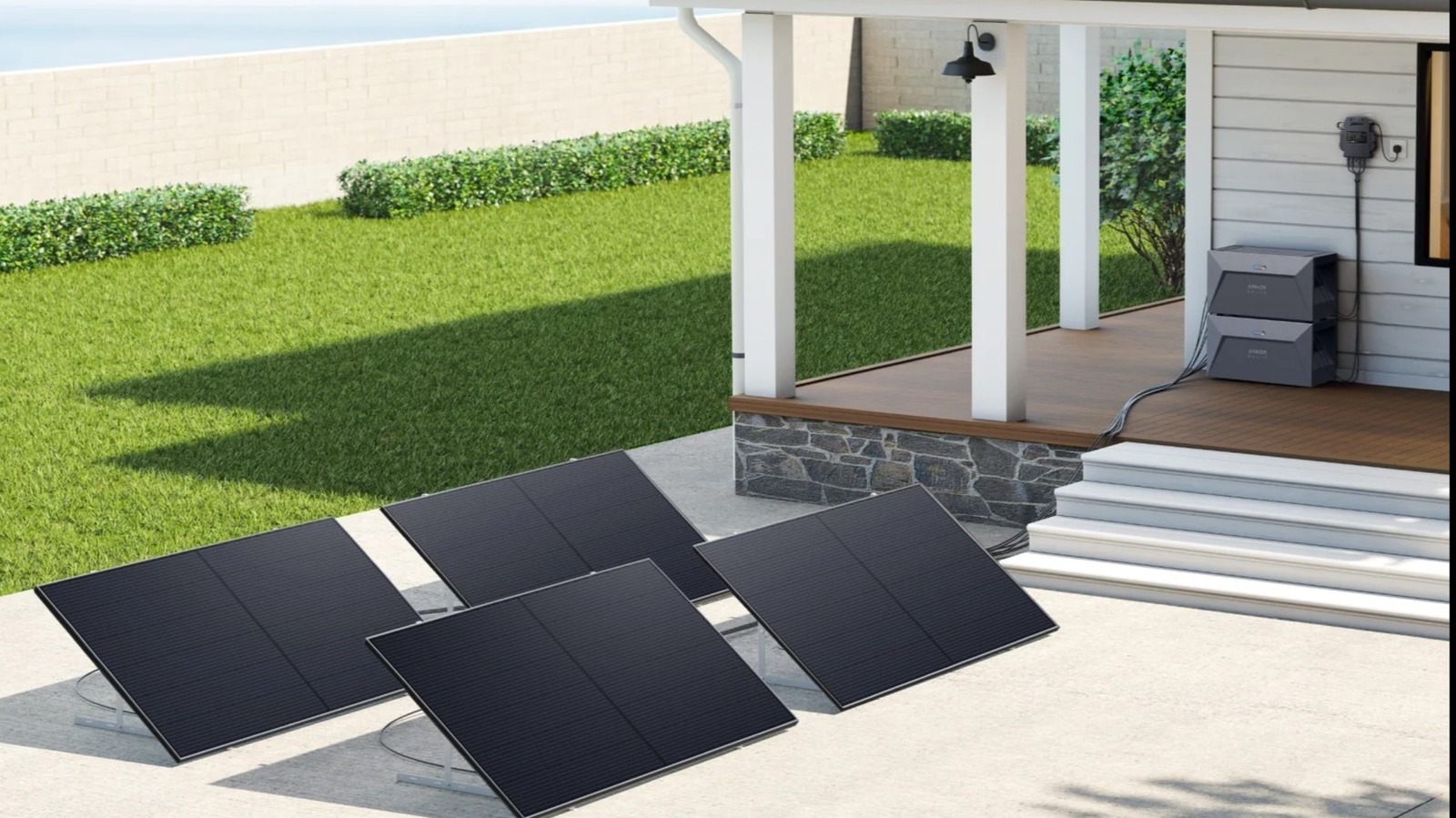
LONDON — The United Kingdom has officially approved the legal use of plug-in solar panel systems, permitting residents to generate renewable electricity by plugging portable solar units directly into standard household wall outlets. However, energy professionals and electrical safety experts are urging consumers to exercise caution and obtain professional evaluations of their home electrical infrastructure before purchasing or installing the systems. According to reporting by Engadget, while the regulatory change marks a significant milestone in expanding access to solar power for renters and apartment dwellers, legacy household wiring and uninspected electrical circuits present potential safety risks if units are deployed improperly.
Key facts
What happened
The legal approval of plug-in solar systems opens a new avenue for low-carbon energy generation across British households, as detailed in reporting by Engadget. Under the newly cleared framework, consumers can purchase self-contained solar kits—comprising photovoltaic modules and micro-inverters—and connect them into ordinary three-pin wall sockets without requiring major structural work or permanent roof mounting.
Despite the regulatory green light, technical experts and safety organizations have immediately cautioned against widespread, unsupervised adoption. The primary concern centers on the structural and electrical suitability of individual residential properties. Standard domestic power circuits, particularly in older housing stock across England, Scotland, Wales, and Northern Ireland, were not originally engineered to manage bidirectional current flows from portable generation devices plugged into branch circuits.
Engineers advise that before energizing a plug-in system, property owners and tenants must confirm that their internal distribution boards, circuit breakers, and wiring integrity can safely accommodate the localized generation. Without appropriate circuit protection and earthing, connecting power-generating equipment into standard power points can risk overloading household conductors, tripping safety switches, or creating hazards for utility workers during local power outages.
Why it matters
The legalization of plug-in solar represents a structural shift in how urban populations access renewable energy technology. Historically, residential solar installation in the UK has been restricted to homeowners with significant capital, suitable roof space, and the structural right to make permanent modifications. By contrast, plug-in solar units—often called balcony solar—offer a lower barrier to entry for millions of tenants, flat owners, and low-income households previously excluded from the green energy transition.
A single 400-watt to 800-watt plug-in kit mounted on a balcony rail or patio can supply enough baseload power during daylight hours to offset the continuous electrical draw of household appliances such as refrigerators, Wi-Fi routers, home office equipment, and standby electronics. Over the course of a year, this baseload reduction can yield noticeable savings on household utility bills, mitigating exposure to volatile retail energy price caps established by the Office of Gas and Electricity Markets (Ofgem).
However, the financial benefit depends heavily on safe deployment and accurate metering. If an uninspected home circuit experiences thermal stress due to improper loading, the cost of electrical repairs or fire hazards far outweighs any utility bill savings. Furthermore, older mechanical or early-generation digital electricity meters may misinterpret power exported back into the grid, potentially counting exported electricity as consumption and inadvertently increasing the customer's bill. Consequently, understanding the intersection of home wiring, meter capability, and grid regulation is crucial for consumers looking to adopt the technology safely.
The background
Plug-in solar technology has experienced explosive growth across mainland Europe over the past decade, most notably in Germany, where small-scale balcony systems—known locally as Balkonkraftwerk—exceed hundreds of thousands of active installations. The European Union's harmonized electrical standards and the widespread use of radial wiring circuits made plug-and-play solar adoption relatively straightforward in countries like Austria, Germany, and the Netherlands. German regulators eventually streamlined registration processes and raised the allowable power output threshold for plug-in micro-inverters from 600 watts to 800 watts, accelerating consumer uptake.
In contrast, the UK market faced technical and regulatory hurdles rooted in historical infrastructure decisions. British residential properties predominantly use ring final circuits (ring mains), a post-World War II copper-saving innovation where a single 32-amp circuit loops through multiple double sockets before returning to the consumer unit. In a ring circuit, injecting current at an arbitrary socket can alter current distribution across the ring's legs, potentially causing localized conductor overheating if the circuit is heavily loaded or poorly balanced.
Additionally, UK grid connections for distributed generation have long been governed by Engineering Recommendations G98 and G99, overseen by the Energy Networks Association (ENA). Under Engineering Recommendation G98, micro-generators under 16 amps per phase (approximately 3.68 kilowatts) benefit from a simplified "fit and inform" procedure, but standard guidance still assumed fixed, hardwired connections installed by certified electricians under BS 7671 (the IET Wiring Regulations). Bridging the gap between rigid fixed-installation standards and portable consumer plug-in appliances required extensive review by regulatory bodies and standards committees to ensure that micro-inverters feature robust anti-islanding protection, which instantly shuts down power output if grid power fails.
Reaction
Following the legalization announcement, response within the renewable energy and electrical safety sectors has been a mixture of optimism and disciplined warning. Environmental advocacy groups and clean energy campaigners have welcomed the decision as a democratizing step that brings energy generation within reach of millions of flat dwellers and private renters who lack control over rooftop installations.
Concurrently, industry bodies such as Electrical Safety First, along with certified electrical contractor associations, have reiterated the mandatory need for safety checks. Professional installers emphasize that while the solar hardware itself may meet international safety compliance standards, the safety of the complete system depends entirely on the condition of the receiving socket and the internal circuit feeding it. Consumer protection groups are expected to issue detailed guidance advising buyers to avoid unbranded online market kits that lack recognized certification marks or proper fault protection mechanisms.
What we don't know yet
While the foundational decision to legalize plug-in solar in the UK has been established, several operational and regulatory specifics remain unresolved in the initial reporting from Engadget. It is currently unclear whether the UK government or Ofgem will establish a mandatory centralized registry for plug-in solar devices, similar to Germany's energy market data register (Marktdatenstammregister), or whether notification to local Distribution Network Operators (DNOs) will be automated through retail vendor sales data.
Furthermore, details regarding specific power output caps for plug-in systems in the UK remain unverified. It has not been publicly detailed whether the UK limit will align with the European 800-watt micro-inverter standard or enforce a lower threshold to accommodate legacy British wiring standards. Clarification is also needed regarding how smart meter operating tariffs—such as the Smart Export Guarantee (SEG)—will handle plug-in units, given that non-registered export cannot typically claim payments from energy suppliers.
What to watch
In the coming months, several key milestones will clarify how plug-in solar is integrated into the British market:
This report is based on original reporting published by Engadget.
How this story was produced
This report was written by The Global Wire newsroom from reporting first published by Daniel Cooper. We verify the core facts against the original report, write our own account, and add the background and consequences a short wire item leaves out. Drafting is AI-assisted inside an editor-supervised pipeline, and every story is checked for accuracy of attribution, structure and duplication before it appears — full detail in our AI and funding disclosure.
Spotted an error? Tell us at corrections@horizonglobalnews.com and read our corrections policy or editorial standards.





Reader comments
Loading comments…