

Trump Administration Releases 248 USAID Documents Alleging Past Agency Weaponization
Hundreds of internal agency records have been published on the restored USAID website as part of an official review of prior administration programs.
By The Global Wire Newsroom · Reported from ET Online
Link preview · horizonglobalnews.com
Trump Administration Releases 248 USAID Documents Alleging Past Agency Weaponization
Hundreds of internal agency records have been published on the restored USAID website as part of an official review of prior administration programs.
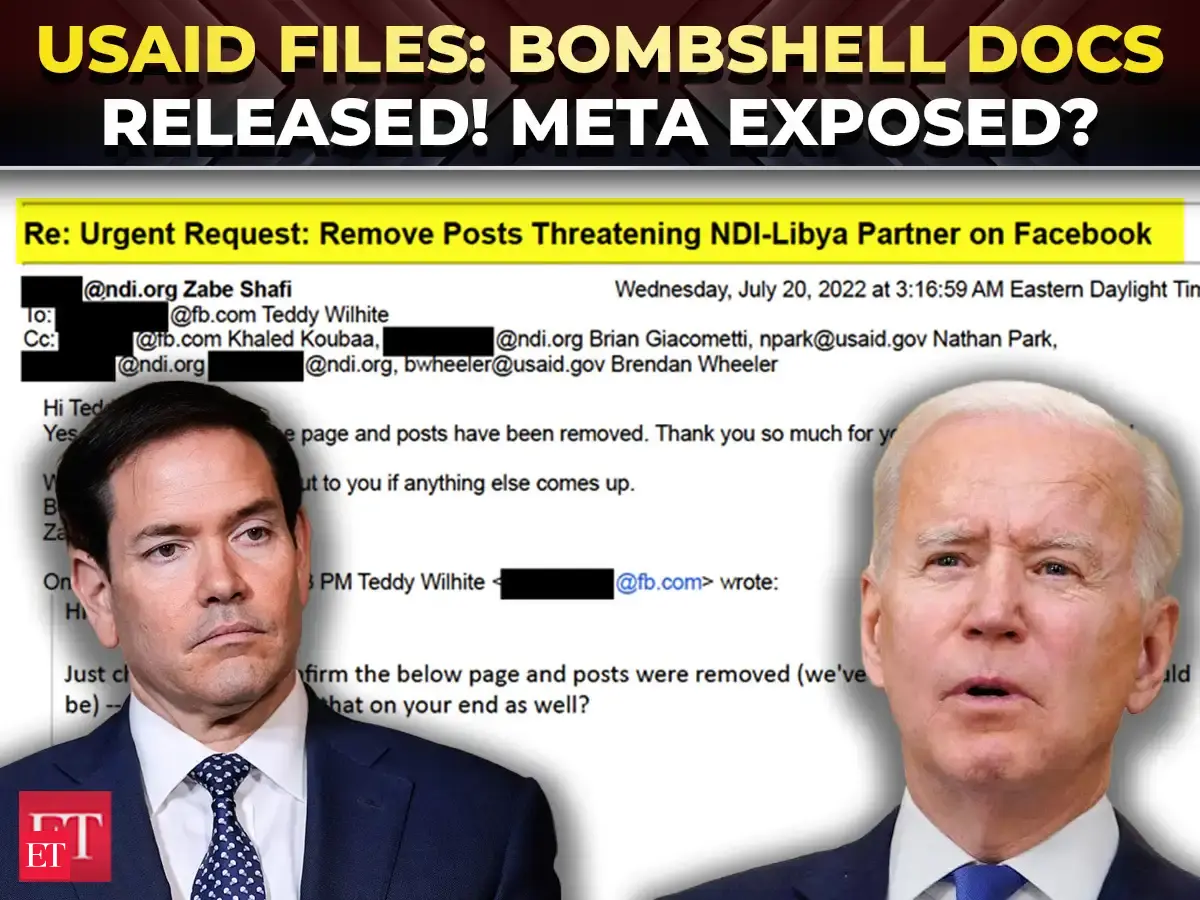
WASHINGTON — The United States Agency for International Development reopened its primary public website with a public repository containing 248 internal files, an administrative disclosure intended to show that federal foreign assistance machinery had been diverted under previous leadership to advance ideological programs, according to reporting by ET Online. The document release, coordinated by officials in the administration of Donald Trump, compiles agency emails, project files, and internal communications from the era of President Joe Biden. The administration asserts the material illustrates systemic politicization across federal programs tasked with global humanitarian aid and information initiatives, setting up a sharp confrontation over the historical mandate, oversight, and operational independence of the country's multi-billion-dollar foreign development apparatus.
Key facts
What happened
Following an interruption in the regular availability of the official USAID portal, the federal platform returned to service configured with a prominent public release of legacy agency records. The digital dossier comprises 248 separate files, drawing largely upon correspondence, memos, and program management materials generated during the Biden presidency, as detailed by ET Online.
According to the materials presented on the agency portal, the current administration contends that these communications reveal institutional overreach within the foreign development agency. Specifically, the repository targets initiatives implemented under the banner of combating disinformation, supporting foreign non-governmental organizations, and funding overseas messaging programs. Political leadership accompanying the release asserted that administrative machinery was systematically turned toward objectives fundamentally disconnected from statutory development goals, characterizing past policies as an effort to enforce specific social and political orthodoxies through foreign grantmaking.
While the documents uploaded to the portal reflect internal exchanges among civil servants, political appointees, and international grant recipients, the specific operational contexts of many individual grant approvals remain detailed across thousands of pages. The publication strategy mirrors previous instances where incoming executive teams have utilized public agency websites to declassify or disseminate legacy administrative files, shifting the digital presence of the agency from routine foreign assistance guidance to an active repository of bureaucratic scrutiny.
Why it matters
For decades, the United States has served as the single largest bilateral donor of humanitarian relief and development assistance in the world. The restructuring of USAID’s official posture and the public exposure of 248 internal operating records carry concrete ramifications across international diplomacy, congressional appropriations, and the global non-governmental sector.
First, foreign aid programs rely extensively on statutory trust and predictability. When internal agency deliberations, personnel emails, and project dossiers are publicly framed as partisan weaponization, foreign governments and non-governmental partners face immediate uncertainties regarding the continuity of existing grant agreements. Funding for global health interventions, emergency food relief, clean water access, and democratic governance projects is administered through multi-year commitments. An agency-level assertion that prior funding channels were illegitimate creates acute vulnerability for implementing organizations operating in conflict zones and developing economies.
Second, the focus on past disinformation programs intersects directly with acute domestic legal and policy conflicts over the federal government’s role in monitoring information environments. Congressional committees have spent years probing whether federal agencies improperly coordinated with tech platforms, academic centers, and international media monitors to suppress protected domestic speech under the justification of countering foreign propaganda. By using USAID's public platform to air internal communications on these topics, the administration is providing evidentiary material designed to feed into domestic legislative debates, legal actions, and potential defunding measures targeting international civil society grants.
Finally, the move signals an institutional break in how civilian foreign assistance is coordinated between career civil service staff and political leadership. Civil servants across the State Department and USAID operate under specific federal protections and ethical mandates. Publicizing internal staff emails on an official portal signals that career foreign affairs personnel may face unprecedented exposure and institutional reviews when political control of the White House shifts.
The background
USAID was established on November 3, 1961, by President John F. Kennedy, following the passage of the Foreign Assistance Act of 1961, which separated military assistance from economic and humanitarian aid. While technically an independent federal agency, USAID operates under the overarching foreign policy guidance of the President and the Secretary of State. Its annual budgetary resources have routinely ranged between $25 billion and $40 billion, channeled into thousands of global projects managed by a workforce of foreign service officers, civil servants, and international local hires operating in more than 100 countries.
Throughout its six-decade history, the agency has periodically become a focal point of partisan conflict in Washington. Changing administrations have routinely altered funding restrictions via executive action, most visibly through the Mexico City Policy—a directive originally instituted by President Ronald Reagan in 1984 that conditions federal global health funding on foreign non-governmental organizations certifying they will not promote or provide abortion services as a method of family planning. That policy has been repeatedly rescinded by Democratic presidents and reinstated by Republican presidents.
In recent legislative cycles, however, scrutiny expanded beyond social policy conditions into civil society and governance programming. During the Biden administration, USAID placed elevated emphasis on supporting independent media, combating foreign digital disinformation campaigns, advancing diversity initiatives in development work, and promoting LGBTQ+ rights abroad. These initiatives drew sustained criticism from conservative lawmakers, who argued that taxpayer-funded foreign aid was increasingly being deployed to export contentious domestic political philosophies rather than addressing basic human needs such as agricultural productivity, maternal health, and disaster relief.
Simultaneously, federal efforts to analyze and counter disinformation—principally led by the State Department's Global Engagement Center and supported in foreign spaces by USAID grantmaking—became the target of congressional investigations. Lawmakers raised concerns that programs ostensibly intended to track hostile foreign influence operations were collaborating with organizations that evaluated domestic media outlets and policy advocacy groups.
Reaction
Congressional committees possessing jurisdictional oversight over international relations, including the House Committee on Foreign Affairs and the Senate Foreign Relations Committee, are widely expected to evaluate the disclosed files as part of their budgetary and statutory reviews. Republican lawmakers on Capitol Hill have long demanded expanded access to unredacted agency correspondence regarding international information programs and have consistently signaled plans to use oversight hearings to probe administrative spending decisions.
Conversely, former agency leaders, diplomatic advocacy groups, and international development professionals are expected to raise concerns regarding the impact of the disclosure on agency personnel and global partnerships. While formal public statements addressing the specific 248 records were not detailed in initial reporting, institutional defenders of the agency traditionally argue that international democracy promotion, independent journalism support, and counter-propaganda efforts are vital components of American national security that protect fragile democracies from authoritarian coercion.
Implementing partners and international contractors that carry out USAID grants on the ground have increasingly expressed concern in trade forums that public politicization of development aid jeopardizes the safety of local personnel working in politically volatile jurisdictions.
What we don't know yet
Significant operational and legal questions remain unresolved following the release of the documents. First, the reporting available does not yet establish the specific criteria used to select the 248 files published on the portal, leaving open whether the collection represents an exhaustive release of completed internal investigations or an initial tranche of ongoing bureaucratic reviews.
Second, the degree of redaction applied to the published files remains unclear. It has not been definitively established whether sensitive personal identifying information of career civil servants, foreign local contractors, or international grant recipients has been fully protected, which bears direct implications for personnel security in host nations.
Third, it remains unverified whether the published communications relate exclusively to foreign civil society support, or whether they substantiate allegations of direct involvement in domestic communication platforms. The precise mechanisms through which the agency's current leadership plans to act upon the findings—whether through administrative disciplinary proceedings, contract cancellations, or formal referrals to the Department of Justice or the USAID Office of Inspector General—have yet to be detailed.
What to watch
In the coming weeks, several concrete milestones will dictate the institutional fallout from the disclosure:
This account incorporates reporting originally published by ET Online regarding the restoration of the agency's official website and the release of the internal records.
How this story was produced
This report was written by The Global Wire newsroom from reporting first published by ET Online. We verify the core facts against the original report, write our own account, and add the background and consequences a short wire item leaves out. Drafting is AI-assisted inside an editor-supervised pipeline, and every story is checked for accuracy of attribution, structure and duplication before it appears — full detail in our AI and funding disclosure.
Spotted an error? Tell us at corrections@horizonglobalnews.com and read our corrections policy or editorial standards.



Reader comments
Loading comments…