

Melbourne Hospital Voyeurism Case: Singaporean Trainee Doctor Awaits Sentencing
Ryan Cho faces sentencing in February after being remanded in custody for illicitly filming hundreds of female medical colleagues across three Victorian healthcare facilities.
By The Global Wire Newsroom · Reported from Marie McInerney
Link preview · horizonglobalnews.com
Melbourne Hospital Voyeurism Case: Singaporean Trainee Doctor Awaits Sentencing
Ryan Cho faces sentencing in February after being remanded in custody for illicitly filming hundreds of female medical colleagues across three Victorian healthcare facilities.
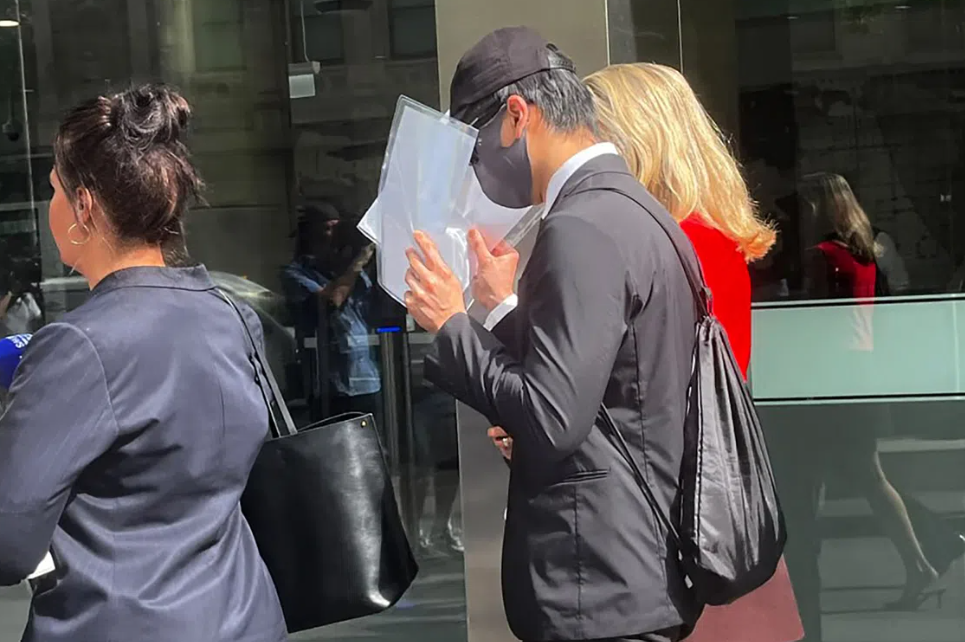
A Singaporean junior physician has been remanded in custody by an Australian court ahead of his formal sentencing scheduled for early next year, following revelations that he secretly captured illicit imagery of hundreds of female colleagues inside staff washrooms across three metropolitan Melbourne healthcare institutions. Ryan Cho, who was completing post-graduate medical training in the state of Victoria, appeared in court on Nov. 26, where judicial authorities ordered him detained until his sentencing hearing on Feb. 12, culminating a criminal proceeding described in court records as an unprecedented breach of privacy and trust within the Australian clinical system.
Key facts
What happened
According to reporting by journalist Marie McInerney, judicial proceedings against Ryan Cho reached a decisive phase in late November when the junior medical officer was denied liberty and held in state custody awaiting judicial determination of his penalty. Cho, who had been practicing as a resident or registrar within the Victorian healthcare network, utilized concealed electronic devices to capture intimate visual records of female hospital personnel without their knowledge or authorization.
Investigators established that the unauthorized surveillance occurred inside private staff amenities—principally toilets and communal washrooms—located across three prominent clinical campuses within the Greater Melbourne metropolitan area. These private staff enclaves, typically secured by electronic passcards or staff-only physical access mechanisms, are designed to afford medical personnel privacy during extended clinical shifts. Cho systematically circumvented this expectation of privacy, installing surveillance apparatus to compile a vast repository of intimate material that targeted fellow healthcare professionals with whom he worked daily.
Upon Cho’s court appearance on Nov. 26, magistrates and judicial officers evaluated the scope of the offending, determining that the severity of the conduct and the vast tally of affected personnel precluded his release on continuing bail. The court ordered him transferred to an adult correctional facility in Victoria. The presiding bench set a formal sentencing date for Feb. 12, allowing time for victim impact statements to be coordinated, legal submissions on sentencing tariffs to be finalized, and pre-sentence reports regarding Cho’s psychological evaluation and background to be compiled by judicial administrators.
Why it matters
The case has prompted profound institutional anxiety across Australia’s public health network, exposing vulnerabilities in the physical security of staff-only hospital spaces while raising serious questions about occupational safety and clinical oversight. In modern tertiary hospitals, staff bathrooms and locker rooms are legally classified as private areas where personnel disrobe, sanitize, and rest during 12- to 14-hour rotations. When covert optical surveillance breaches these zones, it fundamentally undermines the physical and emotional safety of the medical workforce, carrying long-term ramifications for staff retention, psychological well-being, and workplace morale.
Beyond the immediate institutional trauma inflicted upon hundreds of working nurses, physicians, allied health specialists, and administrative staff, the litigation tests the capacity of Victorian law to adequately penalize industrial-scale digital voyeurism. Historically, common-law systems treated non-consensual visual recording under summary or low-level statutory offenses, often designed around opportunist acts rather than calculated, serial intrusion involving hundreds of victims. Because the scale of Cho's offending involves hundreds of individual targets across multiple sites over an extended period, the sentencing outcome on Feb. 12 will establish an influential precedent for how Australian courts quantify harm and apply consecutive or concurrent custodial penalties to large-scale digital invasions of privacy.
Furthermore, the case intersects directly with statutory professional registration rules. Under the national registration regime governed by the Australian Health Practitioner Regulation Agency (AHPRA) and the Medical Board of Australia, practitioners convicted of serious offenses involving non-consensual sexual misconduct or gross violations of public trust face immediate, non-negotiable professional disqualification. The revocation of practice rights not only terminates a practitioner’s career in Australia but triggers mandatory alerts through transnational medical licensing databases, including the Singapore Medical Council, preventing regulatory evasion across international borders.
The background
Non-consensual intimate image generation—often categorized under digital voyeurism, unlawful surveillance, or non-consensual optical recording—has grown into a complex enforcement challenge across developed legal jurisdictions over the past decade. In Victoria, offenses involving the use of optical surveillance devices in private places and the distribution or capture of intimate images without consent are governed under the Summary Offences Act 1966 and the Surveillance Devices Act 1999, alongside specific amendments to the Crimes Act 1958. Legislative reforms enacted by the Victorian Parliament in recent years escalated penalties for offenders who systematically capture or distribute intimate recordings, reflecting growing recognition that digital voyeurism causes severe, enduring psychological harm analogous to physical sexual violations.
Within Australian hospitals, junior medical officers, interns, and international medical graduates navigate a demanding training architecture overseen by regional health networks, such as Melbourne Health, Alfred Health, or Monash Health, in coordination with postgraduate medical councils. Overseas doctors—particularly from Singapore, Malaysia, the United Kingdom, and Ireland—frequently enter Australia on temporary skill-shortage or training visas to complete fellowship years or residencies. The Australian medical sector relies substantially on this international cohort to staff emergency departments, intensive care wards, and surgical teams.
However, immigration and clinical governance rules enforce strict character and fitness requirements. Under Section 501 of the Australian Migration Act 1958, non-citizens who receive a custodial sentence of 12 months or greater automatically fail the statutory "character test," mandating the mandatory cancellation of their entry visas and initiating automatic deportation protocols upon completion of their carceral terms. Consequently, foreign professionals who engage in serious criminal misconduct face a compounding sequence of criminal penalties, professional stripping of qualifications, and sovereign exclusion.
Comparable voyeurism scandals in Australian and Commonwealth institutional settings have previously led to structural reviews of workplace access. Prior cases involving hidden cameras planted in university residential colleges, parliamentary offices, and fitness centers revealed that miniaturized surveillance technology—often concealed in everyday objects such as USB chargers, smoke alarms, or clothes hooks—has become widely accessible through consumer electronics markets, making detection exceptionally difficult without rigorous radio-frequency sweeps and physical counter-surveillance audits.
Reaction
While formal transcripts of immediate courtroom exchanges were limited following the Nov. 26 custody hearing, judicial and prosecutorial representatives placed significant emphasis on the scale of Cho's conduct, with legal teams characterizing the dossier of evidence as an unprecedented compilation of privacy violations within a Victorian healthcare setting.
Healthcare worker unions, including the Australian Nursing and Midwifery Federation (Victorian Branch) and the Victorian Medical Association, are expected to scrutinize the systemic aspects of the case closely as the Feb. 12 sentencing date approaches. Professional bodies representing clinical staff routinely demand rigorous forensic inspections of hospital staff facilities following incidents of covert recording, pressing hospital networks to implement routine privacy audits, security monitoring outside facility entryways, and comprehensive counseling frameworks for impacted staff.
Regulatory bodies, led by AHPRA and the relevant hospital boards across the three affected Melbourne campuses, typically initiate internal clinical reviews alongside formal police proceedings. Standard administrative protocols dictate that an affected health service conduct an audit into access logs, credential distribution, and the historical timeline of an offender’s roster to establish whether vulnerabilities in facility design or supervisory structures facilitated the offenses over months or years.
What we don't know yet
Significant substantive details regarding the operation and administrative handling of the case remain unverified or omitted from initial reporting. The specific names of the three major Melbourne hospitals where Cho was stationed and committed the illicit recordings have not been formally confirmed in available dispatches, leaving uncertainty regarding which specific regional healthcare networks were breached.
Additionally, the reporting does not indicate the exact mechanical method through which Cho's activities were first discovered—whether through an alert coworker discovering a concealed camera, a routine security inspection, or the analysis of digital storage media during a separate inquiry. It also remains unknown whether any of the intimate images captured by Cho were transmitted across encrypted chat forums, uploaded to commercial voyeurism websites, or retained strictly on local physical drives. The digital disposition of these files is critical, as any external dissemination would expand the criminal liability to include transmission offenses and substantially worsen the psychological trauma experienced by the victims.
Finally, the exact statutory sections under which Cho entered guilty pleas or was convicted remain unstated, which obscures the precise maximum statutory ceiling the sentencing judge will consider when Cho returns to the dock on Feb. 12.
What to watch
The primary milestone in this proceeding is the formal sentencing hearing listed for Feb. 12 in the Victorian judicial system. During this session, the court will deliver its judgment, detailing the total custodial sentence, non-parole periods, and the official assessment of Cho's moral culpability and contrition.
Observers should also monitor whether the Victorian Department of Health or the executive leadership of the implicated Melbourne hospital networks commission an independent review into workplace infrastructure safety. Any mandated facility audit could lead to statewide directives requiring regular physical sweeps of staff changing rooms and restrooms across all Victorian healthcare districts.
Following the conclusion of judicial proceedings on Feb. 12, subsequent actions by federal immigration authorities under the Migration Act will determine the legal mechanics of Cho's eventual deportation to Singapore once his custodial obligation to the Australian state is discharged. Concurrently, formal determinations by the Medical Board of Australia and AHPRA will confirm the permanent cancellation of his clinical registration, with corresponding regulatory advisories submitted to licensing authorities in Southeast Asia.
This account is based on original courtroom and wire reporting by Marie McInerney.
How this story was produced
This report was written by The Global Wire newsroom from reporting first published by Marie McInerney. We verify the core facts against the original report, write our own account, and add the background and consequences a short wire item leaves out. Drafting is AI-assisted inside an editor-supervised pipeline, and every story is checked for accuracy of attribution, structure and duplication before it appears — full detail in our AI and funding disclosure.
Spotted an error? Tell us at corrections@horizonglobalnews.com and read our corrections policy or editorial standards.



Reader comments
Loading comments…