

Study Finds Tech-Literate Workers Express Highest Anxiety Over AI Job Replacement
Survey data indicates nearly 43 percent of highly AI-knowledgeable workers expect automated tools to replace their roles soon, far exceeding concern levels among less tech-literate peers.
By The Global Wire Newsroom · Reported from Manisha Priyadarshini
Link preview · horizonglobalnews.com
Study Finds Tech-Literate Workers Express Highest Anxiety Over AI Job Replacement
Survey data indicates nearly 43 percent of highly AI-knowledgeable workers expect automated tools to replace their roles soon, far exceeding concern levels among less tech-literate peers.
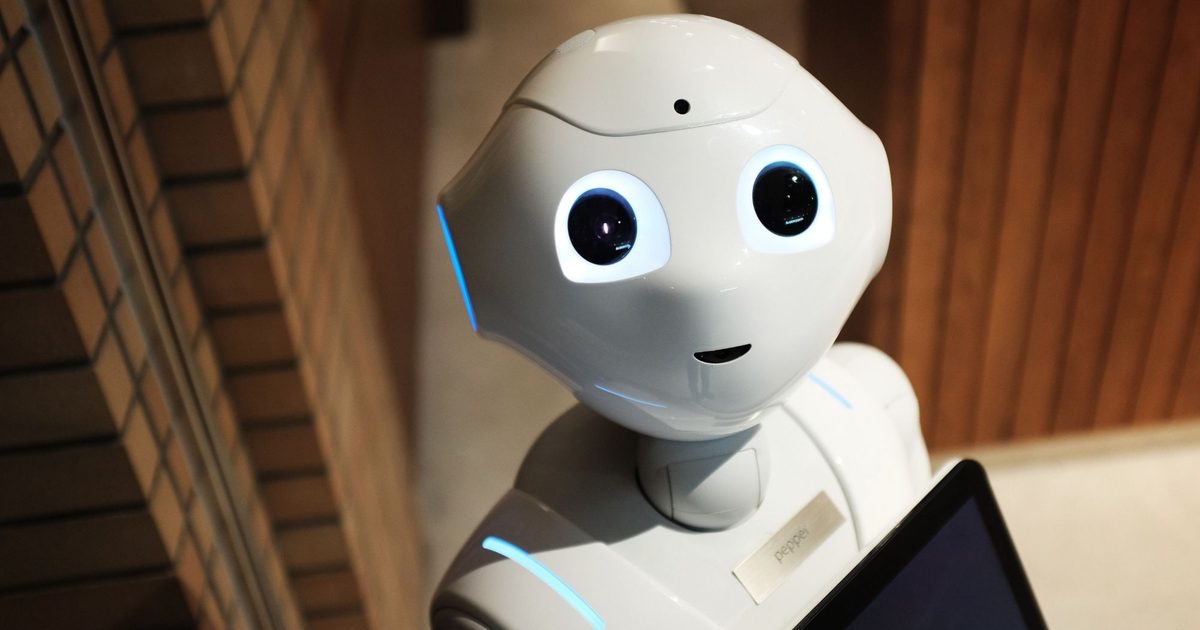
A study released in August 2026 highlights a counterintuitive dynamic in the modern workplace: professionals who possess the deepest technical understanding of artificial intelligence are significantly more fearful of losing their jobs to automation than those with limited technical knowledge. According to reporting by Manisha Priyadarshini, nearly 43 percent of respondents categorized as highly knowledgeable about artificial intelligence anticipate that automated software tools could soon assume their job responsibilities. This figure stands in stark contrast to lower concern levels recorded among workers who report only basic or minimal exposure to artificial intelligence technologies, raising critical questions about how technological literacy influences risk perception and career security in an increasingly automated economy.
Key facts
What happened
The research examines the relationship between employee technical competency and perceptions of workplace stability amidst the rapid expansion of machine learning tools. While popular narratives often assume that technical education and digital literacy protect workers from economic displacement, the survey data reported by Manisha Priyadarshini demonstrates the opposite trend. Individuals who possess extensive technical familiarity with artificial intelligence mechanisms, model architectures, and enterprise integration potential express the highest level of anxiety about the longevity of their current positions.
Specifically, almost 43 percent of highly knowledgeable respondents expressed a strong expectation that artificial intelligence could replace their primary job functions in the short term. In contrast, participants with minimal understanding of artificial intelligence displayed far lower levels of concern. This discrepancy suggests that fear of technological replacement is not merely a product of uninformed anxiety or general technophobia, but rather a calculated assessment made by individuals who closely track the operational capabilities and rapid improvement cycles of modern software.
Engineers, data specialists, and tech-literate knowledge workers regularly witness how advanced language models, computer vision systems, and automated workflow agents perform complex tasks that previously required human cognitive reasoning. Because these workers understand the underlying architecture of software automation, they are capable of extrapolating how quickly current technical limitations—such as output hallucinations, contextual context window boundaries, and latency constraints—are being resolved by researchers and software developers. Consequently, their proximity to the technology provides a clear, unvarnished view of its potential to automate complex cognitive processes, leading to higher reported levels of employment anxiety compared to peers who view artificial intelligence through simplified consumer applications or distant media coverage.
Why it matters
The finding that high artificial intelligence literacy correlates with increased job displacement anxiety has profound implications for corporate management, workforce development, and broader economic stability. In corporate environments, employees who possess the technical skill set required to deploy and refine automated systems are precisely those who feel most threatened by their implementation. This tension creates a potential barrier to internal innovation, as skilled workers may resist adopting, training, or optimizing automated systems if they perceive those tools as direct precursors to personal job loss or team downsizing.
From an organizational health perspective, chronic job insecurity among key technical personnel can drive elevated levels of workplace stress, diminished morale, and higher employee turnover. When top-tier talent believes their roles are systematically being phased out, institutional knowledge retention suffers, and long-term strategic planning becomes compromised. Furthermore, corporate retraining initiatives—frequently championed by business leaders and policy makers as the primary defense against technological disruption—may face unexpected psychological resistance. If workers conclude that acquiring advanced artificial intelligence skills merely heightens their awareness of their own vulnerability without offering long-term employment security, participation in corporate upskilling programs could decline or fail to deliver expected productivity gains.
On a macro-level, this dynamic challenges traditional economic assumptions regarding technological transitions. Historically, technological advancement displaced routine manual tasks while creating higher-value cognitive positions that insulated skilled workers from economic shocks. Because modern generative tools specifically target information processing, code writing, data analysis, and language synthesis, highly compensated knowledge workers find themselves on the front lines of potential displacement. This structural shift alters the risk profile of high-skill professions, potentially reshaping career trajectories, higher education enrollment trends, and national labor policy.
The background
The debate surrounding technological displacement and workplace automation stretches back to the dawn of the Industrial Revolution. In the early 19th century, English textile workers known as Luddites destroyed automated looms out of fear that mechanization would eliminate their livelihoods and degrade labor standards. Throughout the 20th century, successive waves of industrial automation, mainframes, and personal computing periodically renewed fears of widespread unemployment. However, in nearly every prior technological cycle, automation primarily replaced physical labor or highly repetitive administrative work, ultimately expanding aggregate employment by giving rise to entirely new industries, management structures, and service economies.
The current wave of technological disruption differs fundamentally due to the rapid advancement of generative artificial intelligence and deep neural networks. Following the widespread commercialization of large language models and transformer architectures—first introduced in academic literature in 2017 and popularized globally in late 2022—the scope of automation expanded from physical and routine tasks to high-level cognitive processes. By mid-2026, autonomous software agents and multimodal systems had achieved significant capabilities in software development, legal document analysis, financial modeling, medical diagnostics, and creative content generation.
Historically, academic literature on risk perception, such as studies evaluating the Dunning-Kruger effect, observed that individuals with low competence or limited knowledge in a subject often overestimate their safety or abilities, whereas experts maintain a more realistic assessment of complex situations. In the context of technology adoption, workers with limited artificial intelligence literacy frequently assume that human creativity, emotional intelligence, and complex problem-solving are permanently beyond the reach of automated systems. Conversely, software specialists and technical operators understand that machine learning architectures iterate exponentially. Research published by international economic organizations between 2023 and 2025 consistently pointed out that white-collar, college-educated professionals faced the highest exposure scores to generative artificial intelligence capabilities, setting the stage for the anxiety patterns documented in recent survey research.
Reaction
The findings reported by Manisha Priyadarshini are expected to draw close scrutiny from labor organizations, corporate executives, human resource managers, and technology policy researchers. Labor unions representing white-collar workers, media professionals, and tech sector employees have increasingly prioritized job security provisions, human oversight mandates, and limitations on autonomous decision-making systems in recent collective bargaining negotiations. Representatives from labor groups are likely to use these survey results to argue for stronger legal protections and guaranteed retraining standards, contending that even highly technical workforces require explicit employment safeguards against unconstrained software deployment.
Corporate leadership and human resource strategists are tasked with managing the operational fallout of widespread employee anxiety. Industry experts recommend that business leaders adopt transparent communication strategies regarding how artificial intelligence tools will be integrated into internal workflows. Rather than framing automated software solely as a cost-cutting mechanism to reduce headcounts, organizations are being urged to emphasize task augmentation, where software handles repetitive computational work while human employees focus on high-level strategic oversight, client relationships, and qualitative judgment.
In political and regulatory spheres, lawmakers in major economies—including the European Union under its regulatory framework for artificial intelligence and various state and federal agencies in the United States—are monitoring the impact of artificial intelligence on labor markets. Legislative committees focusing on economic development and workforce trends are expected to examine how technical literacy influences worker stability, potentially using such data to inform future labor regulations, unemployment safety net adjustments, and public sector workforce development grants.
What we don't know yet
Despite the striking headline metric, several important details regarding the underlying research remain unexamined in the initial reporting by Manisha Priyadarshini. The summary does not specify the exact methodology, total sample size, geographic distribution, or precise demographic composition of the survey respondents. It remains unknown whether the survey evaluated workers globally or focused on specific national markets such as North America, Europe, or Asia-Pacific, where economic conditions and labor laws vary considerably.
Additionally, the available data does not break down responses across distinct technical sectors or specific job categories. For instance, it is unclear whether anxiety levels differ significantly between software engineers, data scientists, legal analysts, corporate accountants, or marketing strategists. Furthermore, the survey summary leaves open the question of whether this high level of displacement anxiety translates into concrete behavioral changes, such as career changes, voluntary industry departures, increased union participation, or active resistance to technology adoption within companies.
What to watch
In the coming months, several key indicators will reveal how this technological anxiety influences the broader labor market and enterprise strategy. Analysts will closely monitor quarterly earnings reports, SEC filings, and corporate restructuring announcements from major technology, consulting, and financial firms for explicit references to head-count reductions driven by artificial intelligence integration.
Additionally, future labor contract negotiations across media, software engineering, and corporate services will serve as critical reference points. Observers should track whether new labor agreements include explicit guarantees regarding human-in-the-loop requirements and protection against automated job replacement. On the research front, upcoming academic publications and longitudinal labor studies from government statistics agencies will provide essential cross-tabulations, shedding light on whether high anxiety among tech-literate workers corresponds with actual spikes in structural unemployment or displaced worker claims over the next fiscal year.
This report is based on coverage published by Manisha Priyadarshini.
How this story was produced
This report was written by The Global Wire newsroom from reporting first published by Manisha Priyadarshini. We verify the core facts against the original report, write our own account, and add the background and consequences a short wire item leaves out. Drafting is AI-assisted inside an editor-supervised pipeline, and every story is checked for accuracy of attribution, structure and duplication before it appears — full detail in our AI and funding disclosure.
Spotted an error? Tell us at corrections@horizonglobalnews.com and read our corrections policy or editorial standards.





Reader comments
Loading comments…