

Revolution Software Rejects AI Tools in Favor of Human Artists for Broken Sword 2 Remake
Revolution Software co-founder Charles Cecil says human creators remain essential for capturing emotional nuance in the upcoming remake of the classic adventure game.
By The Global Wire Newsroom · Reported from Griff Griffin
Link preview · horizonglobalnews.com
Revolution Software Rejects AI Tools in Favor of Human Artists for Broken Sword 2 Remake
Revolution Software co-founder Charles Cecil says human creators remain essential for capturing emotional nuance in the upcoming remake of the classic adventure game.
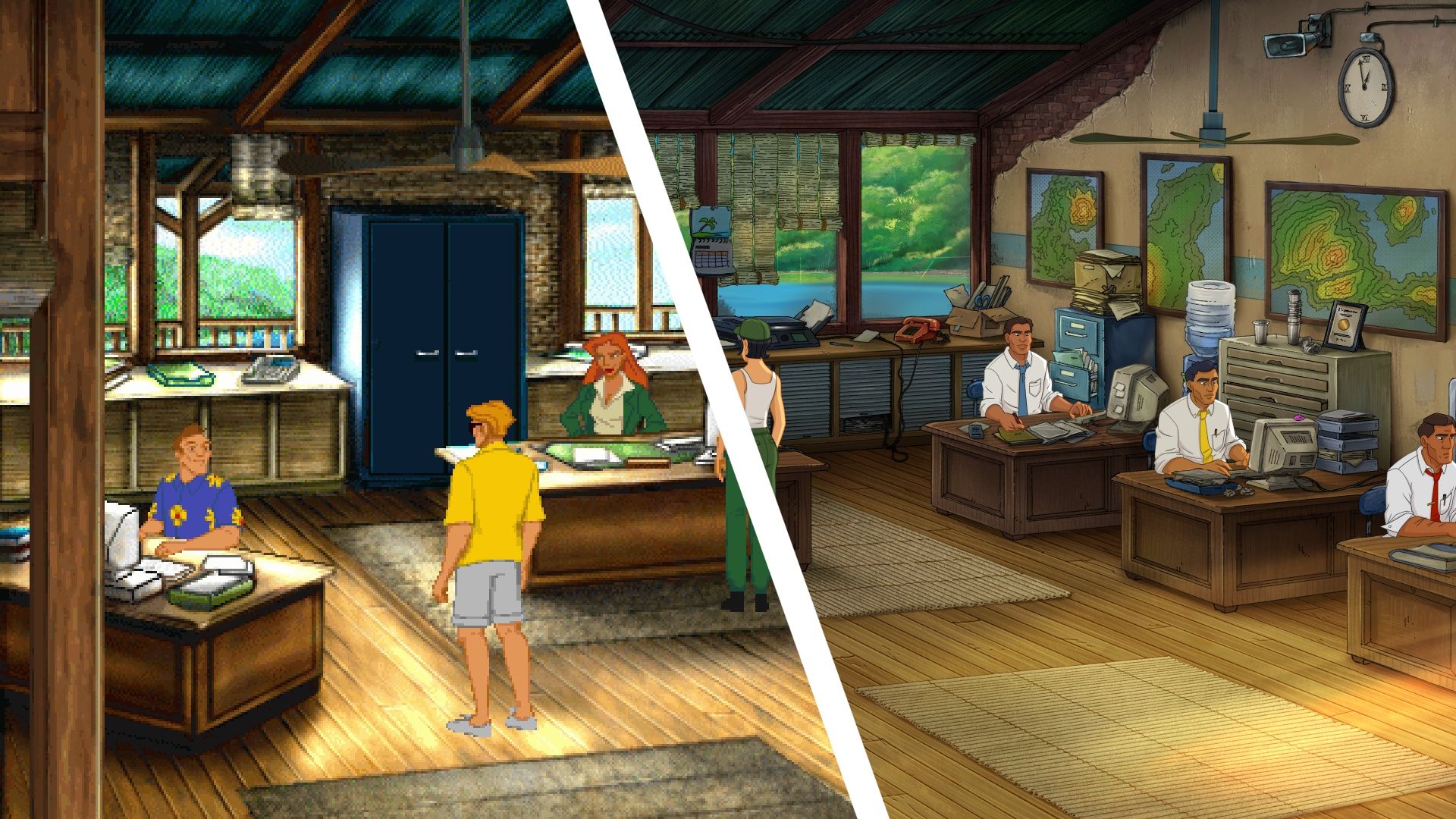
Charles Cecil, co-founder of British game developer Revolution Software, has confirmed that human creators will lead the development of the upcoming remake of Broken Sword 2, explicitly rejecting generative artificial intelligence tools for core art and character design work. Speaking on the creative philosophy behind the project, Cecil stated that human artists remain far superior at capturing nuanced emotion, character depth, and narrative intent compared to automated AI technologies. The decision comes amid an ongoing debate across the interactive entertainment industry regarding the balance between cost-cutting automated tools and traditional human craftsmanship.
Key facts
What happened
In statements reported by Griff Griffin on September 19, 2026, Revolution Software co-founder Charles Cecil articulated why the studio is prioritizing human talent over artificial intelligence for the upcoming Broken Sword 2 remake. Cecil noted that while generative AI software has advanced rapidly across visual and technical disciplines, automated tools struggle to reproduce the subtle emotional beats, expressive character animation, and artistic warmth essential for narrative-focused adventure games.
According to reporting by Griff Griffin, Cecil emphasized that human creators bring an organic understanding of character emotion that algorithms cannot replicate. In adventure titles such as the Broken Sword series, where player engagement depends heavily on expressive character animation, hand-crafted environments, and dialogue timing, relying on automated generation risks diluting the game's distinct artistic identity. As a result, Revolution Software has structured the production of the remake around traditional artistic pipelines led by human illustrators, background artists, and animators.
This choice positions Revolution Software among a select group of independent developers explicitly rejecting generative AI for core asset production. While major publishers increasingly explore automated tools to reduce development costs and shorten production schedules, Cecil’s stance reflects a commitment to preserving hand-crafted creative techniques for legacy intellectual property.
Why it matters
The debate over generative artificial intelligence in video game production has shifted from theoretical discussions into concrete studio management decisions. Cecil’s explicit refusal to use AI tools for the Broken Sword 2 remake carries notable implications for independent game development, creative labor standards, and market positioning within the gaming industry.
For independent game studios, maintaining human-led production pipelines serves as both a guarantee of artistic quality and a key commercial differentiator. Unlike large AAA game publishers operating with development budgets exceeding $100 million and teams numbering in the hundreds, smaller studios like Revolution Software rely on unique visual identity, artistic charm, and strong narrative depth to stand out in a crowded marketplace. Choosing human creators over automated generation reinforces product authenticity for fans who value traditional animation standards.
From a labor perspective, the decision supports digital illustrators, 2D animators, and narrative writers concerned about job displacement caused by generative models. Relying on human labor also eliminates legal and regulatory risks associated with AI-generated content, including unresolved copyright ownership questions and ongoing regulatory scrutiny across major jurisdictions such as the European Union and the United States.
The background
Founded in 1990 in York, England, by Charles Cecil, Tony Warriner, David Sykes, and Noirin Carmody, Revolution Software established itself as a leading developer of point-and-click adventure games. The studio achieved international success with the 1996 release of Broken Sword: The Shadow of the Templars, a story following American protagonist George Stobbart and French journalist Nicole "Nico" Collard as they investigate a global conspiracy. The title gained widespread acclaim for its hand-drawn animation, detailed background art, and cinematic narrative style.
The success of the original game led to the 1997 release of Broken Sword 2: The Smoking Mirror, which expanded the franchise's scope with a storyline involving Mayan mythology, ancient artifacts, and international locations. Over three decades, the series has sold millions of units globally across multiple computer, mobile, and console platforms.
In recent years, Revolution Software has focused on modernizing its classic back catalogue for contemporary gaming hardware. Updating classic 2D adventure games presents significant technical challenges, as original assets were created for low-resolution CRT displays. While automated AI upscaling software can process legacy visual files quickly, such automated methods frequently introduce visual distortion, obscure intentional line work, and fail to preserve character facial expressions.
Concurrently, the broader video game industry has experienced severe economic turbulence, marked by widespread studio closures and extensive job losses between 2023 and 2026. These financial pressures accelerated interest among publishers in generative AI tools for visual concept generation, voice synthesis, and script creation. However, the adoption of these tools has met strong pushback from creative unions such as SAG-AFTRA and international developer groups concerned about artistic integrity, fair compensation, and employment protection.
Reaction
While formal public responses from rival game publishers regarding Cecil's announcement have not been issued, reaction across the broader gaming industry and fan communities highlights clear divisions over AI technology.
Labor organizations and artist advocacy groups routinely commend studios that publicly commit to human-driven development pipelines. Within developer communities such as the Game Developers Conference (GDC) network, commentators frequently note that preserving human artistry is vital for sustaining creative skills and maintaining quality control in narrative-heavy games.
Conversely, technology analysts and automated software vendors often view strict rejections of AI as overly restrictive. Proponents of generative tools argue that automation can handle repetitive background tasks, enabling smaller teams to lower operational costs and allocate limited resources toward gameplay design.
Among players and adventure game enthusiasts, Cecil's comments have been received positively. Community discussions surrounding retro game remasters frequently criticize automated AI upscaling filters, pointing to prior industry releases where algorithmic enhancement resulted in blurry textures, distorted character faces, and lost visual detail.
What we don't know yet
Despite Cecil's public statements, several key aspects of the Broken Sword 2 remake project remain unconfirmed in the reporting by Griff Griffin. The overall project budget, development timeline, and scheduled release date have not been announced.
It is also unclear whether Revolution Software's anti-AI policy applies exclusively to front-end creative work—such as visual art, narrative writing, and voice performance—or extends to back-end engineering, automated testing, and code optimization. Furthermore, specific details regarding voice actor casting, international localization, and target release platforms remain undisclosed by the developer. Whether the studio plans to self-publish the remake or partner with an external distributor also remains to be seen, leaving fans and industry analysts waiting for further technical and business details.
What to watch
In the coming months, several key developments will indicate how Revolution Software executes its human-focused strategy for the Broken Sword 2 remake.
Key milestones to watch include:
This report is based on original reporting published by Griff Griffin on September 19, 2026.
How this story was produced
This report was written by The Global Wire newsroom from reporting first published by Griff Griffin. We verify the core facts against the original report, write our own account, and add the background and consequences a short wire item leaves out. Drafting is AI-assisted inside an editor-supervised pipeline, and every story is checked for accuracy of attribution, structure and duplication before it appears — full detail in our AI and funding disclosure.
Spotted an error? Tell us at corrections@horizonglobalnews.com and read our corrections policy or editorial standards.




Reader comments
Loading comments…