

Nvidia RTX 50-Series Graphics Cards Face Extreme Secondary Market Inflation
Flagship RTX 5090 prices have spiked to $9,000 in the United States, representing a 370 percent surge above suggested retail pricing amid broader hardware market pressures.
By The Global Wire Newsroom · Reported from Sarfraz Khan
Link preview · horizonglobalnews.com
Nvidia RTX 50-Series Graphics Cards Face Extreme Secondary Market Inflation
Flagship RTX 5090 prices have spiked to $9,000 in the United States, representing a 370 percent surge above suggested retail pricing amid broader hardware market pressures.
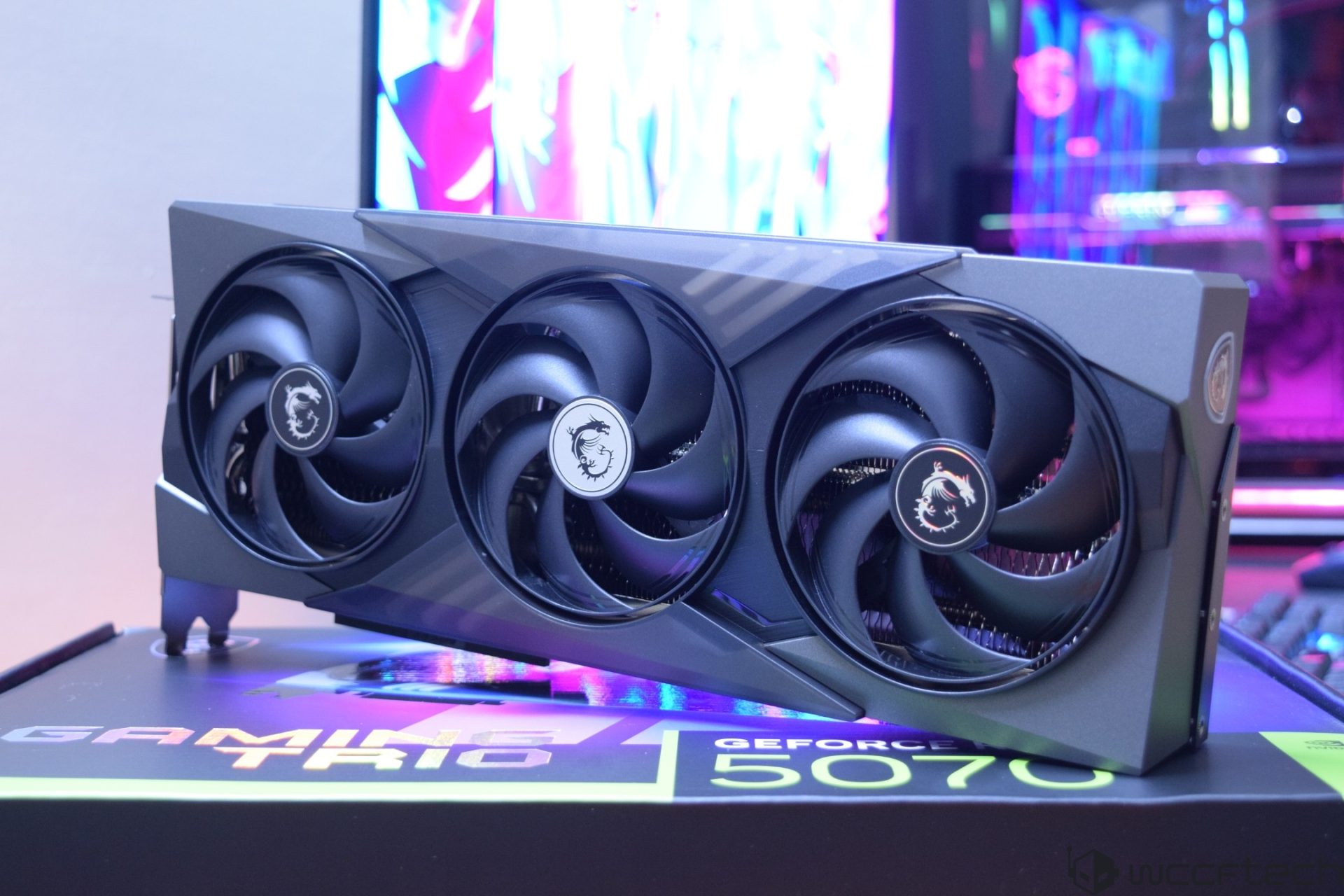
Retail and secondary market prices for Nvidia's latest generation of desktop graphics processing units have escalated dramatically across the United States, with top-tier hardware commanding unprecedented markups. The flagship GeForce RTX 5090 has reached secondary listings as high as $9,000, representing a 370 percent surge over its original manufacturer's suggested retail price, according to reporting by Sarfraz Khan. The price inflation has not been confined to the ultra-enthusiast tier; the broader RTX 50 lineup, including the RTX 5080 and mid-range offerings such as the RTX 5060 Ti, has registered price increases ranging between 40 percent and 120 percent above baseline retail figures.
Key facts
What happened
Following the rollout of Nvidia's next-generation graphics architecture, pricing across retail channels and secondary resale platforms rapidly detached from official manufacturer guidance. The GeForce RTX 5090, positioned as the premier halo product for high-fidelity gaming, content creation, and local artificial intelligence workloads, saw the most severe divergence. Units originally slated to sell near standard flagship price brackets climbed steadily across online marketplaces, eventually touching the $9,000 mark. According to reporting by Sarfraz Khan, this run-up constitutes a 370 percent markup relative to standard suggested retail pricing.
Beyond the flagship tier, retail inventory has thinned across adjacent segments, creating widespread upward pressure on secondary price tags. The GeForce RTX 5080, aimed at high-end performance enthusiasts, and the RTX 5060 Ti, designed as a mainstream volume driver for mid-range desktop gaming, have both seen steep increases. Secondary sellers and retail dynamic pricing engines have elevated prices across the entire RTX 50 product stack by 40 to 120 percent, Khan reported. In practical terms, this places even entry-level and mid-tier desktop silicon well outside the conventional budgets of casual consumers and typical system integrators.
The swift escalation has been driven by a confluence of low stock availability at authorized brick-and-mortar and digital storefronts, high initial consumer interest, and aggressive activity from automated purchasing programs operated by reseller syndicates. When inventory drops occur, standard-priced stock is frequently depleted in seconds, channeling demand directly into auction sites and unregulated third-party storefronts where open-market clearing prices prevail.
Why it matters
The pricing surge carries significant consequences for the broader consumer electronics market, software developers, and independent researchers. When graphics hardware experiences structural inflation of this magnitude, the personal computer gaming ecosystem undergoes distinct contraction pressures. Mainstream consumers are systematically priced out of upgrading aging systems, slowing the adoption rate of modern graphical features, higher resolutions, and advanced rendering standards. This dynamic poses operational headwinds for independent game developers, who depend on wide hardware penetration to justify investing in cutting-edge visual and computational game design.
Simultaneously, the escalation reflects the dual-use reality of contemporary high-performance consumer silicon. Top-tier graphics cards are no longer exclusively utilized for recreational interactive entertainment; they serve as critical localized infrastructure for software engineers, small enterprise artificial intelligence laboratories, digital video editors, and machine learning researchers. Enterprise-grade computational accelerators, such as Nvidia's dedicated datacenter systems, face extensive enterprise order backlogs and carry price tags exceeding tens of thousands of dollars per unit. As a result, prosumer organizations and academic labs routinely turn to flagship consumer graphics cards as cost-effective substitutes for local model inference and development. When consumer silicon prices spiral toward $9,000, small technology startups and independent researchers encounter steep capital expenditure hurdles, restricting competitive research and development outside of well-capitalized corporate laboratories.
The background
Severe price distortions are not unprecedented in the graphics processing unit sector. Between late 2020 and early 2022, the launch of previous-generation architectures collided with severe global supply chain gridlock and a historic boom in cryptocurrency mining, specifically networks utilizing proof-of-work consensus algorithms that favored graphics memory bandwidth. During that period, cards routinely traded on secondary exchanges at three to four times their stated retail value, while store shelves remained devoid of inventory for over eighteen months.
That cycle eventually unwound in mid-2022 following changes to algorithmic mining protocols, an accumulation of excess inventory across secondary channels, and broader macroeconomic normalization. However, the subsequent emergence of generative artificial intelligence in late 2022 fundamentally reordered the semiconductor industry's priorities. The design and manufacturing capacity of advanced microelectronics relies heavily on a limited number of specialized fabrication lines, primarily managed by Taiwan Semiconductor Manufacturing Company (TSMC). Advanced packaging techniques, such as Chip-on-Wafer-on-Substrate (CoWoS), and bleeding-edge silicon wafer capacity have increasingly been redirected toward high-margin enterprise datacenter chips.
Because leading chipmakers must strategically allocate fixed silicon wafer starts between enterprise accelerators and consumer graphics products, desktop graphics cards frequently face constrained component supplies during manufacturing transitions. Furthermore, global logistics costs, component-level inflation for high-speed dynamic memory like GDDR7, and localized retail distribution dynamics have created structural conditions where any temporary supply bottleneck rapidly translates into aggressive markups across the supply chain.
Reaction
The pricing developments have sparked widespread frustration among desktop hardware enthusiasts, gaming communities, and consumer advocacy circles. Online discussion forums and technology communities have widely condemned the recurring failure of standard distribution channels to protect ordinary consumers from automated scalping networks. System integrators and boutique PC builders have similarly voiced concerns, noting that unpredictable component pricing complicates margin forecasts and hampers pre-built desktop sales.
Hardware manufacturers have historically maintained that suggested retail pricing represents guidance for third-party board partners and retailers, rather than an enforceable ceiling. While chipmakers have in previous cycles introduced algorithmic software limiters or hardware revisions to discourage unintended commercial applications, such measures have rarely permanently constrained market-driven secondary pricing. Retailers such as Best Buy, Micro Center, and Newegg have previously tested lottery allocation systems, verified account queues, and in-person reservation policies to mitigate digital scalping, though these measures have struggled to keep pace with demand during major launch cycles. Institutional analysts tracking the semiconductor sector are anticipated to question executive leadership regarding consumer supply allocation and margin sustainability during upcoming quarterly investor presentations.
What we don't know yet
Critical details surrounding the exact mechanics of this price surge remain unverified. It is currently unclear what proportion of the existing inventory shortage stems from structural semiconductor manufacturing constraints versus temporary initial logistics and distribution lag. Neither Nvidia nor its add-in-board manufacturing partners, such as Asus, MSI, and Gigabyte, have published definitive shipment volumes detailing how many discrete physical units have entered North American retail channels since the hardware family debuted.
Additionally, the reporting does not delineate the specific transaction volume occurring at the peak $9,000 price point. While secondary listings regularly demand extreme prices, public marketplace data does not always clarify whether substantial volumes of consumers are completing purchases at these escalated figures or if listings represent speculative pricing by opportunistic resellers testing market resistance. Furthermore, it is not yet established whether chipmakers plan targeted production shifts to increase consumer wafer allocations in the near term.
What to watch
The trajectory of graphics card pricing over the coming months will depend on several critical operational indicators. First, market watchers should track restock cadences at primary consumer electronics distributors to determine whether shipment frequency improves after the initial post-launch window. A steady rise in base inventory levels at authorized retailers would typically erode the leverage of secondary market resellers.
Second, the competitive landscape will play a decisive role. Scheduled product announcements and pricing strategies from primary rival AMD and secondary competitor Intel could provide price-to-performance alternatives, potentially siphoning consumer demand away from inflated tiers. Third, investors should monitor forthcoming corporate earnings calls from major semiconductor designers for official commentary on consumer gaming division revenues, supply-demand equilibrium forecasts, and advanced packaging allocation strategies. Finally, monitoring listing velocity and completed sales data on prominent resale platforms will reveal whether secondary prices stabilize, drop back toward MSRP, or settle into an extended inflationary plateau.
This account is based on reporting published by tech journalist Sarfraz Khan regarding recent retail and secondary market movements within the Nvidia GeForce RTX 50 hardware generation.
How this story was produced
This report was written by The Global Wire newsroom from reporting first published by Sarfraz Khan. We verify the core facts against the original report, write our own account, and add the background and consequences a short wire item leaves out. Drafting is AI-assisted inside an editor-supervised pipeline, and every story is checked for accuracy of attribution, structure and duplication before it appears — full detail in our AI and funding disclosure.
Spotted an error? Tell us at corrections@horizonglobalnews.com and read our corrections policy or editorial standards.




Reader comments
Loading comments…