

Qantas to Cut 850 Corporate Roles by 2027 in Pivot to AI and Indian Operations
Australia's national carrier plans to reduce 850 white-collar jobs starting in 2027, transferring corporate functions offshore while investing heavily in fleet renewal.
By The Global Wire Newsroom · Reported from Se-Anne Rall
Link preview · horizonglobalnews.com
Qantas to Cut 850 Corporate Roles by 2027 in Pivot to AI and Indian Operations
Australia's national carrier plans to reduce 850 white-collar jobs starting in 2027, transferring corporate functions offshore while investing heavily in fleet renewal.
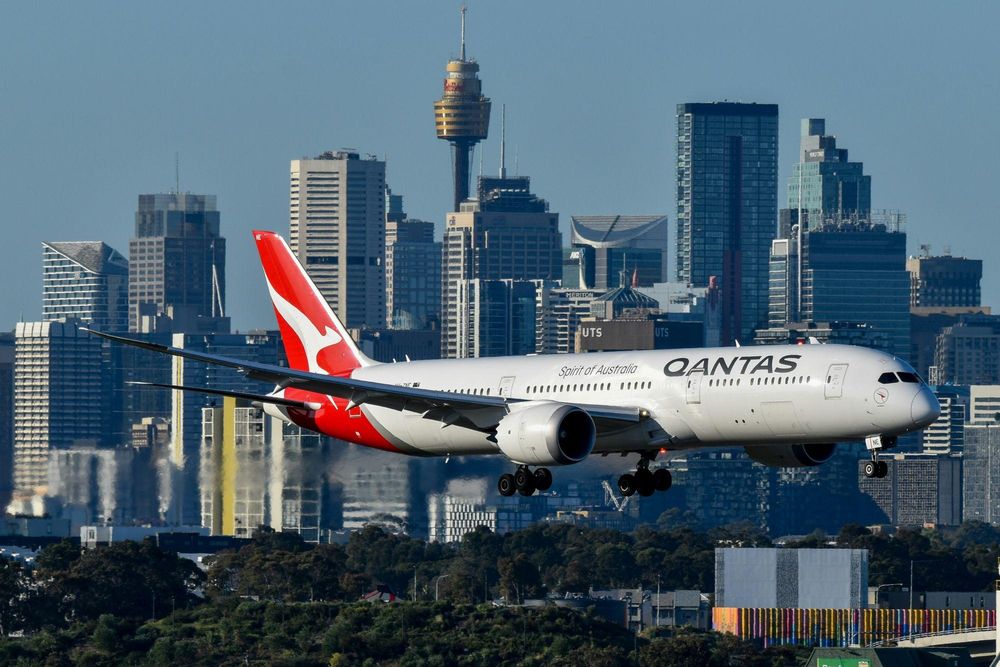
SYDNEY — Qantas Airways Limited is preparing to eliminate approximately 850 corporate positions beginning in 2027, shifting key administrative and operational functions to India while ramping up internal investments in artificial intelligence, according to reporting by aviation journalist Se-Anne Rall. The planned retrenchments come as the Australian flag carrier undertakes the largest fleet recapitalization program in its 106-year history, balancing multi-billion-dollar outlays on next-generation aircraft with aggressive structural cost-reduction targets across its support divisions.
Key facts
What happened
According to reporting by Se-Anne Rall, Qantas management has detailed an organizational overhaul designed to trim overhead expenses by reducing 850 non-operational staff positions starting in 2027. The phased reduction will see a selection of the carrier's corporate processes relocated to offshore service locations in India, an established global destination for enterprise shared-services centers.
Alongside the geographical transfer of administrative duties, the airline is accelerating the integration of enterprise artificial intelligence software to automate recurring data processing, administrative reporting, and customer-facing support tasks that have historically required internal human oversight. The dual-track strategy aims to permanently lower the ongoing cost structure of managing the airline's core commercial operations.
Crucially, these cost-containment measures are occurring parallel to what executive leadership has characterized as the most extensive fleet renewal initiative in Qantas history. The carrier is currently navigating significant capital commitments to replace aging mainline and regional aircraft, requiring strict capital discipline elsewhere on its balance sheet to protect operational liquidity, credit metrics, and investor dividend returns.
Why it matters
The planned cut of 850 corporate roles underscores an accelerating trend across the global aviation sector, where legacy carriers are leveraging automated computing systems and lower-cost labor hubs to offset soaring operational costs. Airline balance sheets worldwide face compounding pressures from elevated jet fuel prices, escalating airport user tariffs, higher supply chain costs for airframe parts, and rising wage pressures within heavily unionized operational workforces such as pilots and licensed aircraft maintenance engineers.
To preserve operating margins without degrading on-time performance or safety standards, management teams are zeroing in on corporate, administrative, and technological functions. By deploying automated algorithms and algorithmic decision-support platforms to analyze commercial yields, manage enterprise resource planning, and triage internal workflows, airlines can handle larger passenger volumes with smaller administrative teams.
For Australia's domestic employment market, the relocation of professional white-collar work to India marks another high-profile transfer of knowledge-economy roles away from domestic headquarters. While operational airline workers—such as pilots, flight attendants, ramp handlers, and certified mechanics—must remain physically stationed at domestic air hubs, corporate back-office tasks in finance, procurement, information technology support, and administrative scheduling can be seamlessly transitioned across borders.
Moreover, the restructuring highlights the intense capital balancing act demanded by commercial aviation. Aircraft procurement represents an immense long-term cash commitment. If an airline faces sustained high financing costs, it must compensate by compressing internal administrative overhead. The cuts at Qantas serve as a case study in how capital-intensive industrial modernization programs can directly trigger white-collar headcount reductions across corporate support structures.
The background
Qantas, founded in 1920 in outback Queensland, is one of the world's oldest continuously operating commercial carriers and serves as Australia's primary international and domestic aviation brand. Over recent decades, the airline has repeatedly turned to restructuring initiatives to maintain commercial viability against low-cost entrants and state-backed international competitors.
The carrier is currently midstream in a historic fleet modernization program. On domestic and regional routes, the airline is progressively retiring older Boeing 737-800 and Boeing 717 airframes, replacing them with fuel-efficient Airbus A321XLR and Airbus A220 aircraft. On ultra-long-haul routes, Qantas has committed substantial capital to "Project Sunrise," an ambitious project deploying specially configured Airbus A350-1000 aircraft designed to operate commercial non-stop passenger flights between the east coast of Australia and key financial capitals, including London and New York. These aircraft orders carry multi-billion-dollar price tags, requiring rigorous cash-flow discipline to service debt and finance advance pre-delivery payments.
Workforce rationalization has historically proven to be a sensitive issue for Qantas. Under previous executive leadership, the airline implemented widespread cost-reduction programs, culminating in the 2020 outsourcing of approximately 1,700 ground handling roles during the COVID-19 pandemic. That decision led to prolonged legal battles that ultimately concluded in late 2023, when the High Court of Australia ruled that the carrier had breached the Fair Work Act 2009 by terminating those workers to prevent future industrial action. Under current Chief Executive Vanessa Hudson, who took the helm in late 2023, the airline has pledged to repair frayed relationships with customers, regulatory bodies, and unionized labor.
The adoption of offshore shared services is a well-trodden strategy for global airlines. Major international carriers across North America and Europe have long maintained specialized back-office shared services centers in India, primarily in tech and business hubs such as Bengaluru, Hyderabad, and Chennai. The expansion of enterprise generative AI and automated robotic process automation (RPA) over recent years has made these offshore transitions even more cost-efficient by allowing leaner overseas teams to manage high-volume transactional workloads.
Reaction
The announcement is expected to encounter rigorous scrutiny from domestic organized labor groups that represent corporate, technical, and administrative personnel within Australia's commercial transport sector. Organizations such as the Australian Services Union (ASU), which represents clerical, administrative, and customer service staff across the Qantas Group, have historically resisted moves to offshore local employment opportunities or diminish headcount through automated technological replacements.
Under Australian workplace law governed by the Fair Work Ombudsman and the Fair Work Commission, enterprise agreements typically require formal consultation frameworks when employers plan structural changes that result in substantial redundancies. Union representatives and workplace delegates are anticipated to demand comprehensive disclosures regarding the exact divisions targeted, the criteria used to identify affected roles, and the redundancy compensation terms offered to departing personnel.
Within the broader investment community, equity analysts generally view back-office automation and geographic cost optimization favorably, provided that such transitions do not create operational bottlenecks or degrade customer service delivery. Market observers will watch how institutional shareholders weigh the cost savings against the potential reputation risks associated with moving Australian corporate positions overseas.
What we don't know yet
While the baseline framework of the restructuring has been disclosed, several essential operational details remain unknown. The reporting does not yet specify the exact functional divisions that will bear the brunt of the 850 cuts—such as whether the reductions will fall primarily on finance, software engineering, marketing, human resources, or operational customer dispatch.
It is also unclear what proportion of the work will be handed directly to automated software systems versus human teams operating in Indian facilities, or whether Qantas intends to build proprietary overseas subsidiaries or contract work out to third-party global business service providers. Additionally, the precise financial scale of the projected operational savings, the total redundancy provisions Qantas will record against its statutory financial earnings, and the specific quarterly timeline across 2027 for initiating the exits remain unconfirmed.
What to watch
Moving forward, several key milestones will signal how smoothly Qantas can execute this corporate pivot:
This article incorporates reporting initially published by aviation journalist Se-Anne Rall regarding corporate restructuring, technological adoption, and fleet transformation programs at Qantas.
How this story was produced
This report was written by The Global Wire newsroom from reporting first published by Se-Anne Rall. We verify the core facts against the original report, write our own account, and add the background and consequences a short wire item leaves out. Drafting is AI-assisted inside an editor-supervised pipeline, and every story is checked for accuracy of attribution, structure and duplication before it appears — full detail in our AI and funding disclosure.
Spotted an error? Tell us at corrections@horizonglobalnews.com and read our corrections policy or editorial standards.






Reader comments
Loading comments…