

Pochettino Set to Lead USMNT Through 2030 as Questions Over European Lure Persist
Mauricio Pochettino will direct the U.S. men's national team through the 2030 World Cup, though potential interest from top European clubs remains a key variable.
By The Global Wire Newsroom · Reported from Jeff Carlisle; Bill Connelly; Cesar Hernandez; Lizzy Becherano
Link preview · horizonglobalnews.com
Pochettino Set to Lead USMNT Through 2030 as Questions Over European Lure Persist
Mauricio Pochettino will direct the U.S. men's national team through the 2030 World Cup, though potential interest from top European clubs remains a key variable.
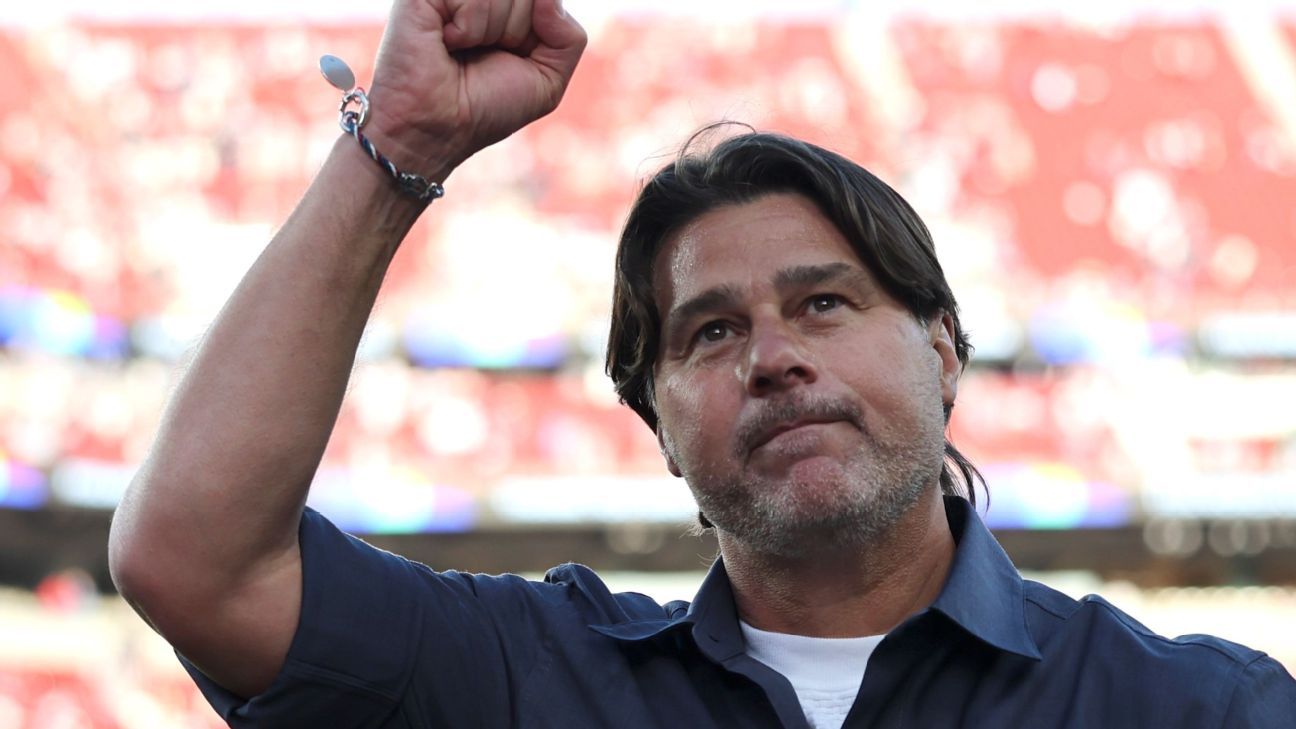
CHICAGO — Mauricio Pochettino will remain head coach of the United States men’s national soccer team through the 2030 FIFA World Cup, establishing a long-term managerial framework for the program. However, the lengthy agreement leaves open the possibility that interest from elite European soccer clubs could test the partnership before the contractual term concludes, according to reporting by ESPN journalists Jeff Carlisle, Bill Connelly, Cesar Hernandez, and Lizzy Becherano.
The long-term arrangement binds the former Premier League and Ligue 1 manager to the U.S. Soccer Federation through two complete World Cup cycles. While long-term contracts are designed to provide program stability and continuous tactical development, international coaching roles frequently face external pressure when managerial vacancies arise at major European clubs operating with substantial financial resources and competing in prestigious continental tournaments.
Extended agreement anchors national team structure
The commitment through 2030 provides the U.S. Men’s National Team with rare managerial continuity. In international soccer, federation contracts typically run in four-year cycles linked directly to the conclusion of a single World Cup tournament. By securing Pochettino’s leadership through 2030, U.S. Soccer has signaled an intention to build a unified system capable of bridging multiple player generations.
This long-range timeline allows the coaching staff to oversee the development of both established senior players and emerging talent progressing through domestic and international youth academies. Tactical implementation in national team environments often suffers from limited training window availability compared to daily club environments. An extended tenure allows a manager to gradually instill tactical principles during international windows over several consecutive years.
The persistent allure of European club football
Despite the stability offered by an international federation post, elite club management in Europe represents the financial and competitive pinnacle of professional soccer coaching. Pochettino spent over a decade building a prominent reputation in European club football, managing high-profile clubs across Europe’s top domestic competitions.
Top-tier European clubs continuously monitor proven managerial talent to fill high-stakes vacancies created by mid-season dismissals or end-of-season restructurings. The opportunity to manage in competitions such as the UEFA Champions League, paired with the ability to participate in daily training and high-value player transfers, frequently presents an enticing alternative to the periodic nature of international fixtures.
According to the reporting by ESPN, the lingering question facing U.S. Soccer is how the federation will navigate potential overtures from major European teams if managerial vacancies open at leading clubs during Pochettino's tenure.
Balancing international duties and club overtures
The relationship between national federations and top-tier coaches often involves navigating external club interest. When high-profile international managers achieve success on the global stage, or when European clubs experience sudden managerial turnover, federations frequently must defend their staff commitments against lucrative club offers.
In modern soccer, contracts contain buyout mechanisms, release clauses, or mutual separation agreements that facilitate managerial movements between national teams and clubs. While national federations emphasize long-term strategic projects, individual coaches retain significant mobility within the global sports market.
For Pochettino, managing a national team offers a distinct cadence compared to club coaching. International management involves scouting, talent tracking, and intense short-burst tournament preparation, contrasting with the grueling 50-to-60-game annual schedules typical of elite European clubs. However, the competitive intensity and daily involvement of top-flight club management remain a strong draw for top-level tacticians.
Institutional challenges in national team retention
Retaining elite technical leadership presents structural challenges for soccer federations operating outside the traditional European powerhouses. While national governing bodies can offer competitive compensation and the prestige of leading a country in international competition, they rarely match the continuous exposure and resources of top-tier European teams.
In recent years, several high-profile national team managers across global football have cut short their international commitments when presented with opportunities to return to top European clubs. Federations often establish clear contractual guidelines to mitigate these risks, including substantial compensation clauses should a club seek to acquire a manager under contract.
Whether U.S. Soccer’s agreement with Pochettino includes specific provisions addressing potential European club approaches remains a central focus for analysts monitoring the long-term viability of the partnership. The federation’s ability to maintain its strategic direction depends heavily on maintaining alignment with the head coach amidst an ever-shifting international coaching market.
Strategic impact on U.S. Soccer's long-term goals
U.S. Soccer's investment in a manager of Pochettino’s stature reflects a strategic effort to elevate the national team's global standing. Having a coach with extensive experience in top European leagues provides the U.S. roster—many of whom play for European clubs—with leadership familiar with the highest levels of global competition.
A stable coaching environment allows U.S. Soccer to plan comprehensively for upcoming international tournaments without the distraction of frequent managerial searches. Consistency at the top level also aids in recruiting dual-national players, who often evaluate managerial stability and program ambition when deciding which country to represent internationally.
If Pochettino remains through the end of his contract in 2030, it would mark one of the longest continuous managerial tenures in modern U.S. Soccer history. Such longevity could establish a standardized style of play throughout the federation's age-group national teams, creating a clear pathway for developing players entering the senior setup.
What comes next for the partnership
The true test of the multi-year partnership will depend on competitive results and the unpredictable landscape of European club football. Strong performances by the national team on the international stage could further increase Pochettino's standing among top European club executives, potentially increasing the likelihood of club inquiries.
Conversely, a shared commitment between Pochettino and U.S. Soccer to see out the full 2030 cycle would offer the program unprecedented stability through two major world championship tournaments. As international competition dates approach, both the manager and the federation remain focused on tournament preparation while global football observers monitor potential shifts in the European managerial market.
This article incorporates reporting originally conducted by Jeff Carlisle, Bill Connelly, Cesar Hernandez, and Lizzy Becherano for ESPN.
How this story was produced
This report was written by The Global Wire newsroom from reporting first published by Jeff Carlisle; Bill Connelly; Cesar Hernandez; Lizzy Becherano. We verify the core facts against the original report, write our own account, and add the background and consequences a short wire item leaves out. Drafting is AI-assisted inside an editor-supervised pipeline, and every story is checked for accuracy of attribution, structure and duplication before it appears — full detail in our AI and funding disclosure.
Spotted an error? Tell us at corrections@horizonglobalnews.com and read our corrections policy or editorial standards.



Reader comments
Loading comments…