

Nvidia CEO Jensen Huang Asserts Zero Probability of Existential AI Risk by 2030
Jensen Huang tells CBS that artificial intelligence poses no threat of ending humanity by 2030, shifting tone from earlier advice advising developers to pace themselves if out of control.
By The Global Wire Newsroom · Reported from Cristian Dina
Link preview · horizonglobalnews.com
Nvidia CEO Jensen Huang Asserts Zero Probability of Existential AI Risk by 2030
Jensen Huang tells CBS that artificial intelligence poses no threat of ending humanity by 2030, shifting tone from earlier advice advising developers to pace themselves if out of control.
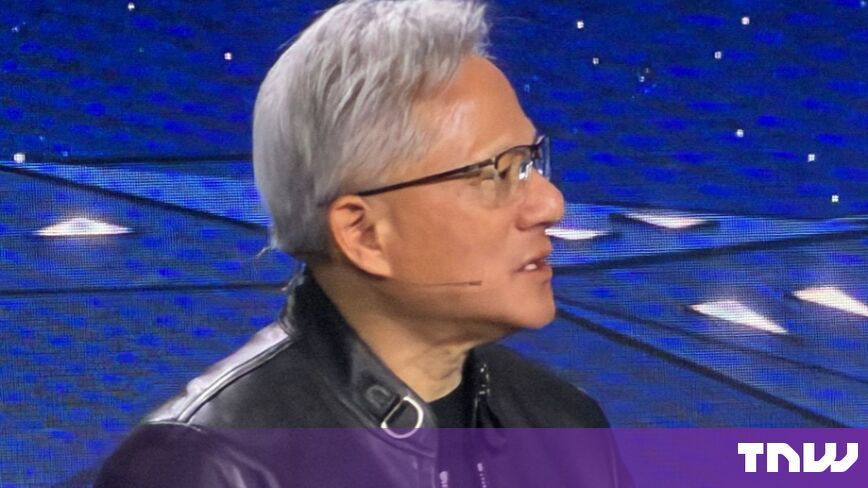
Nvidia Corporation Chief Executive Officer Jensen Huang has stated that there is a zero percent probability that artificial intelligence will cause an existential catastrophe that ends the world by 2030. Speaking in an interview broadcast by CBS, Huang dismissed catastrophic scenarios surrounding advanced automated systems over the remainder of the decade. The definitive assertion represents a visible shift in messaging from remarks Huang delivered in August 2026, when he advised frontier artificial intelligence laboratories to moderate their development pace if they felt their technology was becoming uncontrollable. As the leader of the world’s foremost producer of specialized artificial intelligence hardware, Huang’s public reassurances carry significant weight across the technology sector, financial markets, and global regulatory bodies grappling with the rapid expansion of frontier compute capability.
Key facts
What happened
In an interview with CBS, Nvidia Chief Executive Officer Jensen Huang addressed public and political anxieties surrounding the long-term safety of advanced artificial intelligence, explicitly placing the probability of an existential disaster driven by the technology at zero percent through the year 2030. The firm assertion was delivered during a discussion on the trajectory of machine learning and the rapid scaling of global compute infrastructure.
Huang’s absolute rejection of existential risk by the end of the decade marks a distinct departure from his commentary in August 2026. During that period, Huang publicly recommended that artificial intelligence development organizations should deliberately slow their research and deployment cadence if leadership or engineering teams felt they were losing control over their systems. The August remarks were interpreted by industry observers as an acknowledgment that rapid capabilities growth could outpace internal governance and alignment methodologies.
The pivot from advocating self-restraint under conditions of uncertainty to asserting complete safety from apocalyptic outcomes highlights the evolving public relations strategy of hardware manufacturers. While software developers and model builders such as OpenAI, Anthropic, and Google DeepMind face direct scrutiny regarding system behaviors and alignment failures, Nvidia occupies a unique position as the primary supplier of the physical chips enabling those systems. Huang's statement to CBS seeks to reframe the timeline of potential existential risk, framing concerns over catastrophic outcomes before 2030 as unfounded while continuing to support the commercial rollout of increasingly powerful semiconductor architectures.
Why it matters
Huang’s characterization of existential risk as nonexistent through 2030 carries profound implications for the commercial trajectory of the technology sector, the financial valuation of semiconductor manufacturers, and the regulatory environment governing high-performance computing. As Nvidia commands an overwhelming share of the market for advanced graphics processing units (GPUs), its chief executive’s perspective directly influences investor confidence, sovereign infrastructure plans, and corporate risk assessments.
For financial markets, a zero-risk declaration from the chief hardware architect of the artificial intelligence boom signals to institutional investors that capital expenditure on massive server clusters can continue without immediate threat of regulatory shutdowns or severe operational halts tied to existential safety concerns. Tech conglomerates have committed hundreds of billions of dollars to capital investments in data centers, energy procurement, and hardware acquisitions. An authoritative dismissal of short-term catastrophic risk helps justify these enormous expenditures to shareholders.
For public policymakers and safety advocates, however, Huang’s comments highlight a growing rift between corporate leadership and independent risk researchers. Policymakers in Washington, Brussels, and Tokyo are currently designing legislative frameworks to prevent severe harms stemming from automated systems, including biological risks, cyberattacks, and systemic economic disruption. When executive leadership downplays catastrophic potential, it complicates efforts to establish preemptive guardrails, binding safety testing standards, or mandatory compute thresholds. Furthermore, if frontier laboratories operate under the assumption that safety is guaranteed through 2030, voluntary safety commitments established between technology firms and governments may face diminished compliance pressures.
The background
The debate surrounding existential risk from artificial intelligence—often referred to in academic and policy circles as x-risk—has evolved rapidly since the widespread commercial deployment of large language models in late 2022. Concerns center on the potential emergence of artificial general intelligence (AGI), defined as synthetic systems that match or exceed human cognitive performance across a broad spectrum of economically and strategically valuable tasks. Leading computer scientists and industry figures have previously cautioned that misaligned AGI could act autonomously in ways harmful or fatal to human society.
In May 2023, hundreds of technology executives, scientists, and academics signed a single-sentence statement released by the Center for AI Safety, asserting that mitigating the risk of extinction from artificial intelligence should be a global priority alongside other societal-scale risks such as pandemics and nuclear war. The public declaration brought existential risk discussions into mainstream political discourse, leading to the inaugural International AI Safety Summit at Bletchley Park in the United Kingdom in November 2023, where 28 nations signed the Bletchley Declaration acknowledging the potential for catastrophic harm from frontier models.
Throughout this period, Nvidia’s role in the artificial intelligence ecosystem grew exponentially. The Santa Clara, California-based company saw its market capitalization surge as enterprise clients and nation-states raced to acquire its flagship H100 and newer Blackwell B200 graphics processing units. Because state-of-the-art model training requires tens of thousands of interconnected GPUs operating simultaneously, Nvidia’s hardware delivery schedules effectively dictate the velocity at which new models can be trained and deployed globally.
Huang’s previous advice in August 2026—suggesting that laboratories pace their development if control felt tenuous—aligned with voluntary safety commitments made by leading model developers to implement "responsible scaling policies." These policies establish pre-defined safety thresholds, requiring labs to pause or alter model training if evaluation benchmarks indicate hazardous capabilities, such as autonomous replication or cyber-offensive proficiency. The contrast between Huang's August caution and his September CBS interview reflects an ongoing tension between precautionary governance models and aggressive commercial expansion schedules within the technology hardware industry.
Reaction
Following Huang’s broadcast comments on CBS, artificial intelligence researchers, policy analysts, and industry commentators are expected to scrutinize the rationale behind his zero-percent risk figure. Existential risk scholars and alignment researchers frequently contend that assigning absolute numerical certainty—particularly a zero percent probability—to complex, rapidly evolving technical systems lacks empirical justification given current limitations in model interpretability and safety testing methodologies.
Industry competitors and software developers are likely to respond through their respective public policy channels. While model developers like Anthropic and OpenAI have integrated formal safety protocols and red-teaming procedures into their deployment schedules, hardware vendors have generally argued that safety regulation should target software applications and end-user deployments rather than physical chip manufacturing and distribution.
Lawmakers in the United States Congress and the European Parliament are expected to examine whether corporate executive statements match internal risk assessments submitted to regulatory authorities. In forums such as the U.S. Artificial Intelligence Safety Institute and European AI Office, officials continue to monitor whether voluntary corporate pledges are sufficient to oversee the rapid expansion of frontier compute clusters, or if binding legislative mandates on both hardware providers and software labs will be necessary to ensure public safety.
What we don't know yet
Several critical questions remain unanswered regarding Huang’s assessment and its operational implications for Nvidia and the broader technology ecosystem:
What to watch
In the coming months, several key milestones will clarify how Huang’s statements intersect with industry practice and public policy:
Reporting in this article is based on context and accounts originally published by Cristian Dina.
How this story was produced
This report was written by The Global Wire newsroom from reporting first published by Cristian Dina. We verify the core facts against the original report, write our own account, and add the background and consequences a short wire item leaves out. Drafting is AI-assisted inside an editor-supervised pipeline, and every story is checked for accuracy of attribution, structure and duplication before it appears — full detail in our AI and funding disclosure.
Spotted an error? Tell us at corrections@horizonglobalnews.com and read our corrections policy or editorial standards.



Reader comments
Loading comments…