

New Method Aims to Scale Up Antiviral Drug Candidate Discovery
A framework reported by Matthew Anketell and Robert Britton aims to generate 100 times more antiviral drug candidates in weeks to accelerate outbreak response.
By The Global Wire Newsroom · Reported from Matthew Anketell; Robert Britton
Link preview · horizonglobalnews.com
New Method Aims to Scale Up Antiviral Drug Candidate Discovery
A framework reported by Matthew Anketell and Robert Britton aims to generate 100 times more antiviral drug candidates in weeks to accelerate outbreak response.
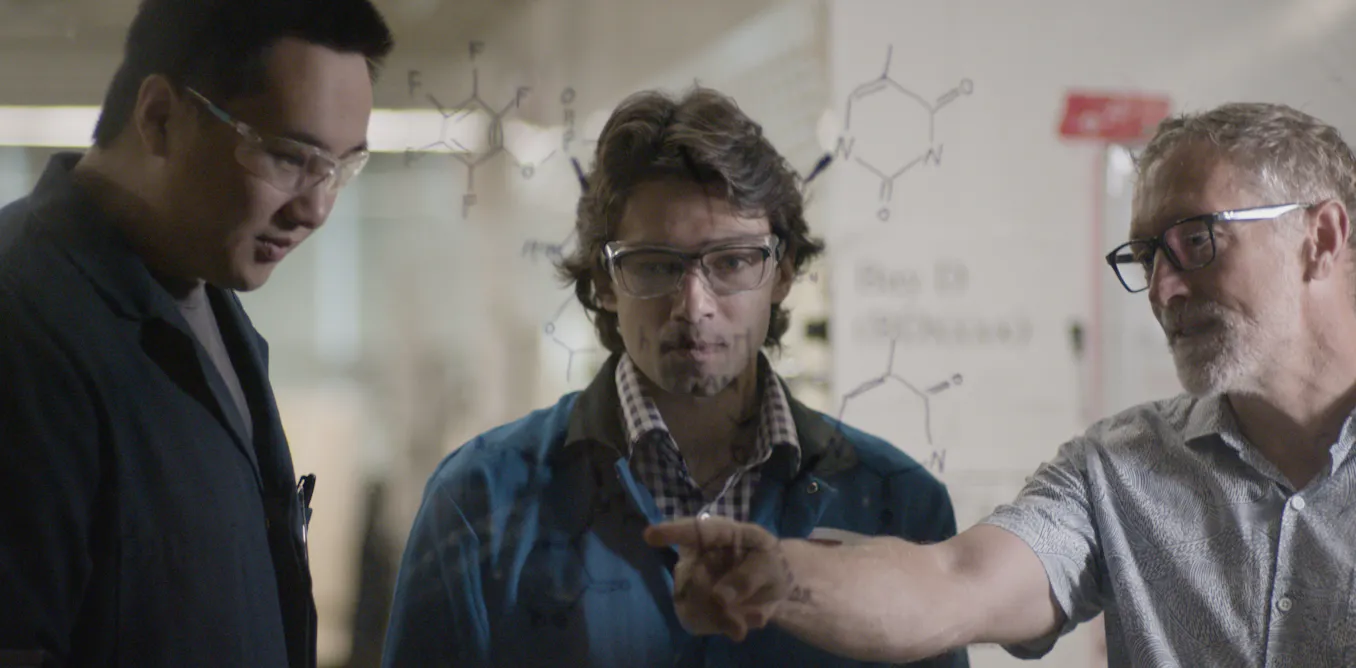
Researchers Matthew Anketell and Robert Britton detailed an advanced methodological framework designed to compress the initial phases of antiviral drug discovery. By combining high-efficiency synthesis techniques with streamlined screening platforms, the authors demonstrate that research teams can generate up to 100 times more antiviral drug candidates than previously achievable using standard laboratory practices. Crucially, this accelerated production process reduces the timeframe required to assemble and evaluate candidate libraries from several months or years down to just weeks. The development addresses one of the most persistent bottlenecks in global pandemic response: the delayed transition from identifying a novel viral pathogen to producing viable small-molecule therapeutic candidates capable of treating infection in clinical settings.
Key facts
What happened
The research presented by Matthew Anketell and Robert Britton outlines a paradigm shift in how medicinal chemists synthesize and evaluate potential antiviral therapeutics during the initial stages of a health crisis. Under traditional drug discovery models, identifying a promising chemical series begins after a pathogen is isolated and its biological targets—such as viral proteases or polymerases—are structurally characterized. Chemists then design, synthesize, and purify individual molecules or small batches of compounds, a labor-intensive sequence that typically yields hundreds to a few thousand candidates over many months or years.
According to the details reported by Anketell and Britton, the new methodology restructures this initial synthesis phase to maximize candidate diversity and output velocity. By deploying high-throughput synthesis protocols and automated reaction workflows, researchers can assemble chemical libraries containing tens of thousands of structural variants in a fraction of the time previously required. This 100-fold expansion in candidate generation allows scientists to explore a vastly larger chemical space simultaneously, testing structural modifications that might otherwise be overlooked during rapid emergency responses.
Once generated, these broad candidate libraries undergo rapid primary screening using automated assays to evaluate their binding affinity for target viral proteins. Molecules exhibiting strong inhibitory activity are immediately triaged for secondary biological validation, such as viral replication assays in cell cultures. By compressing what was historically a multi-year lead generation cycle into weeks, the process aims to deliver high-quality therapeutic candidates to preclinical toxicity and pharmacokinetic testing before an emerging pathogen achieves widespread transmission.
Why it matters
The ability to compress candidate generation from years into weeks has profound implications for global public health, pharmaceutical economics, and emergency outbreak intervention. During the initial months of a novel viral outbreak, the lack of targeted small-molecule antivirals leaves populations reliant on non-pharmaceutical measures or repurposed drugs, which frequently display limited efficacy against novel viral families.
By increasing candidate volume by up to two orders of magnitude within weeks, research teams vastly improve the hit rate of discovering high-affinity inhibitors. In medicinal chemistry, evaluating a candidate pool of tens of thousands of distinct chemical structures rather than a few hundred exponentially raises the likelihood of identifying lead compounds with both optimal binding affinity and favorable drug-like properties, such as oral bioavailability and low cell toxicity.
From an economic perspective, early-stage candidate generation represents a major financial barrier for academic laboratories and mid-sized biotechnology firms. Traditional iterative synthesis requires extensive manual labor and prolonged instrument time. Automating candidate generation lowers the per-compound cost of early discovery, broadening access to antiviral screening pipelines.
Furthermore, rapid candidate generation complements existing vaccine platforms. While mRNA vaccines can be designed quickly, their deployment depends on manufacturing infrastructure and distribution logistics. Direct-acting small-molecule antivirals provide an immediate therapeutic line of defense for infected individuals, particularly immunocompromised patients who may not mount a robust vaccine response. Speeding up therapeutic development narrows the critical window between outbreak detection and medical availability.
The background
The field of antiviral drug discovery has historically moved at a multi-year pace dictated by the complex chemistry of small molecules. Standard pharmaceutical development timelines traditionally stretch between 10 and 15 years from initial target identification to final regulatory approval by agencies such as the U.S. Food and Drug Administration (FDA) or the European Medicines Agency (EMA). Within that framework, the exploratory discovery phase—encompassing hit identification, candidate generation, and lead optimization—typically consumes three to five years.
During major global viral crises over past decades, this prolonged timeline severely constrained therapeutic responses. During the early years of the HIV epidemic in the 1980s, the development of antiretroviral therapies like zidovudine (AZT) and subsequent protease inhibitors required years of systematic chemical synthesis and clinical testing. Similarly, the development of direct-acting antivirals for Hepatitis C, such as sofosbuvir, represented over a decade of continuous medicinal chemistry research into viral RNA polymerase inhibition.
The COVID-19 pandemic caused by SARS-CoV-2 highlighted both the progress and limitations of modern rapid drug discovery. While vaccines were authorized in under a year, small-molecule antiviral discovery largely relied on repurposing existing drugs, such as remdesivir, which was originally investigated for Ebola virus disease. The first novel small-molecule antiviral specifically optimized for SARS-CoV-2, nirmatrelvir (formulated with ritonavir as Paxlovid), reached emergency authorization in approximately two years—a record pace for small-molecule development, but still long after global transmission was established.
International organizations, including the Coalition for Epidemic Preparedness Innovations (CEPI) and the World Health Organization (WHO), have repeatedly called for structural innovations that shorten preclinical discovery cycles. Initiatives such as the "100 Days Mission"—an effort endorsed by G7 nations to make diagnostics, therapeutics, and vaccines available within 100 days of a pandemic threat—depend heavily on technological breakthroughs that accelerate early candidate assembly. High-throughput screening platforms and microfluidic synthesis have gradually transformed modern chemistry labs, setting the stage for the 100-fold expansion reported by Anketell and Britton.
Reaction
Following the release of the report by Matthew Anketell and Robert Britton, scientists and public health strategists are expected to analyze the practical scalability of the proposed candidate generation pipeline. Academic medicinal chemists typically look for independent verification of reaction yields, purification limits, and the fidelity of high-throughput synthesis protocols when assessing new platform technologies.
Industry experts from biotechnology and pharmaceutical sectors are expected to evaluate how easily this high-volume candidate synthesis can be integrated into existing high-throughput screening infrastructure. Representatives from public health institutions and funding consortia, such as CEPI, routinely advocate for platform approaches that can be rapidly pivoted toward unknown pathogens, often referred to as "Disease X."
While formal responses from regulatory authorities like the FDA or EMA are not typically issued for early-stage synthesis methodologies, regulatory scientists consistently emphasize that accelerating candidate generation must not compromise preclinical safety screening. Industry observers will monitor upcoming scientific conferences for further technical commentary on the trade-offs between synthesis speed, compound purity, and screening accuracy.
What we don't know yet
Despite the significant technical promises of generating 100 times more candidates in a matter of weeks, several critical parameters remain unconfirmed in the initial reporting.
First, the specific chemical classes and target viral families used to validate the methodology have not been detailed. It remains unconfirmed whether the 100-fold generation speed applies universally across diverse chemical scaffolds—such as peptidomimetics, nucleoside analogues, or non-nucleoside inhibitors—or if the gains are restricted to specific synthetic chemistry reactions.
Second, candidate volume does not automatically guarantee drug quality. A primary challenge in early-stage discovery is distinguishing between "hits" (compounds that bind to a target in an assay) and true "leads" (compounds with acceptable absorption, distribution, metabolism, excretion, and toxicity profiles, known as ADME/Tox). The available reporting does not clarify how rapidly these tens of thousands of generated candidates can be cleared through downstream ADME/Tox filtering without creating massive testing backlogs.
Finally, the physical cost, hardware requirements, and supply-chain dependencies needed to operate this high-throughput candidate generation engine during an active emergency remain unknown. Understanding whether this methodology can be deployed in standard academic laboratories or requires specialized high-automation industrial facilities is vital for assessing its global accessibility.
What to watch
In the coming months, several key milestones will determine whether this accelerated discovery model transitions from theoretical framework to operational reality:
This report is based on original reporting published by Matthew Anketell and Robert Britton on October 4, 2026.
How this story was produced
This report was written by The Global Wire newsroom from reporting first published by Matthew Anketell; Robert Britton. We verify the core facts against the original report, write our own account, and add the background and consequences a short wire item leaves out. Drafting is AI-assisted inside an editor-supervised pipeline, and every story is checked for accuracy of attribution, structure and duplication before it appears — full detail in our AI and funding disclosure.
Spotted an error? Tell us at corrections@horizonglobalnews.com and read our corrections policy or editorial standards.

Reader comments
Loading comments…