

Matthew Brennan Dominates Vuelta Sprints With Fourth Victory on Grand Tour Debut
British debutant Matthew Brennan secured his fourth stage win at the Vuelta a España on Sept. 8, matching multi-stage feats by established stars like Wout van Aert.
By The Global Wire Newsroom · Reported from Associated Press; Guardian staff reporter
Link preview · horizonglobalnews.com
Matthew Brennan Dominates Vuelta Sprints With Fourth Victory on Grand Tour Debut
British debutant Matthew Brennan secured his fourth stage win at the Vuelta a España on Sept. 8, matching multi-stage feats by established stars like Wout van Aert.
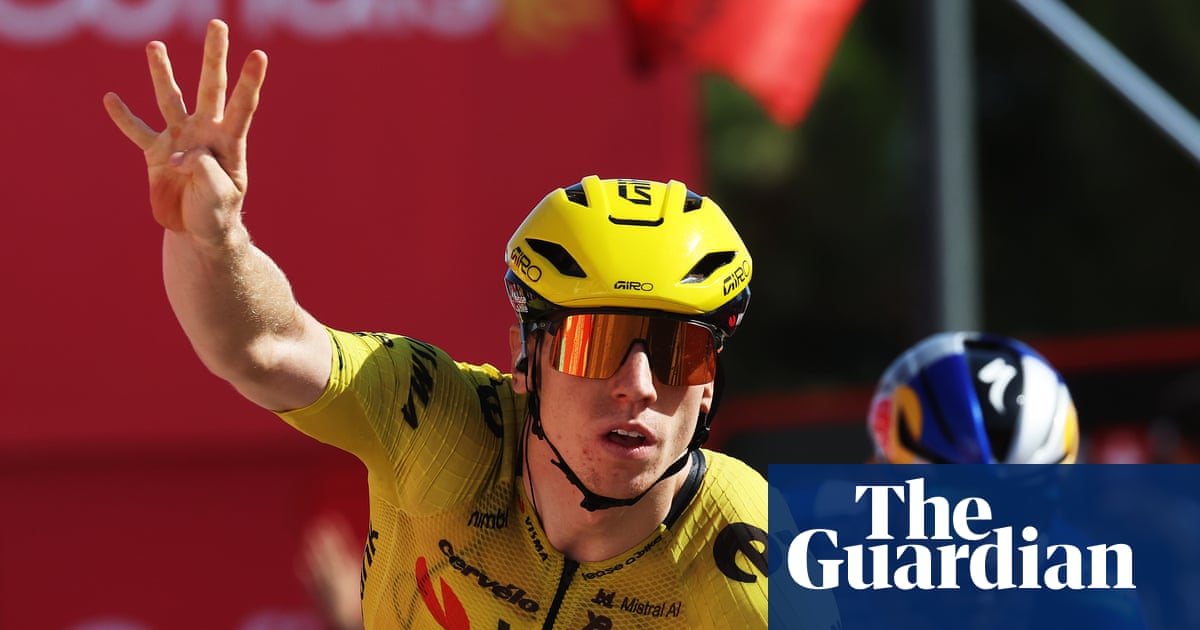
British sprinter Matthew Brennan secured his fourth stage victory of the 2026 Vuelta a España on Sept. 8, solidifying his status as the standout fastman of the race during his debut appearance in a three-week Grand Tour. The accomplishment places the young British rider in rare historical company, matching the multi-stage winning streaks achieved by premier riders like Belgium's Wout van Aert in recent Grand Tour editions. According to reporting by the Associated Press and The Guardian, Brennan’s four-stage haul on debut marks one of the most remarkable individual breakthroughs in modern Grand Tour sprinting.
Key facts
What happened
Sprint stages in professional road cycling represent a high-stakes balance between team tactics, physical power output, and aerodynamic position over distances that often exceed 150 to 200 kilometers. In a typical flat Grand Tour stage, the peloton allows a small breakaway of riders from non-sprint teams to venture ahead early in the day. The teams representing the fastmen—often referred to as sprint trains—then calculate the precise wattage and timing required to reel in the breakaway over the final 30 kilometers, ensuring the race settles into a bunch sprint.
Over the course of the 2026 Vuelta a España, Brennan and his support squad have repeatedly executed this tactic with precision. Navigating the final three kilometers—a sector where road furniture, roundabouts, sharp turns, and territorial jockeying create intense physical risk—Brennan’s lead-out train positioned him near the front of the main field. As the sprint launched in the closing hundreds of meters, Brennan accelerated out of the slipstream of his final lead-out man, reaching peak speeds exceeding 65 kilometers per hour (40 miles per hour) to cross the line ahead of his rivals.
Winning four individual stages across a single Grand Tour requires not only explosive raw speed in the final 200 meters, but also exceptional endurance and recovery capability across consecutive days of racing. While mountain stages test a rider’s power-to-weight ratio on steep ascents, flat sprint stages demand high absolute power output after hours of energy-saving drafting in the pack. Brennan’s fourth victory demonstrated both his top-end sprint velocity and his ability to maintain physical freshness deep into a grueling three-week stage race, where fatigue cumulatively degrades the power output of lesser-conditioned sprinters.
Why it matters
Securing four stage wins in a single Grand Tour fundamentally alters a young cyclist’s career trajectory, market value, and standing within the Union Cycliste Internationale (UCI) WorldTour hierarchy. For a debutant, winning a single Grand Tour stage is historically considered a career-defining milestone; capturing four in a single race establishes the rider as an elite world-class sprinter capable of leading a WorldTeam’s grand tour ambitions.
From a team perspective, four stage victories represent an exceptional return on investment for sponsors. Grand Tour stage wins deliver immense television exposure, digital engagement, and commercial value. Under the UCI points system, which governs team promotions and relegations across three-year cycles, stage victories in Grand Tours carry substantial points totals. These points cushion a team’s position in the top-tier WorldTour rankings, ensuring automatic entry into all major global events, including the Tour de France, Giro d'Italia, and historic one-day monuments.
Furthermore, Brennan’s emergence reshapes the competitive dynamic among top-tier sprinters. Established fastmen and rival WorldTeams must now re-evaluate their lead-out strategies and tactical approaches when facing Brennan in flat finishes. His success also elevates his standing within British Cycling, positioning him as a primary candidate for national team leadership at upcoming UCI Road World Championships and European Championships, where flat or rolling road race courses favor riders possessing explosive terminal speed after long distances.
The background
The Vuelta a España, first held in 1935, is the third and final Grand Tour of the annual men’s professional cycling calendar, following the Giro d'Italia in May and the Tour de France in July. Spanning 21 stages across 23 days—including two mandatory rest days—the race covers approximately 3,000 to 3,500 kilometers across varied Spanish terrain. Traditionally characterized by steep, explosive mountain finishes and extreme heat, the Vuelta often presents limited opportunities for pure sprinters compared to the Tour de France, making multi-stage sprint victories particularly challenging to achieve.
In the history of Grand Tour cycling, winning four or more stages on debut is a rare feat. Historic sprinters such as Freddy Maertens, Alessandro Petacchi, and Mark Cavendish set benchmarks for multi-stage dominance in their early Grand Tour appearances, but modern peloton depth and specialized lead-out technology have made consecutive stage wins increasingly difficult. Wout van Aert, referenced in reporting by The Guardian, established a modern precedent for multi-stage success across varied terrain, winning multiple stages at both the Tour de France and the Vuelta a España through a combination of sprint power, time trial ability, and breakaway riding.
British sprinting has a rich lineage in Grand Tour racing, headlined by Mark Cavendish, who holds the all-time record for Tour de France stage wins at 35. Brennan’s breakthrough represents the next chapter in this national heritage, demonstrating that British cycling pipelines continue to produce top-tier sprinting talent capable of performing on the sport's biggest stages. Surviving the mountain stages of the Vuelta—where heavy sprinters must finish within tight official time cut-offs relative to the stage winner—is a prerequisite for contesting later sprint stages, highlighting the physiological versatility required to achieve a four-stage tally.
Reaction
Following a fourth stage victory, standard protocol in professional road cycling involves post-race podium ceremonies, press conferences, and anti-doping controls governed by the International Testing Agency (ITA) under UCI regulations. While specific quote transcripts were not detailed in the initial wire summaries, team management and lead-out teammates typically attribute such success to seamless collective execution, precise timing in the final kilometer, and mechanical support.
Rival sprinters and opposing sports directors are expected to review telemetry and broadcast footage to analyze Brennan’s acceleration patterns, gear selection, and positioning relative to his lead-out train. In national media outlets across Great Britain and Spain, cycling analysts have highlighted Brennan's composure under pressure, emphasizing how a young rider navigating his first three-week race has managed the intense media scrutiny and physical stress that accompanies repeated podium appearances.
What we don't know yet
While Brennan’s fourth victory marks a historic personal milestone, several operational and competitive questions remain open as the 2026 Vuelta a España progresses. The available reporting does not specify whether Brennan currently leads the race’s points classification—represented by the green jersey—or how many sprint opportunities remain on the official stage profile before the race concludes.
Additionally, it remains unconfirmed whether Brennan and his team management plan for him to complete all 21 stages to the traditional final finish line in Madrid, or whether he might withdraw early to preserve fresh legs for the upcoming UCI Road World Championships. Young debutants frequently face careful workload management from sports directors concerned about long-term physical burnout, making his full race completion a key open question.
What to watch
This report contains news information originally gathered and reported by the Associated Press and The Guardian.
How this story was produced
This report was written by The Global Wire newsroom from reporting first published by Associated Press; Guardian staff reporter. We verify the core facts against the original report, write our own account, and add the background and consequences a short wire item leaves out. Drafting is AI-assisted inside an editor-supervised pipeline, and every story is checked for accuracy of attribution, structure and duplication before it appears — full detail in our AI and funding disclosure.
Spotted an error? Tell us at corrections@horizonglobalnews.com and read our corrections policy or editorial standards.


Reader comments
Loading comments…