

Madrid Debuts Brand-New Hybrid Circuit to Conclude Formula 1's 2026 European Season
Formula 1 introduces a new Madrid layout for the 2026 Spanish Grand Prix, marking the finale of the European leg amidst major technical and calendar transitions.
By The Global Wire Newsroom · Reported from ESPN
Link preview · horizonglobalnews.com
Madrid Debuts Brand-New Hybrid Circuit to Conclude Formula 1's 2026 European Season
Formula 1 introduces a new Madrid layout for the 2026 Spanish Grand Prix, marking the finale of the European leg amidst major technical and calendar transitions.
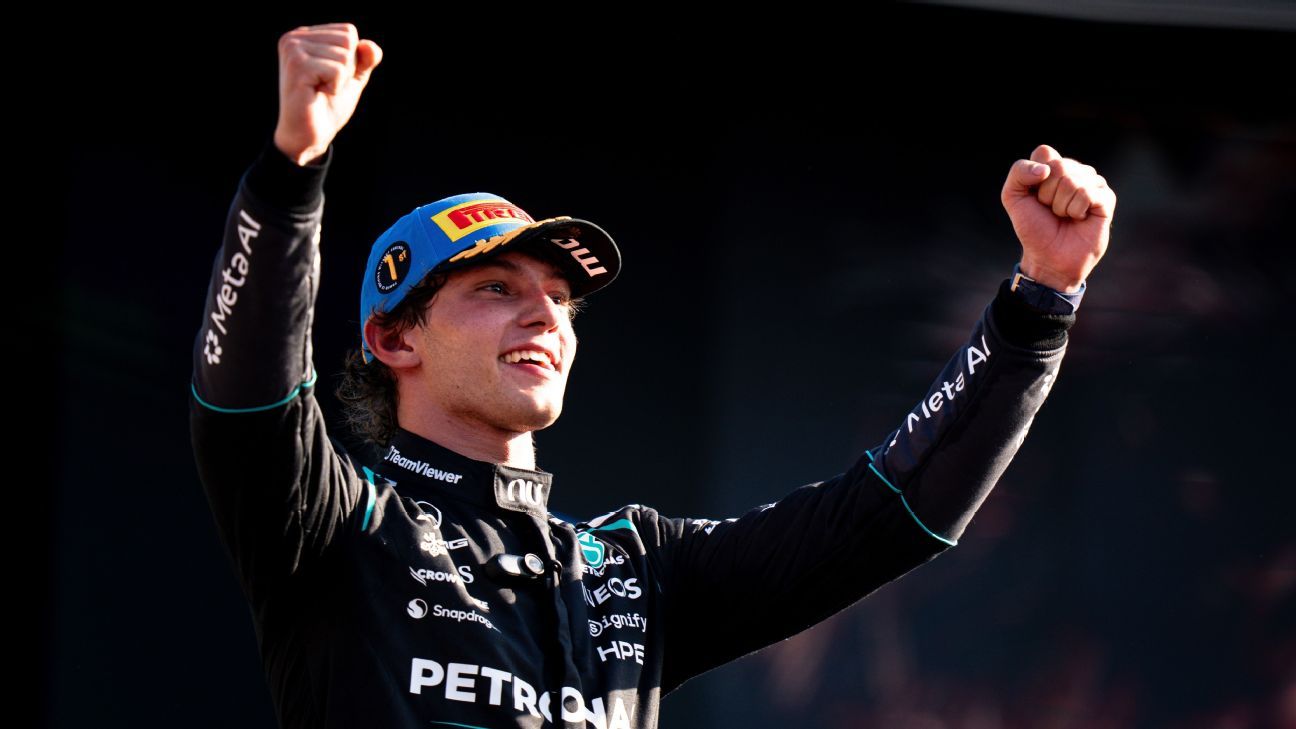
Formula 1 has inaugurated a new era for motor racing in Spain as the sport arrives in Madrid for the 2026 Spanish Grand Prix, debuting a custom-built circuit that concludes the European portion of the World Championship schedule. According to reporting by ESPN, the race introduces a brand-new layout designed to challenge drivers and engineering staff while providing a fresh backdrop for the final European fixture of the season. The event marks a pivotal transition in the sport's calendar, moving Spain's flagship motor race to the national capital as teams prepare for the subsequent series of global flyaway events that will decide the 2026 championship.
Key facts
What happened
The arrival of Formula 1 in Madrid brings teams to an untested venue at a critical juncture in the competitive season. According to reporting by ESPN, the new circuit was constructed to test drivers across a diverse mix of high-speed sweeps, heavy braking zones, and narrow technical segments. As the final race on European soil for the 2026 campaign, the grand prix represents a key strategic hurdle where teams must maximize points before packing equipment for overseas logistics.
The event schedule outlined by ESPN covers the standard three-day grand prix format, encompassing free practice sessions, competitive qualifying, and the main race. Engineers and strategists face the immediate challenge of analyzing a track surface that lacks historical telemetry data. Teams must rely heavily on computer simulations to establish initial gear ratios, ride heights, wing angles, and energy recovery mappings.
Because the Madrid venue is brand new to the calendar, initial practice sessions carry heightened significance. Drivers must quickly adapt to proximity to concrete barriers and shifting grip levels across the hybrid surface, which blends fresh asphalt on new permanent loops with existing public road pavements. The competitive stakes are amplified by the race's position at the end of the European swing, a phase where major aerodynamic upgrade packages are traditionally evaluated before development shifts toward the following season's vehicle architecture.
Why it matters
The establishment of the Madrid venue represents a substantial shift in both the commercial layout of Formula 1 and the competitive dynamics of the 2026 season. For commercial rights holder Liberty Media, placing a flagship grand prix in a top-tier European capital demonstrates a continued push toward urban centers with high-density transport links, substantial hospitality infrastructure, and direct access to corporate sponsors. This hybrid street-circuit model mirrors recent additions to the calendar in cities such as Miami, Las Vegas, and Baku, where the sport integrates directly into municipal metropolitan zones rather than relying solely on remote facilities.
From a sporting perspective, an all-new venue late in the European season disrupts established team hierarchies. On familiar tracks like Barcelona, Silverstone, or Spa-Francorchamps, teams possess decades of historical data regarding tyre degradation curves, wind sensitivity, and mechanical wear. On an unproven surface in Madrid, established performance gaps can narrow if a top team misjudges suspension kinematics or thermal management of the tyres. Furthermore, the 2026 season introduces fundamentally altered power units—featuring a near 50-50 split between internal combustion and electric propulsion—alongside active aerodynamic systems. Executing precise energy management strategies over a single lap and across a full race distance on an unfamiliar circuit adds operational complexity that could alter the trajectory of the championship.
For regional economic stakeholders, hosting the Spanish Grand Prix in Madrid represents a major investment designed to capture international tourism revenue and elevate the city's global sports profile. The economic ripple effects extend across hotel bookings, municipal transit usage, local catering industries, and international media exposure.
The background
To understand the significance of the 2026 event, it is necessary to examine the history of grand prix racing in Spain. For decades, the Spanish Grand Prix was synonymous with the Circuit de Barcelona-Catalunya in Montmeló, which hosted the race continuously from 1991 through 2025. The Montmeló track was widely regarded as the definitive benchmark for aerodynamic efficiency and chassis balance due to its combination of long straights, sweeping turns, and technical final sector. Because teams conducted extensive testing at Montmeló for many years, the venue yielded predictable racing data and served as a reliable yardstick for vehicle performance.
Before Montmeló established its era, the Spanish Grand Prix migrated between several historic venues. In the 1960s and 1970s, the race alternated between the Montjuïc street circuit in Barcelona and the permanent Jarama circuit located north of Madrid. Jarama held nine World Championship grands prix between 1968 and 1981, with its final race producing a famous defensive victory by Gilles Villeneuve. Following the 1981 event, top-level motor racing departed the capital region, settling in Jerez de la Frontera from 1986 to 1990 before moving permanently to Catalonia.
In January 2024, Formula 1 announced a ten-year agreement with trade fair operator IFEMA Madrid and regional authorities to bring the Spanish Grand Prix back to the capital starting in 2026. The contract, running through 2035, authorized the creation of a 5.47-kilometer circuit circling the IFEMA exhibition halls and Valdebebas development area. Designed to accommodate up to 110,000 spectators per day initially, with plans to expand capacity to 140,000, the project emphasized public transit access via Madrid's metro and commuter rail networks.
The 2026 race also aligns with the broader technical reset across Formula 1. The 2026 regulations eliminated the Motor Generator Unit–Heat (MGU-H), increased the electrical output of the Motor Generator Unit–Kinetic (MGU-K) to 350 kilowatts, and mandated 100 percent advanced sustainable fuels. Concurrently, chassis dimensions were narrowed and vehicle weights reduced, accompanied by active front and rear wings to manage drag on straights and downforce in corners.
Reaction
While official post-session statements were pending during pre-event preparations, the transition to a new Madrid circuit has drawn varied commentary across the motorsport community. Drivers have historically expressed a mix of curiosity and caution regarding urban hybrid layouts. While street tracks offer immediate proximity to fans and dramatic visual backdrops, drivers frequently highlight challenges related to low off-line grip, limited run-off areas, and bumpy public asphalt transitions.
Team principals and chief technical officers have focused public remarks on the logistical and operational demands of adapting to an unfamiliar pit lane and garage infrastructure. Managing power unit energy deployment on a track without established baseline telemetry requires extensive simulation work, putting premium value on data gathered during early practice runs.
Regional authorities in Madrid, including municipal leaders and IFEMA executive leadership, have championed the event as a triumph of urban planning and economic development, pointing to sustainable transportation models and international media reach. Conversely, organizers and supporters of the traditional venue at Montmeló have expressed concern over Catalonia's position on the international racing calendar, highlighting the competitive pressure facing historic European circuits.
What we don't know yet
Several critical variables regarding the new Madrid venue remain unresolved as the event unfolds:
What to watch
In assessing the progression and outcome of the Madrid race, several upcoming benchmarks will provide clear indicators of performance and organizational success:
This report is based on original reporting published by ESPN on September 7, 2026.
How this story was produced
This report was written by The Global Wire newsroom from reporting first published by ESPN. We verify the core facts against the original report, write our own account, and add the background and consequences a short wire item leaves out. Drafting is AI-assisted inside an editor-supervised pipeline, and every story is checked for accuracy of attribution, structure and duplication before it appears — full detail in our AI and funding disclosure.
Spotted an error? Tell us at corrections@horizonglobalnews.com and read our corrections policy or editorial standards.





Reader comments
Loading comments…