

Kash Patel Clashes With House Lawmakers Over Release of Jeffrey Epstein Records
FBI Director Kash Patel engaged in a heated exchange with Representative Jamie Raskin over federal disclosures and past statements concerning Jeffrey Epstein's investigative files.
By The Global Wire Newsroom · Reported from ET Online
Link preview · horizonglobalnews.com
Kash Patel Clashes With House Lawmakers Over Release of Jeffrey Epstein Records
FBI Director Kash Patel engaged in a heated exchange with Representative Jamie Raskin over federal disclosures and past statements concerning Jeffrey Epstein's investigative files.
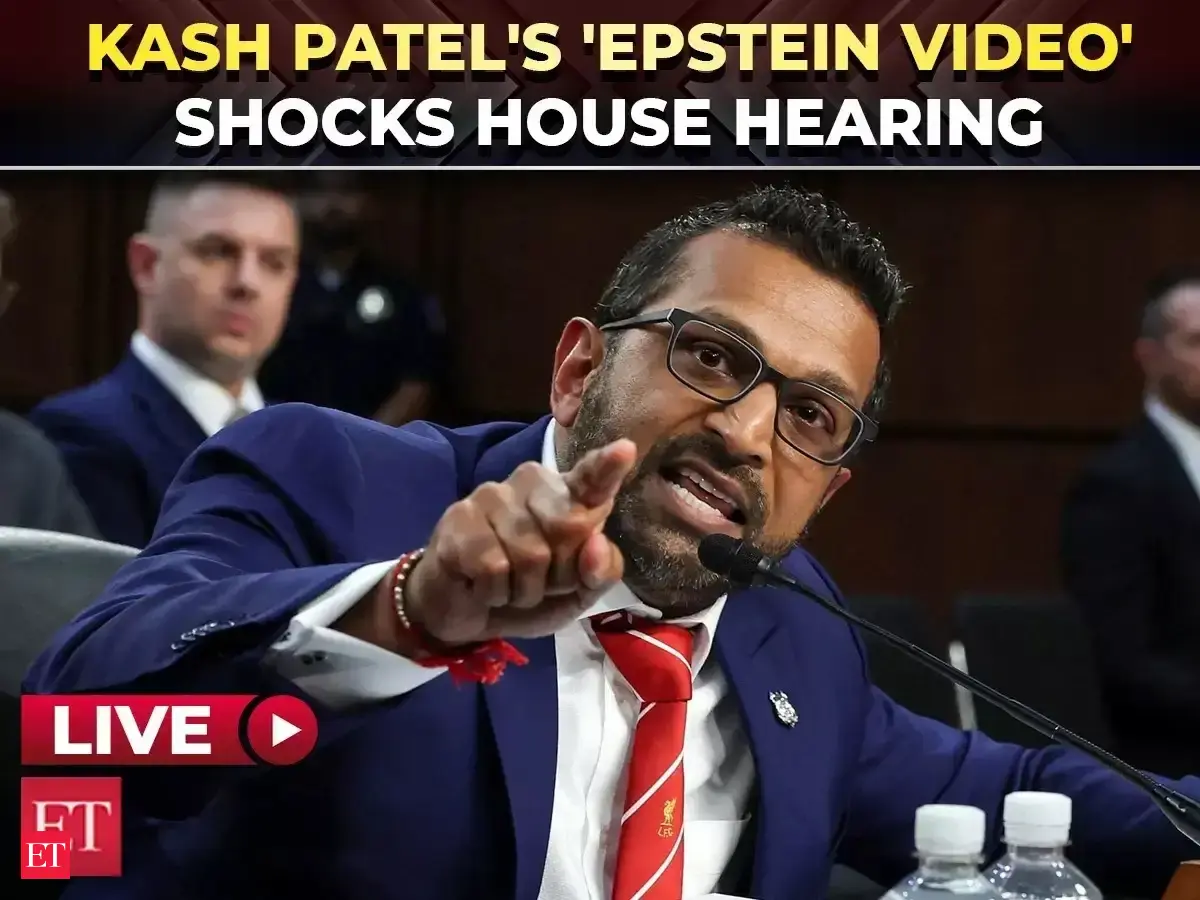
Tensions erupted on Capitol Hill on Oct. 8, 2026, when Federal Bureau of Investigation Director Kash Patel engaged in a sharp verbal altercation with lawmakers during a U.S. House of Representatives oversight hearing regarding the federal government's handling of records linked to convicted sex offender Jeffrey Epstein. The confrontation escalated when Representative Jamie Raskin, Democrat of Maryland, pressed Patel on past public statements in which Patel had forcefully advocated for the unredacted release of investigative files and client records associated with Epstein. After Raskin played audio-visual recordings of Patel’s prior commentary before the committee, the FBI director responded aggressively, offering to produce specific names connected to the government's files. The exchange underscored long-standing friction between Capitol Hill oversight panels and executive law enforcement leadership over access to sensitive, non-public federal investigative materials.
Key facts
What happened
The committee session, convened to review federal law enforcement administration and agency priorities, turned volatile when Representative Raskin directed his questioning toward Patel's prior public positions regarding the Department of Justice's handling of the Epstein investigation. According to reporting by ET Online, Raskin introduced video evidence into the hearing record capturing Patel, prior to assuming his current post, publicly calling on federal authorities to publish internal files detailing individuals linked to Epstein's sex-trafficking network.
Raskin used the recorded footage to challenge Patel on whether his agency had taken steps to execute the immediate disclosures he had previously championed. Facing direct questioning over the contrast between his past advocacy and the formal constraints governing FBI disclosures, Patel delivered a vocal pushback against the Maryland lawmaker. During the heated dialogue, Patel challenged the committee's line of inquiry, stating that he was ready to name specific individuals associated with the case files if pressed by lawmakers.
The exchange produced immediate disruption within the committee room, drawing interjections from members of both parties. Republican lawmakers on the panel sought to frame Patel’s responses as evidence of a willingness to challenge established bureaucratic delays, while Democratic members expressed concern over the potential breach of standard Department of Justice protocols regarding non-public investigative materials. Patel maintained that his agency remained committed to statutory obligations while insisting that public oversight of historical investigations remains a priority.
Throughout the line of questioning, Raskin repeatedly returned to the issue of procedural consistency, asking whether the director had formally petitioned federal courts or Department of Justice leadership to unseal Grand Jury materials or internal investigative logs. The exchange concluded with committee leaders ordering the submission of official written follow-up inquiries to the director's office regarding the exact legal status of the records under discussion.
Why it matters
The clash between Patel and House lawmakers carries substantial legal, institutional, and political consequences for the federal justice system. At its core, the dispute touches upon fundamental questions of executive branch transparency versus the legal protections guaranteed to individuals named in unverified law enforcement files. Under standard federal procedures, the Federal Bureau of Investigation accumulates vast quantities of raw intelligence, interview summaries (known as Form 302s), and third-party tips during major racketeering and human trafficking investigations. Releasing raw investigative files without formal redaction or judicial unsealing risks exposing unverified allegations, damaging the reputations of uncharged individuals, and compromising ongoing law enforcement operations.
Furthermore, the public dispute highlights the operational tension faced by political appointees who transition from public commentators to custodians of federal law enforcement agencies. When executive officials make public assurances regarding document releases while out of office, their subsequent adherence to federal disclosure restrictions can create acute political friction with congressional oversight committees. For the Department of Justice, public statements suggesting the informal release of non-public names risk triggering legal challenges from affected parties and potential procedural sanctions from federal judges presiding over relevant cases.
The exchange also impacts broader public trust in federal law enforcement institutions. The Epstein case has long served as a focal point for intense public scrutiny and skepticism toward federal prosecutors. Public sparring between top law enforcement leadership and congressional panels risks deepening partisan divisions over whether federal agencies apply law enforcement standards consistently regardless of political stature or public visibility.
The background
The controversy surrounding the investigative files of Jeffrey Epstein spans nearly two decades of state and federal legal proceedings. Epstein, a wealthy financier, was initially indicted in Florida in 2006 on state and federal charges involving the sexual abuse of minors. In 2008, he entered into a controversial non-prosecution agreement with the U.S. Attorney’s Office for the Southern District of Florida, pleading guilty to state prostitution charges and serving a 13-month sentence in a county jail with work-release privileges.
In July 2019, federal prosecutors in the Southern District of New York re-arrested Epstein on federal sex-trafficking charges involving dozens of minor victims. Epstein was held without bail at the Metropolitan Correctional Center in Manhattan, where he died by suicide in his cell in August 2019 while awaiting trial. Following his death, public demand for accountability shifted toward his long-time associate, Ghislaine Maxwell, who was arrested by federal agents in July 2020. In December 2021, a federal jury in Manhattan convicted Maxwell on five federal counts, including sex trafficking of a minor, leading to a 20-year federal prison sentence imposed in June 2022.
Parallel to criminal proceedings, extensive civil litigation generated thousands of pages of court filings. In January 2024, U.S. District Judge Loretta Preska unsealed hundreds of documents from a settled 2015 civil defamation lawsuit filed by victim Virginia Giuffre against Maxwell. The unsealed court records contained references to scores of prominent political, business, and entertainment figures mentioned in flight logs, witness depositions, and email correspondence. However, legal experts noted that inclusion in civil discovery filings or witness testimony did not denote criminal wrongdoing or formal target status in federal investigations.
Federal law enforcement disclosures are strictly governed by statutory frameworks, including Federal Rule of Criminal Procedure 6(e), which mandates secrecy for grand jury proceedings, material, and witness testimony. Unsealing grand jury records requires explicit authorization from a federal presiding judge based on strict legal standards. Furthermore, the Freedom of Information Act (FOIA) contains specific exemptions—notably Exemptions 6 and 7(C)—designed to protect personal privacy and prevent the disclosure of law enforcement records that could constitute an unwarranted invasion of personal privacy.
Reaction
The explosive exchange drew immediate reactions from lawmakers on Capitol Hill and legal commentators across the political spectrum. Democratic members of the House Oversight Committee accused Patel of engaging in theatrical public conduct rather than adhering to established Department of Justice protocols. Committee members noted that public statements regarding unreleased names undermine legal due process and risk contaminating official evidentiary records.
Conversely, conservative lawmakers defended Patel's conduct, asserting that public frustration over the non-disclosure of federal investigative files justifies a direct approach from executive leadership. Supporters argued that executive agencies have historically relied on broad privacy exemptions to shield sensitive political matters from public scrutiny, praising Patel's stated willingness to challenge administrative norms.
Legal scholars and ethics experts expressed caution following the hearing, pointing out that any unilateral disclosure of unredacted law enforcement files by an FBI director outside judicial authorization could trigger severe legal challenges. Former federal prosecutors emphasized that law enforcement officials are bound by strict ethical canons prohibiting the public dissemination of uncharged individuals' identities gathered during federal grand jury proceedings.
What we don't know yet
Several critical legal and factual questions remain unresolved in the wake of the committee hearing. First, it remains unclear whether Director Patel possesses unique or unreleased internal FBI files distinct from the materials previously reviewed during federal court proceedings in New York. The reporting by ET Online does not detail whether the director was referring to formal grand jury exhibits, raw interview summaries, or internal agency administrative logs.
Second, it is unknown whether the FBI or the Department of Justice has formally petitioned federal courts to unseal any additional grand jury materials associated with the Epstein investigation. Because Rule 6(e) restrictions bind executive branch officials, any public release of grand jury materials without prior judicial approval would violate federal criminal procedure rules, creating an unresolved legal dilemma for agency leadership.
Finally, the precise mechanism by which Patel intends to respond to formal congressional requests remains unspecified. It is uncertain whether the director will provide redacted briefing materials in a closed-door executive session or attempt to submit documentation directly into the public congressional record.
What to watch
In the coming weeks, several key developments will determine the trajectory of this dispute between Congress and the FBI. Lawmakers on the House Oversight Committee are expected to transmit formal written demands to the FBI seeking clarification regarding the specific documents and names referenced during Patel's testimony. The timeline for the agency's formal response will indicate whether the director's remarks signal an impending change in agency policy or reflect ongoing procedural resistance.
Additionally, observers will monitor whether the Department of Justice Office of Legal Counsel or the Office of the Inspector General issues guidance regarding the propriety of releasing internal investigative files to congressional committees. Any potential court filings by media organizations or watchdog groups seeking the unsealing of additional grand jury records in the Southern District of New York will also serve as a vital indicator of whether judicial authorization for further disclosure is achievable.
Finally, future public oversight hearings featuring Department of Justice leadership will provide a critical test of whether the administration intends to support Patel's public assertions or maintain standard law enforcement non-disclosure protocols.
This report relies on original news reporting by ET Online.
How this story was produced
This report was written by The Global Wire newsroom from reporting first published by ET Online. We verify the core facts against the original report, write our own account, and add the background and consequences a short wire item leaves out. Drafting is AI-assisted inside an editor-supervised pipeline, and every story is checked for accuracy of attribution, structure and duplication before it appears — full detail in our AI and funding disclosure.
Spotted an error? Tell us at corrections@horizonglobalnews.com and read our corrections policy or editorial standards.




Reader comments
Loading comments…