

Karnataka Reaffirms Push for Mekedatu Dam Despite Ongoing Dispute With Tamil Nadu
Karnataka leaders have pledged to move forward with the contentious Mekedatu reservoir, promising downstream Tamil Nadu that its legal share of Cauvery water will not be compromised.
By The Global Wire Newsroom · Reported from SECTIONS Mekedatu project will proceed; Karnataka will protect Tamil Nadu's water share D K Shivakumar PTI
Link preview · horizonglobalnews.com
Karnataka Reaffirms Push for Mekedatu Dam Despite Ongoing Dispute With Tamil Nadu
Karnataka leaders have pledged to move forward with the contentious Mekedatu reservoir, promising downstream Tamil Nadu that its legal share of Cauvery water will not be compromised.
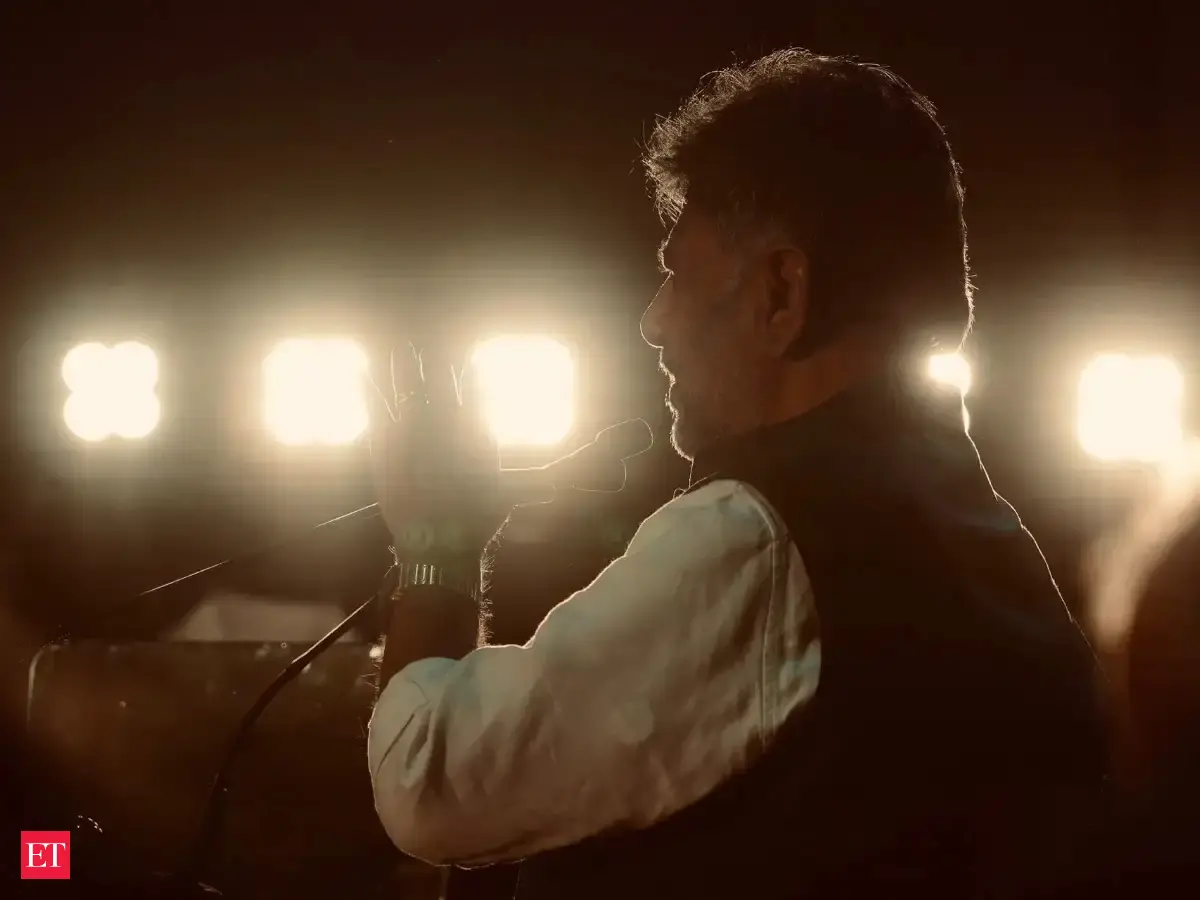
The government of Karnataka has reaffirmed its resolve to construct the long-delayed Mekedatu balancing reservoir across the Cauvery River, maintaining that the infrastructure is vital to securing drinking water for Bengaluru while insisting downstream Tamil Nadu will not suffer supply deficits. Speaking on the disputed public works initiative, senior state leadership declared that Karnataka remains fully committed to executing the project. The announcement revives an intractable inter-state hydro-political struggle in southern India, pitting Karnataka's urban municipal demands against Tamil Nadu's downstream agricultural livelihoods and established riparian rights.
Key facts
What happened
In public remarks reported by the Press Trust of India, Karnataka's political leadership asserted that the state will proceed with the construction of the balancing reservoir project at Mekedatu. Addressing long-standing objections raised by downstream neighbor Tamil Nadu, officials emphasized that the reservoir's design and operation would ensure that Tamil Nadu's allocated share of Cauvery river water remains fully protected under existing legal mechanisms.
The Mekedatu initiative envisions a massive concrete gravity balancing reservoir located approximately four kilometers upstream of the Karnataka-Tamil Nadu border, at the confluence of the Cauvery and Arkavathi rivers in the Ramanagara district. The primary objectives articulated by Karnataka are two-fold: meeting the rapidly expanding municipal drinking water deficits of the greater Bengaluru urban cluster and generating roughly 400 megawatts of hydroelectric energy.
However, the project has remained stalled in administrative and judicial bottlenecks. Tamil Nadu maintains that any upstream impoundment will irreversibly diminish the flow of water into its territory, particularly during deficient monsoon years. In restating Karnataka's operational determination, the leadership argued that the reservoir would primarily capture surplus flows that otherwise run unutilized into the Bay of Bengal during heavy precipitation periods, serving as a regulating buffer that could theoretically assist both states during distress periods.
Why it matters
The dispute over Mekedatu touches on urban sustainability, agrarian food security, federal dynamics, and environmental conservation in peninsular India. For the metropolitan region of Bengaluru—home to roughly 14 million residents and a central pillar of India's information technology economy—the search for dependable municipal water supplies is an existential planning priority. Rapid urbanization, ground water depletion, and severe encroachment on the city's historical network of interconnected lakes have left large swathes of the peripheral zones vulnerable to acute seasonal water emergencies. As peripheral municipal zones expand, the city's dependence on pumping Cauvery water from over 90 kilometers away and elevation gradients exceeding 450 meters has pushed existing supply phases to operational capacity.
Conversely, for Tamil Nadu, the Cauvery basin is the foundational lifeblood of the fertile Cauvery Delta region, commonly referred to as the rice bowl of the state. Hundreds of thousands of farmers across districts such as Thanjavur, Tiruvarur, and Nagapattinam depend entirely on seasonal water releases from upstream reservoirs to irrigate crucial paddy crops, including the traditional Kuruvai and Samba planting seasons. Tamil Nadu authorities argue that permitting Karnataka to construct an additional 67,000 million cubic feet storage facility near the inter-state border would grant upstream authorities unilateral physical control over water releases. In years marked by weak southwest monsoons, agriculturalists in Tamil Nadu fear that upstream storage will prioritize local municipal and regional storage over treaty allocations, causing crop failures, debt cycles, and widespread agrarian unrest across the downstream delta.
Furthermore, the Mekedatu site sits adjacent to sensitive biodiversity hotspots, including portions of the Cauvery Wildlife Sanctuary. The environmental impact of submerging thousands of acres of forest land adds a complex conservation challenge to an already volatile political deadlock.
The background
The hydro-political tension surrounding the Cauvery River spans more than a century, originating in colonial-era agreements negotiated between the Madras Presidency and the Princely State of Mysore in 1892 and 1924. Those compacts expired after 50 years, opening a protracted period of dispute over resource reallocation as agricultural and urban demands grew in post-independence India.
To resolve recurring inter-state impasses, the central government constituted the Cauvery Water Disputes Tribunal in 1990 under the Inter-State River Water Disputes Act of 1956. After nearly seventeen years of legal and technical proceedings, the Tribunal issued its final award in February 2007, defining fixed annual water allocations for the riparian states of Karnataka, Tamil Nadu, and Kerala, alongside the Union Territory of Puducherry. Unhappy with the formulas, several states filed appeals before the Supreme Court of India.
In February 2018, the Supreme Court delivered a landmark verdict settling the Cauvery river dispute. The apex court slightly reallocated water quotas, increasing Karnataka's share to account for Bengaluru's drinking water requirements, which the court explicitly recognized as a non-negotiable human need. Under the 2018 judgment, the court reduced the annual quantum of water that Karnataka is obligated to release at the inter-state border measurement point—the Biligundlu gauging station—to 177.25 million cubic feet in a normal water year. The court also ordered the establishment of the Cauvery Water Management Authority and the Cauvery Water Regulation Committee to monitor water storage levels, rainfall data, and mandatory monthly release schedules.
Karnataka conceived the Mekedatu balancing reservoir project as an engineering solution to fully utilize its allocated share and manage urban drinking water conveyance. However, Tamil Nadu immediately challenged the proposal before the Supreme Court and the Cauvery Water Management Authority, contending that the 2018 judicial order does not permit the construction of new large-scale storage works on the mainstream river without downstream riparian consent. Successive administrations in Chennai have maintained that any alteration to the river's physical topography undermines the established release architecture.
Reaction
While Karnataka's administrative leadership has presented the project as an essential civil works priority that honors downstream obligations, opposition to the stance in Tamil Nadu has historically been immediate, trans-partisan, and unified. In Chennai, state legislative sessions have repeatedly adopted unanimous multi-party resolutions condemning the Mekedatu proposal and demanding that central authorities deny administrative and environmental permissions.
Farmer federations across the Cauvery Delta have routinely mobilized protests whenever Karnataka asserts its intent to initiate preliminary work, urging the central government in New Delhi to refrain from clearing technical feasibility dossiers. Downstream agricultural unions argue that Karnataka's reassurances regarding downstream shares lack practical enforceability, particularly during drought cycles when political pressure within upstream urban centers inevitably favors retention over border discharge.
Within Karnataka, political parties across ideological divides generally support the Mekedatu project, viewing it as an indispensable civic right to address municipal shortages. State politicians face strong electoral pressure from urban constituents in Bengaluru and the surrounding southern districts to demonstrate progress on the reservoir. The debate therefore regularly emerges as a focal point during state legislative sessions, regional election cycles, and inter-state administrative gatherings convened by the Union Ministry of Jal Shakti.
What we don't know yet
Substantial ambiguities surround the regulatory and operational timeline of the Mekedatu balancing reservoir project. First, it remains uncertain whether Karnataka can secure the mandatory statutory clearances required before ground construction can begin. The project requires formal appraisal and approval from the Central Water Commission, environmental and forest clearances from the Ministry of Environment, Forest and Climate Change, and explicit assent or clearance through the Cauvery Water Management Authority. The exact position of federal regulatory bodies on whether downstream concurrence is an absolute prerequisite for clearing the detailed project report remains subject to conflicting interpretations.
Second, the precise financing framework, detailed engineering revisions, and updated capital expenditure projections have not been fully made public in the wake of inflation and prolonged regulatory delays. It is also unclear how Karnataka intends to legally resolve the pending petitions before the Supreme Court of India filed by Tamil Nadu, which explicitly seek permanent injunctions barring any construction activity at Mekedatu without mutual consent.
Finally, the exact distress-sharing formula that would govern reservoir operations during erratic monsoon seasons has never been codified to the complete satisfaction of both riparian states. Because the Cauvery basin is subject to extreme variations driven by climate fluctuations, the lack of an agreed operational matrix during sub-normal monsoon conditions leaves open the question of how conflicting demands between municipal storage and downstream agriculture would be reconciled in practice.
What to watch
The immediate trajectory of the Mekedatu controversy depends on upcoming meetings of the Cauvery Water Management Authority, where the project's detailed project report has frequently been scheduled for consideration amid vigorous objections from Tamil Nadu delegates. Any procedural move by the authority to refer the proposal to its technical sub-committees will immediately provoke legal pushback and political friction.
Observers should also monitor the docket of the Supreme Court of India, which retains jurisdiction over inter-state petitions concerning the implementation of the 2018 final decree. Any directive issued by the bench regarding whether downstream consent is required for balancing reservoirs will set an important precedent for river-basin governance across India.
At the regional level, monsoon tracking in the Western Ghats catchment area will dictate the intensity of the dispute in the short term. Favorable seasonal rainfall typically lowers immediate political friction by naturally filling downstream reservoirs such as the Mettur Dam in Tamil Nadu, whereas deficient or erratic rainfall patterns invariably escalate tensions, transforming regulatory filings into heated national headlines.
Reporting from the Press Trust of India contributed to this account.
How this story was produced
This report was written by The Global Wire newsroom from reporting first published by SECTIONS Mekedatu project will proceed; Karnataka will protect Tamil Nadu's water share D K Shivakumar PTI. We verify the core facts against the original report, write our own account, and add the background and consequences a short wire item leaves out. Drafting is AI-assisted inside an editor-supervised pipeline, and every story is checked for accuracy of attribution, structure and duplication before it appears — full detail in our AI and funding disclosure.
Spotted an error? Tell us at corrections@horizonglobalnews.com and read our corrections policy or editorial standards.






Reader comments
Loading comments…