

Jensen Huang Resigns as Nvidia Chief Executive Amid National Security Inquiries
Nvidia co-founder Jensen Huang has stepped down following weeks of scrutiny regarding personal conduct and connections to a suspected Chinese intelligence operative.
By The Global Wire Newsroom · Reported from SECTIONS Jensen Huang built the company that powers AI Now Nvidia must find a way forward without him AP
Link preview · horizonglobalnews.com
Jensen Huang Resigns as Nvidia Chief Executive Amid National Security Inquiries
Nvidia co-founder Jensen Huang has stepped down following weeks of scrutiny regarding personal conduct and connections to a suspected Chinese intelligence operative.
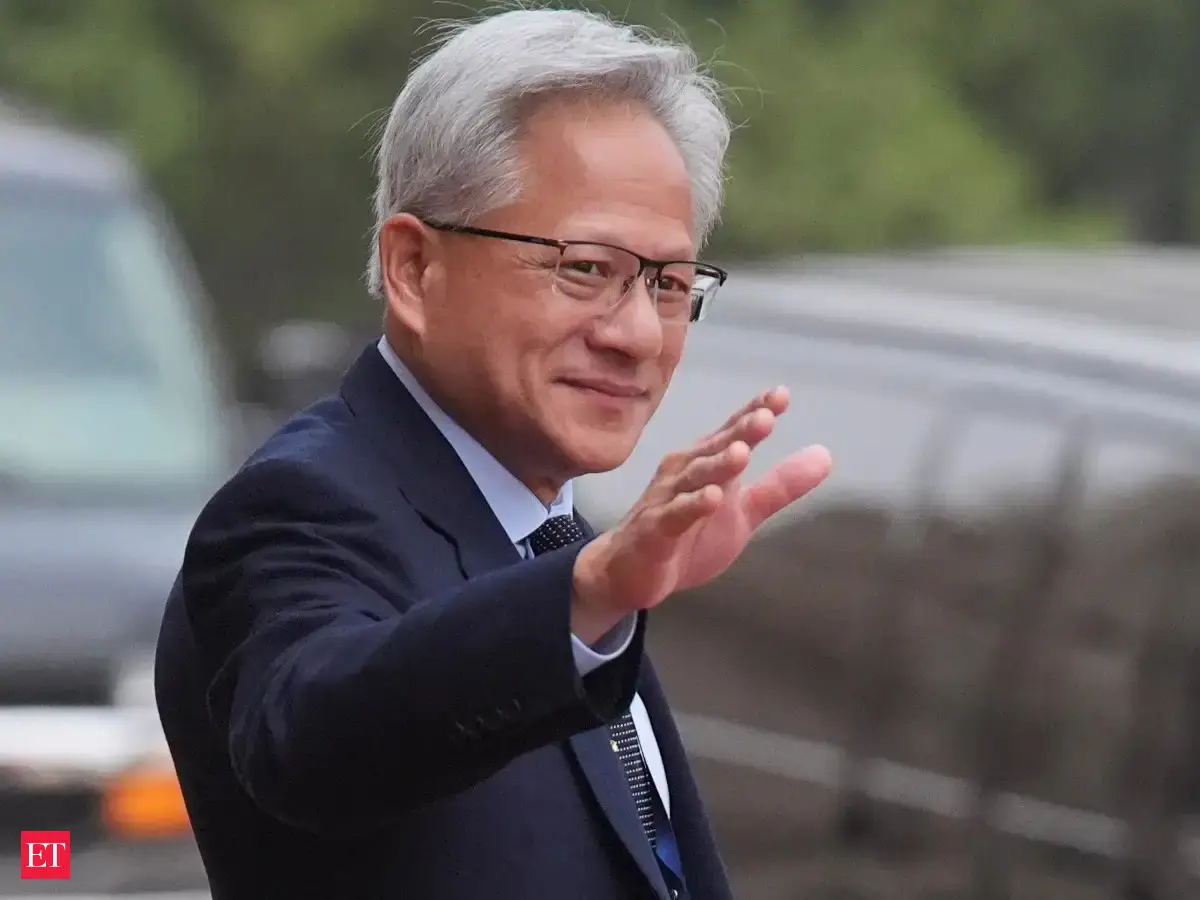
SANTA CLARA, Calif. — Jensen Huang, the longtime chief executive and co-founder of Nvidia Corporation, has resigned from his post, ending a three-decade tenure at the helm of the world's dominant artificial intelligence hardware company. The departure follows weeks of intensifying controversy involving alleged extramarital relationships and connections to an individual suspected of conducting espionage on behalf of the Chinese government, according to reporting by the Associated Press. The sudden leadership vacuum thrusts the Santa Clara-based semiconductor designer into an unprecedented period of corporate transition and regulatory scrutiny, with Chief Financial Officer Colette Kress positioned amid the resulting governance adjustments as federal authorities and company directors navigate sensitive national security concerns.
Key facts
What happened
According to reporting by the Associated Press, Jensen Huang tendered his resignation following several weeks of mounting internal and external pressure. The crisis centered on disclosures regarding alleged extramarital affairs alongside interactions with an individual suspected of intelligence-gathering activities for the People's Republic of China.
While corporate governance codes at publicly traded technology firms routinely address personal relationships between senior executives and third parties, the intersection of private misconduct allegations with foreign intelligence concerns created acute exposure for Nvidia. The company's hardware forms the infrastructural foundation of global artificial intelligence development, making its leadership subject to intense counterintelligence awareness.
As the allegations surfaced, Nvidia's board faced growing demands to evaluate the nature of the contacts and assess whether proprietary architecture details, supply chain methodologies, or corporate strategies had been compromised. Huang, who has served as the continuous public face and strategic architect of the company since its founding in 1993, ultimately relinquished the chief executive position.
The Associated Press reported that the resignation leaves Nvidia confronting an array of formal inquiries and governance challenges. In the immediate aftermath, long-serving Chief Financial Officer Colette Kress was positioned at the center of the company's executive response, providing operational continuity while directors address the structural fallout from the departure.
Why it matters
The abrupt removal of Jensen Huang carries profound ramifications that extend well beyond standard corporate executive turnover. In the semiconductor sector, Huang was widely viewed not merely as an administrator, but as the primary visionary who transformed graphics processors from niche gaming peripherals into the foundational computational engines powering modern artificial intelligence, high-performance scientific computing, and autonomous machines.
Nvidia currently commands an estimated market share exceeding 80 percent in advanced data-center processors utilized for training and deploying large-scale neural networks. Its flagship hardware—ranging from the Hopper architecture to the Blackwell generation—serves as the core physical asset for hyperscale cloud providers, sovereign artificial intelligence programs, and major technological laboratories across North America, Europe, and Asia. When an executive wielding such outsized influence over global computing infrastructure departs amid foreign espionage allegations, the implications ripple across commercial markets, international diplomatic relations, and federal regulatory bodies.
For investors and corporate clients, the transition introduces substantial execution risk. Technology roadmaps in the semiconductor industry are formulated years in advance, requiring intricate coordination with pure-play foundries like Taiwan Semiconductor Manufacturing Company (TSMC), advanced packaging facilities, and memory manufacturers. Huang maintained personal oversight over these supplier relationships and developer ecosystems. Without his strategic direction, Nvidia must demonstrate that its engineering apparatus and executive bench can maintain technical leadership without succumbing to bureaucratic inertia or distraction from ongoing legal and governmental inquiries.
The background
Nvidia was founded in April 1993 by Jensen Huang, Chris Malachowsky, and Curtis Priem during a meeting at a Denny's diner in San Jose, California. The trio recognized that specialized, hardware-accelerated graphics computing would become essential for multimedia and video gaming. Under Huang's leadership, the company went public on the Nasdaq exchange in January 1999 at a split-adjusted price of under fifty cents per share. That same year, Nvidia popularized the term graphics processing unit (GPU) with the release of the GeForce 256.
A decisive turning point in the company's history occurred in 2006 with the introduction of CUDA, a proprietary parallel computing platform and programming model. CUDA enabled software developers to harness Nvidia GPUs for general-purpose mathematical computations, fundamentally altering the economics of scientific simulation, oil and gas exploration, and financial modeling. Although the research and development expenditures associated with CUDA depressed profit margins for years, Huang resisted Wall Street pressure to abandon the project. That persistence positioned Nvidia as the sole hardware provider capable of handling the massive parallel calculations required when deep learning emerged in the 2010s.
Over the past three years, generative artificial intelligence catalyzed an unprecedented financial surge for Nvidia, pushing its quarterly revenues from approximately $6 billion to more than $30 billion and elevating its market capitalization above $3 trillion. However, this commercial supremacy coincided with rising geopolitical friction between Washington and Beijing. Beginning in October 2022 and expanding in October 2023, the United States Department of Commerce’s Bureau of Industry and Security (BIS) enacted sweeping export controls restricting the shipment of high-performance artificial intelligence semiconductors, including Nvidia's A100, H100, and adapted variants, to Chinese entities.
The regulatory measures aimed directly at preventing advanced silicon from supporting Chinese military modernization and surveillance infrastructure. Navigating these rules placed Nvidia at the focal point of U.S.-China technology competition. Huang regularly engaged with federal officials, foreign heads of state, and international trade bodies to balance national security mandates against commercial market access. Against this tense geopolitical backdrop, any association between Nvidia's top leadership and figures suspected of foreign intelligence activity represents a direct intersection with U.S. counterintelligence priorities.
Reaction
The Associated Press reported that the company's immediate leadership focus has turned toward stabilizing operations and addressing inquiries, with Chief Financial Officer Colette Kress emerging as a key figure in managing the transition. Kress, who joined Nvidia in 2013 after senior financial roles at Cisco Systems and Microsoft, is widely respected within the financial community for her fiscal discipline and transparent operational communication.
Formal reactions from legislative committees and executive agencies are anticipated as disclosures progress. Given the national security dimensions reported by the Associated Press, relevant oversight bodies—such as the House Select Committee on the Strategic Competition Between the United States and the Chinese Communist Party, the Senate Select Committee on Intelligence, and the Department of Justice—routinely examine incidents where foreign intelligence services are suspected of targeting critical domestic technology firms. Industry partners across the semiconductor supply chain and hyperscale cloud operators have maintained close observation of corporate communications, preparing for potential regulatory updates or governance adjustments from Santa Clara.
What we don't know yet
Significant elements of the circumstances surrounding Huang's departure remain undisclosed in publicly available accounts. The specific identity of the woman suspected of conducting espionage, her operational affiliations, and the duration of her contact with Huang have not been detailed. Crucially, public reporting has not confirmed whether any unauthorized transfer of proprietary design documents, source code, classified technical specifications, or confidential commercial data occurred as a result of the association.
Furthermore, the precise status of official government investigations remains unverified. It is not yet clear whether the Department of Justice, the Federal Bureau of Investigation, or the Securities and Exchange Commission have initiated formal administrative or criminal proceedings, or whether current inquiries remain internal corporate governance reviews conducted by independent legal counsel. The permanent succession plan for the chief executive role also remains unsettled, leaving market participants uncertain whether the board will elevate an internal executive or conduct an external search to lead the company forward.
What to watch
In the coming days and weeks, attention will center on several verifiable corporate and regulatory milestones. First, filings submitted to the Securities and Exchange Commission, including Form 8-K disclosures, will outline the formal legal terms of Huang's separation, interim management arrangements, and any severance agreements or governance committee restructuring.
Second, the actions of Nvidia's board of directors regarding leadership appointments will indicate the company's strategic path. Observers will monitor whether Colette Kress is formally designated as interim chief executive officer and who is appointed to oversee hardware engineering, which Huang historically steered directly.
Third, federal oversight responses warrant scrutiny. Any announcement of congressional hearings, inquiries by the Department of Commerce regarding export licensing, or actions by intelligence-oversight committees will signal the degree of regulatory jeopardy confronting the firm. Finally, the tone and commentary delivered during Nvidia’s next scheduled earnings call will provide an essential baseline for how management intends to address operational continuity, ongoing research programs, and client confidence without its historic founder.
This report is based on original reporting published by the Associated Press.
How this story was produced
This report was written by The Global Wire newsroom from reporting first published by SECTIONS Jensen Huang built the company that powers AI Now Nvidia must find a way forward without him AP. We verify the core facts against the original report, write our own account, and add the background and consequences a short wire item leaves out. Drafting is AI-assisted inside an editor-supervised pipeline, and every story is checked for accuracy of attribution, structure and duplication before it appears — full detail in our AI and funding disclosure.
Spotted an error? Tell us at corrections@horizonglobalnews.com and read our corrections policy or editorial standards.





Reader comments
Loading comments…