

Jason Whitlock Criticizes Media Coverage Following On-Court Foul Involving Carrington and Cunningham
Sports commentator Jason Whitlock called out local reporters for failing to question coach Stephanie White about a controversial foul that drew intense public reaction over the weekend.
By The Global Wire Newsroom · Reported from Arian Kashyap
Link preview · horizonglobalnews.com
Jason Whitlock Criticizes Media Coverage Following On-Court Foul Involving Carrington and Cunningham
Sports commentator Jason Whitlock called out local reporters for failing to question coach Stephanie White about a controversial foul that drew intense public reaction over the weekend.
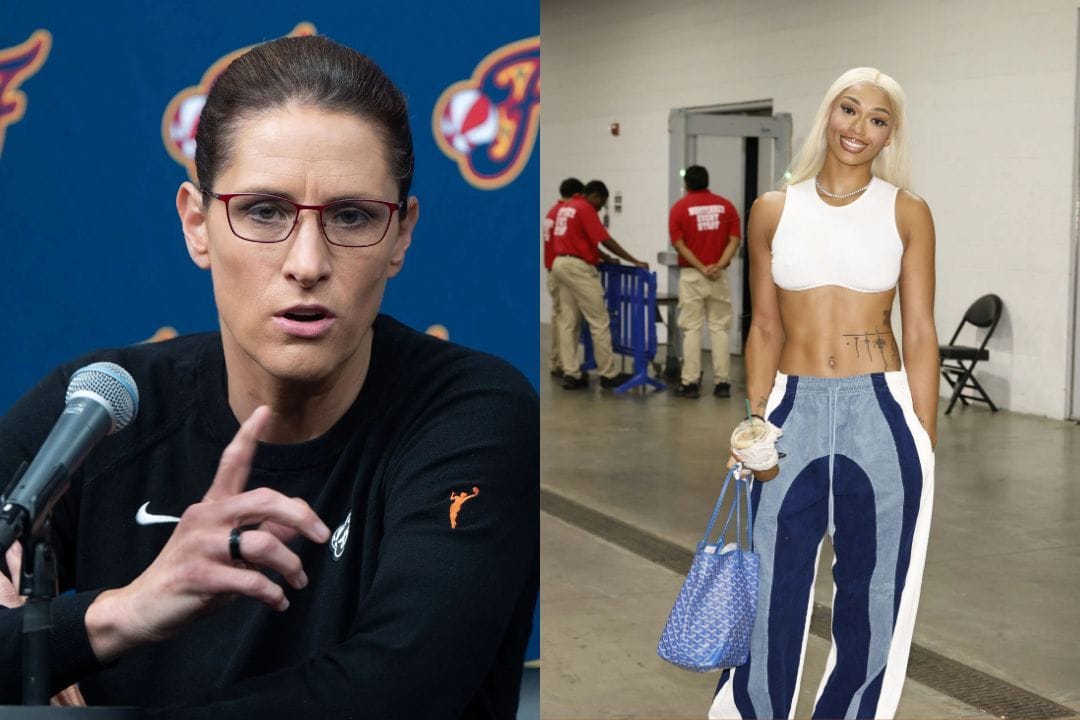
Sports commentator Jason Whitlock has issued a stern rebuke of local sports journalists following a controversial on-court incident during a recent professional basketball game, according to reporting by Arian Kashyap. Whitlock focused his criticism on beat reporters covering the post-game press conference, arguing that members of the media failed in their professional obligations by neglecting to question head coach Stephanie White about a hard foul committed by player DiJonai Carrington against Sophie Cunningham.
The incident, which occurred during Saturday's contest, quickly became a focal point of discussion among fans and basketball analysts. However, the absence of direct questioning regarding the play during the official post-game media session drew sharp criticism from Whitlock, who asserted that the local press corps demonstrated a standard of journalism that should embarrass the credentialed media covering the team.
On-Court Foul Sparks Controversy
The dispute stems from an action during Saturday's game when Carrington delivered a hard foul on Cunningham. The play resulted in immediate reaction on the floor and quickly spread across broadcast networks and digital platforms, generating significant public backlash.
Physical play in professional basketball frequently generates strong reactions from both spectators and sports commentators, particularly when fouls appear elevated in intensity or context. In the hours following the game, video clips and commentary surrounding Carrington's play against Cunningham gained significant traction online, making the physical encounter one of the most widely discussed moments of the match.
Despite the visibility of the play and the subsequent online debate, the official post-game briefing with head coach Stephanie White concluded without journalists pressing for clarification, commentary, or the coaching staff's assessment of the hard foul.
Whitlock Calls Out Press Corps
Following the game's conclusion and the subsequent press availability, Whitlock voiced strong disapproval regarding the line of questioning—or lack thereof—directed at White. In his commentary highlighted by Kashyap, Whitlock targeted the journalists present in the room, asserting that the entire local media contingent covering the beat failed to meet basic standards of sports reporting.
Whitlock argued that when a high-profile, contentious play occurs during a game, it is the primary duty of press conference attendees to address the event directly with team leadership. By omitting questions about Carrington's foul on Cunningham during the interaction with White, reporters allowed a major narrative of the game to pass without official response or accountability from the bench.
According to Whitlock's critique, such omissions reflect a broader trend in specialized sports reporting, where beat writers may avoid uncomfortable or confrontational lines of questioning in order to maintain harmonious professional relationships with coaching staffs and team representatives.
Press Conference Scrutiny and Media Roles
The interaction between professional sports franchises and credentialed journalists during post-game press conferences serves as a primary channel for public accountability. Beat reporters are granted access to players and coaches immediately following games to provide context, explain tactical decisions, and address key plays that impacted the outcome or atmosphere of the contest.
When major on-court incidents occur, national commentators and sports outlets routinely rely on beat reporters to ask the direct questions that elicit immediate responses from decision-makers. When those questions are omitted, national analysts often highlight the disparity between what fans and commentators are discussing outside the arena and what is being asked inside the press room.
Media ethics in sports reporting dictate that significant rule violations, physical altercations, and controversial calls should be put on the record during available media windows. Critics argue that omitting these topics creates a disconnect between the reality observed by television audiences and the official narrative captured in press room transcripts.
The Evolving Landscape of Basketball Coverage
The controversy surrounding Carrington's foul and the subsequent press conference comes at a time of heightened visibility and scrutiny for professional basketball. Increased viewership and expanding digital coverage have brought unprecedented attention to on-court physicality, officiating decisions, and player rivalries.
With greater public engagement comes elevated expectations for post-game coverage. Outlets and independent commentators increasingly scrutinize not only the actions of the players on the court but also the conduct and rigor of the press corps assigned to cover them. The debate highlighted by Whitlock underlines the tension between traditional beat reporting—which often prioritizes broader game recaps and long-term access—and the fast-paced, incident-driven focus of contemporary sports commentary.
As physical encounters on the court continue to drive viral conversation, beat writers face mounting pressure from national figures and audiences to address contentious moments directly, regardless of potential discomfort during post-game exchanges.
Future Implications for Press Availability
The public criticism directed at the press corps following Saturday's game is likely to intensify focus on upcoming media opportunities. Head coaches and team spokespersons may face more rigorous questioning regarding physical play and player discipline in future press sessions as journalists respond to scrutiny over their coverage choices.
For sports media organizations, the episode serves as a reminder of the public expectation that post-game press conferences address the most prominent events of a broadcast. Whether the critique leads to shifts in how beat writers approach post-game interviews remains to be seen in upcoming team media availabilities.
This article relies on original reporting and details published by Arian Kashyap.
How this story was produced
This report was written by The Global Wire newsroom from reporting first published by Arian Kashyap. We verify the core facts against the original report, write our own account, and add the background and consequences a short wire item leaves out. Drafting is AI-assisted inside an editor-supervised pipeline, and every story is checked for accuracy of attribution, structure and duplication before it appears — full detail in our AI and funding disclosure.
Spotted an error? Tell us at corrections@horizonglobalnews.com and read our corrections policy or editorial standards.


Reader comments
Loading comments…